2018 New Legal Rules: It Doesn't Matter Whose Name Is on the Property Deed Anymore
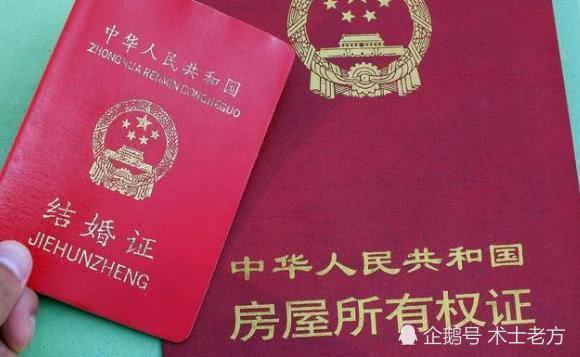
The property ownership certificate is a legal document by which the state protects ownership rights in accordance with the law. Once a house has an ownership certificate, it can be rented out, transferred, exchanged, gifted, inherited and mortgaged, and compensation can be obtained if demolition occurs. The relationship between whose name is on the property deed (including the house ownership certificate, hereinafter collectively referred to as the property deed) and who owns the house has always drawn the attention of home buyers, especially after the relevant judicial interpretations of the Marriage Law were issued, which set clear rules on the question of house ownership. So, if your name is on the property deed, does that mean the house is definitely yours?
1. The legal effect of the name on the property deed.
A house is not something you automatically get half of just because your name is on the ownership certificate; it also depends on whether the house is the separate property of one party or community property.
If one spouse paid the full purchase price before marriage and obtained the property deed, then the house undoubtedly counts as premarital property. A house purchased after marriage with one party's separate property also belongs to that one party. The Interpretation (III) of the Marriage Law stipulates that when parents contribute funds after their children marry to purchase real estate and the ownership is registered in the name of their own child, this is regarded as a gift to that child alone, and the real estate should be recognized as the personal property of that one spouse. When both sets of parents contribute funds to purchase real estate and the ownership is registered in the name of one spouse's child, the real estate is recognized as being owned by both parties in shares according to the proportion of each set of parents' contributions, unless the parties have agreed otherwise.
2. The property deed is about to be retired, and the real estate ownership certificate formally takes the stage!
What is the difference between the property deed and the real estate ownership certificate? According to the official Weibo of the Ministry of Land and Resources, there are differences between the new "real estate ownership certificate" and the "property deed" residents currently hold.
In addition to content from the original property deed such as the rights holder, co-ownership status and location, the real estate ownership certificate also adds a laser area, a real estate unit number, a term of use and other content. The real estate unit number has a unique code, equivalent to the nationwide unique "ID number" of the real estate recorded in the certificate; through the real estate unit number, the information on that real estate can be pinpointed.
The inner pages of the property deed only include the house owner, co-ownership status, house location, registration time, house nature, planned use, house condition and land condition.
3. How to add a name to the property deed
Adding a name to the property deed is something everyone deals with fairly often and is also a point of common concern, usually parents adding their children's names to the property deed, or one spouse adding the other spouse's name.
Generally speaking, changing the name on a property deed commonly involves three methods: gifting real estate ownership, house sale and partition registration, each with its own advantages and drawbacks.
To handle the procedure of adding a name to the property deed, one needs to provide the property deed, the house's market guide price or appraisal report and the appraisal fee invoice, the ID cards of both buyer and seller, the home purchase invoice, the deed tax certificate, and the online-signed home purchase contract; for housing converted from public housing, the time is based on the time on the property book, receipt and public housing sale agreement; in addition, a household register and marriage certificate are required. Also, to prove that it is the buyer's only residence, a certificate of no other property issued by the housing management department is also needed.