Succulent plant care is very simple, and homemade fertilizer makes the leaves plump and healthy
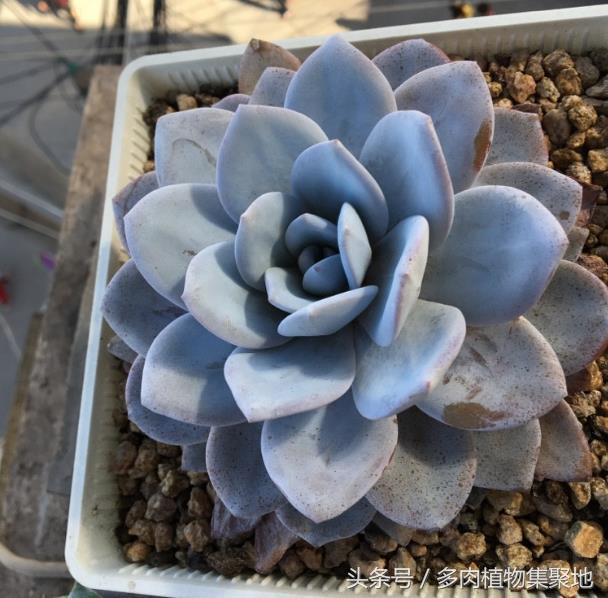
Generally speaking, the native environments of succulent plants are usually rather poor, so they only need to grow normally and fertilizer is not essential. In other words, if your succulents look like skin and bones, it has nothing to do with whether you fertilized them, and more to do with your light and watering. But it is also clearly wrong to conclude from the poor native environments of succulent plants that fertilizing succulents is bad. An appropriate amount of suitable fertilizer can make succulents grow better.
Every household has this kind of thing, and that is bones, the bones left over from eating meat (chicken bones, fish bones, pork bones, and so on). Bones are rich in trace elements such as calcium and phosphorus, which are very suitable for succulent plants to absorb. This homemade fertilizer can not only be used to mix into the soil, but also some can be placed at the bottom of the flower pot. This is not only good for soil aeration and drainage, but the slowly released fertility (nutrients) can continuously supply the plant for absorption. Most importantly, there is no need to worry at all about burning the roots.
The collected bones can be washed clean, for the purpose of removing the salt on the bones. Then put them in the sun to dry for several more days. After they are dried, use a small hammer to crush them as much as possible. What is finally produced is bone meal and some larger pieces of bone that cannot be crushed, and all of them can be fully used. When repotting succulent plants, they can be taken directly to mix into the soil. As for those slightly larger pieces of bone, they can be placed directly at the bottom of the pot. The trace elements in the bones will gradually release nutrients later, and then through the root system of the succulent plant they will slowly be delivered to every growth point of the plant. If you keep this up over the long term, it will be hard for the succulents not to grow as plump as balls.
Before fertilizing, you must first figure out exactly what kind of fertilizer succulents need. Nitrogen fertilizer can make plants grow fast, with large and bright green leaves. It is important for vegetables, but not important for succulents, and it affects coloring. Too much nitrogen fertilizer can also cause leggy growth, and there are claims that it increases mealybugs and invites powdery mildew. Phosphorus fertilizer acts on flowers and fruit, and potassium fertilizer acts on roots and stems. There are also claims that phosphorus fertilizer and potassium fertilizer improve drought resistance, cold resistance, and stress resistance. Therefore, when fertilizing succulents, nitrogen fertilizer should be intentionally used less, while phosphorus and potassium fertilizers should be used more.
As for granular slow-release fertilizer, this is currently the most common fertilizer we see. This kind of granular slow-release fertilizer is specially aimed at succulent plants, works very well, and releases fertilizer gradually. Fertilizing succulent plants is not very important. With slow-release fertilizer like this, generally putting in a few granules means you do not need to fertilize the succulents again for a long time. It should belong to a type of compound fertilizer. Potassium fertilizer can promote photosynthesis, increase stem hardness, and promote the growth of succulent stems and roots. Some old-stem succulents of Uncle's use this kind of fertilizer, but the amount used is very small. After all, Uncle still likes old stems in their original ecological state. If flower lovers want to grow old stems, they can use a fertilizer mainly containing potassium.
The role of nitrogen fertilizer is to make the leaves of succulent plants grow larger and healthier, slow down leaf aging, and increase yield. If succulent lovers want the fleshy leaves to grow larger, they can try using this kind of nitrogen fertilizer, but the amount used must be controlled well. No matter what kind of fertilizer it is, the amount used must be controlled well. Use as little as possible, and if you can avoid using it, then do not use it. What Uncle likes is the original ecological state, but in some cases compound fertilizer is also used, that is, granular slow-release fertilizer. But it is recommended not to fertilize. However, many succulent lovers have asked me, so I will write about it so that succulent lovers can understand and know about it. Growing succulents is a process, and this process does not need too much pollution.
After choosing a suitable fertilizer, the fertilizing method is also very important. Usually before potting, mix the chosen slow-release fertilizer with the pre-prepared growing medium in a certain proportion, stir it evenly, and use it. It is also recommended to apply it within two weeks, mainly to avoid too much salt accumulating in the growing medium, which would instead cause a situation unfavorable to the full dissolution of the fertilizer.
This is a gathering place for succulent plant lovers, sharing succulent care tips. You are welcome to follow and exchange ideas.