Sow coreopsis seeds in spring, and in summer and autumn the whole yard bursts into golden flowers
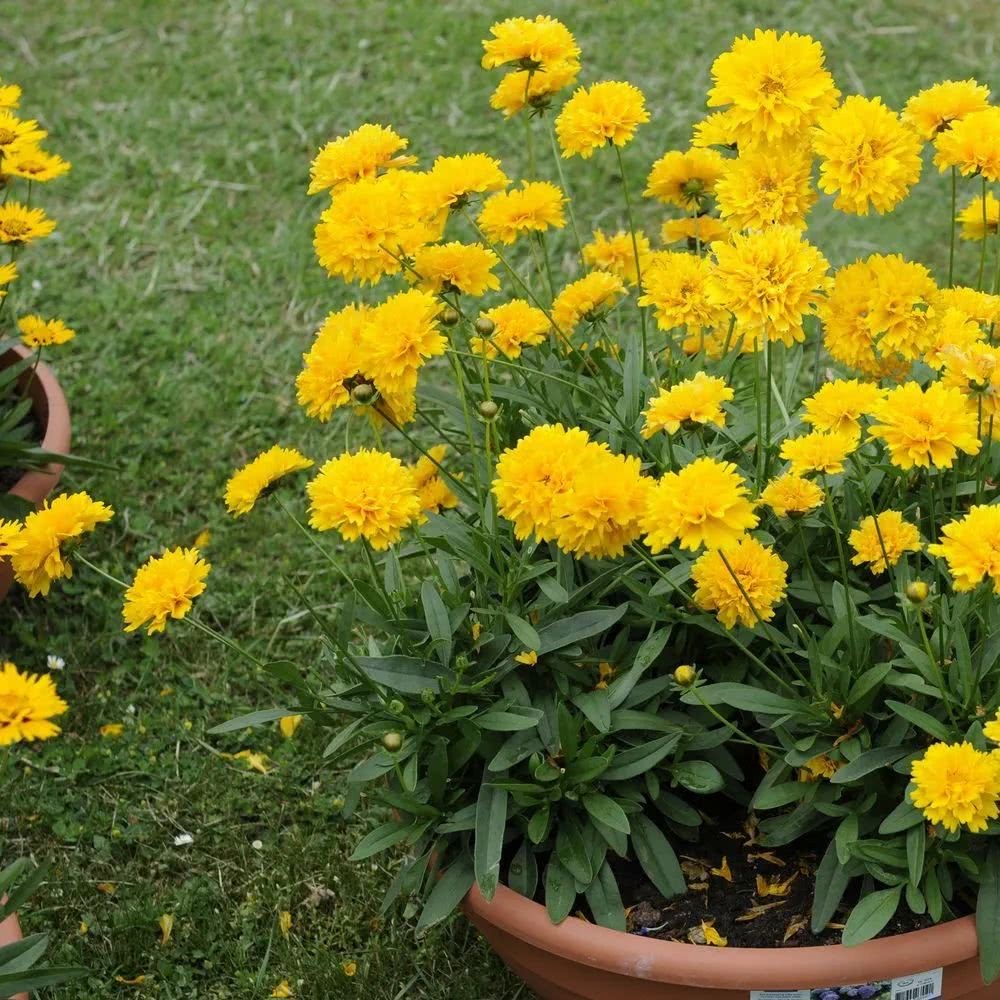
The plant I'm going to introduce below is coreopsis. It is a flowering plant especially suited to being grown in the yard. You only need to scatter some seeds in the yard in spring, and in the early stage of growth, supplement water appropriately, and in summer and autumn it will produce brilliant blooms.
Coreopsis has many aliases; it is also called golden tickseed or peacock flower, because it has a great many varieties, very rich flower colors, and flower forms that differ from one another. Besides the common golden yellow varieties, there are also orange-red or mixed-color varieties. Some people very much like to cut its flowers to make arrangements, and its ornamental value is also very high.
Besides having beautiful flowers and being easy to care for, coreopsis also has a very long flowering period. As long as it stays warm year-round, it can keep blooming until frost arrives, and throughout spring, summer and autumn it is almost continuously in flower.
You can plant different varieties in the yard. In places without frost year-round, coreopsis can also keep growing for many years, and without much management it can grow into a large patch on its own.
Caring for coreopsis is very simple. Choose a spot with especially ample light, with more than six hours of direct sunlight each day, keep it ventilated, and maintain a certain plant shape, and it will grow vigorously.
Coreopsis has low requirements for soil, but the soil must have good drainage, and waterlogging in the soil must be avoided. For coreopsis grown in the ground, drainage work should be done well at ground level.
During the growth period it practically does not need watering; only during long droughts does it need occasional supplemental water. Its need for fertilizer is also very small. If soil fertility is too high, it will instead affect flowering.
To encourage coreopsis to bloom continuously, the key is appropriate pruning. After the flowers fade, promptly cut off the spent flowers, so it can retain nutrients, which helps form new flower buds.
During the peak growth period of coreopsis, especially in late summer, you can cut off part of the top of the plant, usually about 1/3 to 1/4. This process is pinching, and it can promote branching and produce more flowers.
Coreopsis is generally propagated by sowing. After spring warms up and the temperature stays steady at around 18°C, you can sow. First level the soil, then scatter the seeds evenly over the surface, cover lightly with soil, and keep the soil moist. In 2 to 3 weeks they will sprout and take root.
Coreopsis is very easy to grow, but avoid frequent watering, and even more, do not let the soil become waterlogged. When watering, avoid pouring water on the leaves, otherwise it will be prone to powdery mildew infection. When watering, avoid watering in the evening or at night.
Master the care tips above and you can basically grow coreopsis well. It is a tropical plant, so in winter pay attention to cold protection. In places with frost, coreopsis is grown as an annual plant.