How do you care for a kalanchoe? These common varieties come in a rich range of colors
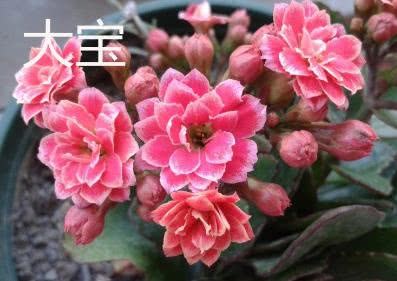
Kalanchoe, what an auspicious name, but when it comes to its varieties, that is a real headache, because you will get all confused. There are so many varieties that it is almost impossible to sort out exactly how many there are, but at the flower market most of them are just those same few old types. Recently, to help everyone out, I searched some materials and divided them by appearance and color into the following categories, hoping to help you recognize its varieties, and I will also share a few cultivation tips.
1. Pink types: Dabao, Single Pink Double Color, Pink Judy, Hongfenfei, Yilian, Fenghua Xueyue, etc.
2. White types: Single-petal White, White Snow, White Cloud Sea, White Star, Feather White Leaf, etc.
3. Purple types: Large-leaf Purple Single, Purple Judy, Zibin, Ziyi, Zidi, etc.
4. Red types: Large-leaf Red Single, Watermelon Red Single, Hongri, Hongxing, Feather-leaf Red, etc.
5. Tips
1. Growing period. After kalanchoe matures, some branches need to be pruned to promote the growth of side branches, so as to ensure a beautiful plant shape and the number of flowers. Kalanchoe itself is relatively drought-tolerant, so during cultivation you do not need to water it too much, to avoid waterlogging and affecting plant growth; especially in winter, the amount of watering must be controlled even more. The peak growing season for kalanchoe is autumn. If you want the plant to grow more robustly and produce more flowers, you must do a good job of water and fertilizer maintenance during the growing period.
2. Topdressing work. When the plant is potted, fertilizer must absolutely not be applied; topdressing can only be done after the branches have survived and new leaves have sprouted. Kalanchoe topdressing must follow the principle of small amounts and frequent applications, so as not to accidentally harm the new buds.
3. Disease and pest control. Two pests, aphids and leafminers, are often seen on kalanchoe plants. Leafminers are relatively hard to deal with, since they hide inside the leaves and are hard to spot; by the time you discover them after they have eaten the leaves bare, it is too late and you feel great regret. So usually pay more attention to whether the leaves have changed, or occasionally spray the plant with some insecticide.
4. Light. If a kalanchoe grown outdoors gets rained on, do not let it receive direct sunlight; a major change in environment can easily suffocate the plant, so pay attention to environmental changes and move its position at any time. For plants grown indoors, ensure sufficient sunlight every day in winter; adjust the light duration according to the plant's growth changes.
Kalanchoe plants have relatively small, compact flowers that bloom in clusters, making them an ideal home-grown flower; because of their good meaning, they are very popular, so you can often see people growing kalanchoe at home. I hope the above tips can help those who grow kalanchoe.