What to Do When Roses Get Powdery Mildew? A Detailed Guide to Prevention and Control Methods
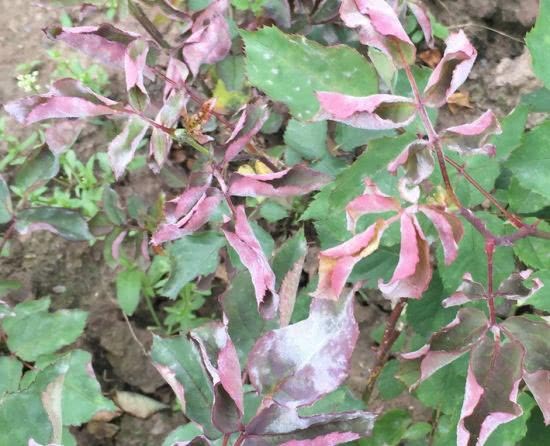
Powdery mildew is a common disease of roses and can harm many plants in the genus Rosa. Diseased roses develop curled, scorched leaves, young shoots may die, and flowers may fail to open or become misshapen, affecting the plant's growth and ornamental value.
Powdery mildew generally affects rose leaves, young shoots, flower buds, and pedicels. After young leaves are infected, the leaves shrink, curl and become deformed, sometimes turning purplish red, while after older leaves are infected, nearly round, water-soaked, chlorotic yellow spots appear on the leaf surface, not very different from leaves that are not infected. In addition, white material appears on the diseased spots on the underside of the leaves of infected plants.
Prevention and Control Methods
1. Control fertilizer and water
Strengthen cultivation management and water reasonably according to the actual moisture conditions of the soil. In terms of fertilization, nitrogen fertilizer should not be applied too much; potassium and calcium fertilizers should be appropriately increased to enhance plant growth, keep plants robust, and improve disease resistance. In addition, reasonably controlling the spacing between plants can also effectively inhibit the occurrence of powdery mildew.
2. Prune in good time
If diseased plants are found, prune them in good time and remove diseased shoots and leaves. In addition, improve ventilation and light conditions between plants. For potted roses indoors, place them in an environment with good ventilation and sufficient light. In winter, control indoor temperature and humidity, and pay attention to ventilation at night.
3. Chemical control
Before the disease occurs, spray 200-300 times diluted Bordeaux mixture or lime sulfur mixture once every two weeks; spraying 3-5 times in succession can prevent it.
After coating and washing the diseased parts with laundry detergent solution for 2-3 minutes, rinse them clean with clean water, once every other day; after 2-3 times, the damage can be reduced.
If the disease has already occurred, sulfur preparations can be sprayed, that is, wrap sulfur powder in coarse cloth, rub it in water to make a suspension, and spray it, generally once every 5-7 days; when the condition is severe, spray once every 3 days, 2-3 times in succession, for a relatively good control effect. Boric acid solution can also be sprayed; boric acid solution can both control the spread of powdery mildew and prompt diseased flower buds to bloom as usual, without affecting the growth of disease-free branches and leaves, with good results. When preparing, use 1 gram of boric acid and 1000 grams of water, mix them, and spray the affected parts. The spray should be comprehensive, especially reaching the underside of the leaves; spray again after 2-3 days. You can also use 70% thiophanate-methyl 1000 times solution, or 50% zineb 800-1000 times solution for spray control. However, do not spray when the temperature is above 32°C, to avoid burning the leaves.
Powdery mildew has a relatively obvious characteristic, namely that a powdery white substance appears on the affected parts, so when gardeners discover powdery mildew, they should promptly take corresponding measures to avoid the spread of the disease.