How to grow orchids? Essential care basics for beginners
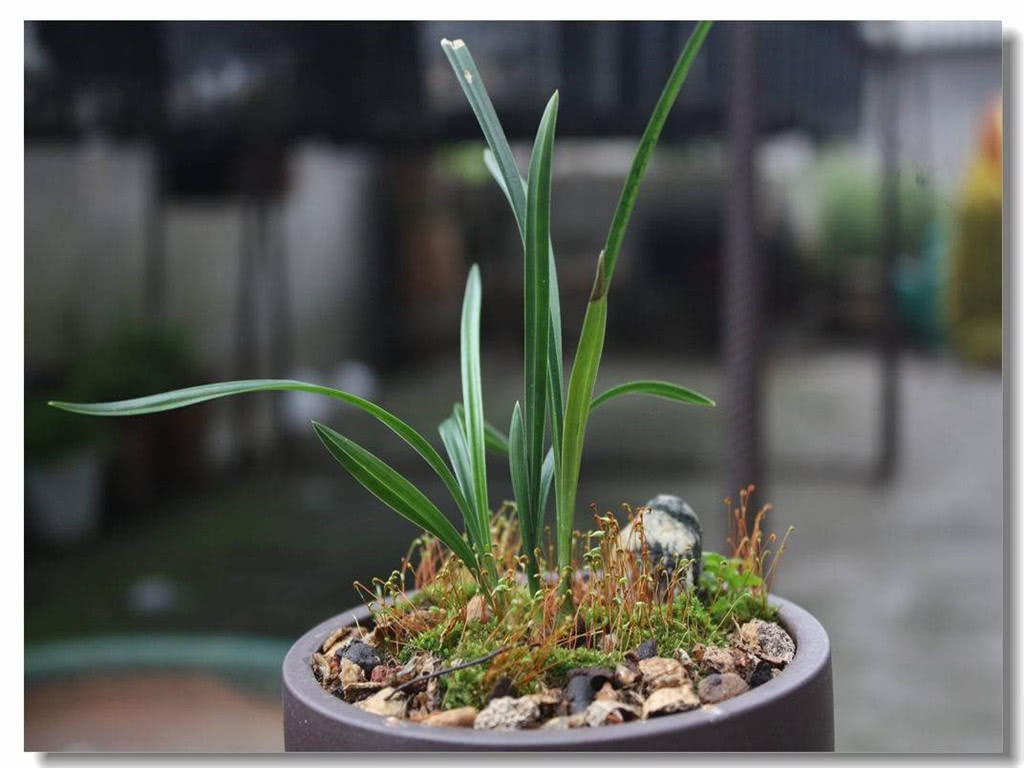
A few beginner basics for orchid care, so beginners can level up right away.
Loving to grow some flowers and plants is a good thing; it not only cultivates character but also enriches life. When growing orchids, even beginners need not worry; orchid growers give you a few beginner tips so you can level up right away.
When caring for orchids, pay attention to regulating the dryness and moisture of the growing medium. If the medium is too dry, the flower stalk's development stalls or even wilts, and bud drop occurs; if it is overly moist, waterlogging easily occurs and roots rot, causing the flower stalk's development to lose its supply line, so it either cannot open smoothly or its flowering period is shortened.
Second, pay attention to regulating the temperature well. The differentiation and development of orchid flower buds require a temperature of 12-13°C or above. If it is too low, the flower buds develop slowly and are difficult to open; even if they can slowly open, the fragrance of their orchid nectar is not easily volatilized, so there is little or no fragrance. If the temperature is below 0°C, the flower stalk will be frozen and rot; if the temperature is above 32°C, the flower stalk and flowers are also difficult to develop normally and are prone to wilting and early withering due to stuffy heat. The flower buds of Cymbidium goeringii (spring orchid) need a low-temperature vernalization stage with a temperature below 10°C and above 3°C, lasting 15-22 days, and then must be moved into an environment managed at 12-13°C or above in order to open normally. Therefore, during the flowering period, pay attention to regulating the temperature so that it stays within the optimal range.
Third, pay attention to adjusting the amount of light. During the flowering period of orchids, if there is too little light, the flower color will appear dull, the appearance will be lackluster, and the fragrance will be insufficient; if the light is stronger, the orchid will have vivid flower color, a spirited appearance, and abundant fragrance. However, it is also not tolerant of strong direct light, and it is best to open it in an environment with normal shading. This requires that when light is strong in summer and autumn, normal shading conditions should be available to ensure the orchid opens; although light is weaker in winter and spring, the light around noon is still strong, so appropriate shading should also be provided.
Fourth, thin out flower stalks and flower buds. For potted orchids and clustered orchids with too many and too dense flower stalks, an early thinning should be carried out once, keeping the strong and removing the weak; for traditional varieties and stable varieties that do not need to bloom, their flower stalks should also be removed early; for those with too many buds on a stalk, you may also keep the plump and remove the shriveled, thinning appropriately. In this way, the consumption of the plant body can be reduced, which can both make the flowers opening that year larger, more vividly colored, and more fragrant, and also benefit the orchid plant's later growth and the next year's sprouting and flowering.
At the same time, thank you for taking your precious time out of your busy schedule to read patiently; reading takes you to a higher level. In addition, if you have any thoughts or views, you can post them in the comment section below. You are welcome to save or forward this! Click the word "Follow" and you will be able to read more articles related to orchid care.