How do you identify the right nutrient soil for succulents? Here's how to get every leaf-propagated succulent to sprout
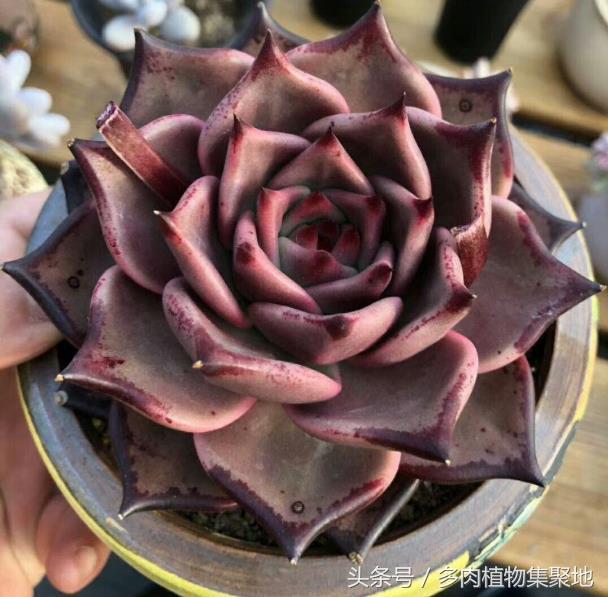
Many people like to keep some pretty plants on their desks, and because succulents have high ornamental value, there are a great many growers. Quite a few flower lovers enjoy growing succulents, and to make succulents grow better, many people buy professional nutrient soil. Can nutrient soil be used to grow succulents? Ordinary nutrient soil cannot be used directly for succulents, but if there is nutrient soil specially made for succulents, then it can be used directly.
Nutrient soil is a bed soil specially formulated to meet the growth and development of seedlings, containing a variety of mineral nutrients, loose and airy, with strong water and fertilizer retention capacity, and free of pests and diseases. Nutrient soil is generally made by mixing fertile field soil with decomposed manure, and it can provide a healthy growing environment for plant roots; it is clean, odorless, and free of pathogenic bacteria and weed seeds.
There are golden glittery flakes in succulent nutrient soil. What are they? They are vermiculite, a natural, non-toxic mineral that expands under high temperatures. It is a relatively rare mineral belonging to the silicates. Its crystal structure is monoclinic, and in appearance it looks like mica. Vermiculite is produced when certain granite becomes hydrated. It is generally produced together with asbestos. Because vermiculite has ion exchange capacity, it has a great effect on soil nutrients.
As the best ingredient for growing succulents, vermiculite can increase the survival rate of succulents. Never underestimate this tiny bit of vermiculite; although its hardness is not high and its appearance is not appealing, vermiculite is the best top dressing for plants. In succulent growing, vermiculite is called the sowing miracle. Here Sheng Yi Vermiculite Factory reminds everyone. Generally, using less than 5% vermiculite will not make the potting soil too wet in the early stage, and the vermiculite particle size chosen for growing succulents is best at 3-6mm.
Vermiculite itself has few nutrients, but it holds water fairly well. Some flower lovers like to mix vermiculite into the soil as a granular component, and flower lovers each have their own views on the pros and cons. Some flower lovers add too much vermiculite when mixing soil, so the medium contains a lot of water, holds water too well, and causes root rot. Sometimes many claims are not absolute. Flower lovers in some regions need better water retention, and at that time vermiculite is very suitable, but some regions do not need a medium with good water retention. If vermiculite is still used at that time, then it actually does more harm than good.
Turf soil, that is, peat, is a product of the swamp development process. Turf soil formed in the Quaternary period, from the remains of swamp plants that could not fully decompose and accumulated under water-rich anaerobic conditions. It contains a large amount of water and incompletely decomposed plant remains, humus, and a portion of minerals. It retains water and lets air through, with organic slow release. It is an excellent plant growing medium and soil improvement material. If during succulent care you find that a succulent has relatively fast metabolism and the bottom leaves keep being consumed, this indicates that the succulent lacks nutrients at this time, and we need to supplement nutrients for the succulent in time, especially succulents growing side shoots, which need a lot of nutrients. When fertilizing, pay attention to the concentration and do not make it too high.
This is a gathering place for succulent lovers, sharing succulent care tips. You are welcome to follow and exchange ideas.