Rose not growing for a long time: you missed this step when you bought it
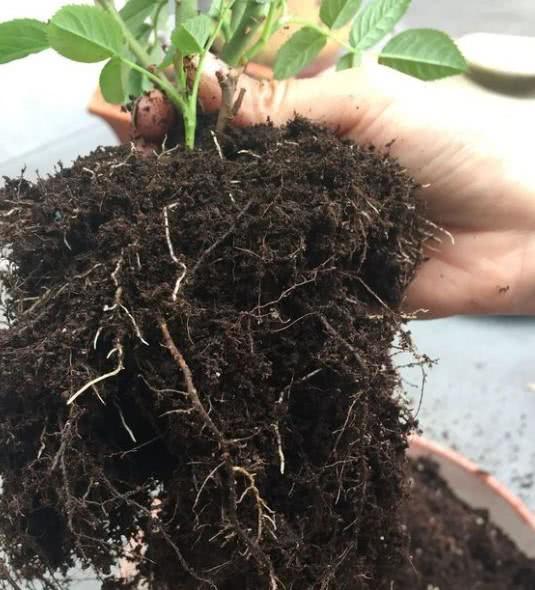
The rose I bought has been planted for several months, but it just won't grow. I applied fertilizer and watered it too. I really couldn't hold back anymore, so I dug it up to look. The roots had barely grown, and it was all black, with some rotten roots as well.
I asked my neighbor Aunt Wang, who has been growing roses for many years, and she gave me some advice on growing roses:
1. Shake off the soil, change the pot
When you buy a rose, don't skip changing the soil and repotting just because you find it troublesome. The soil used in rose seedling fields is definitely quite different from the rose nutrient soil we use at home. Some soil sits in piles for a long time without being used, and sometimes the greenhouses leak rain. That soil also has more bacteria and poorer air permeability.
So when you buy a rose, you must shake off half of the original soil, then replace it with soil that contains humus and has good air permeability. This ensures the rose roots can breathe smoothly. Once the roots grow well, the plant will naturally grow faster too.
2
Growing roses requires fertilizer, but you must know how to use it
Do not apply fertilizer that has not been fully fermented, or fertilizer containing hormones, and do not apply fertilizer that is too concentrated. Either the roots get burned, or they get suffocated, and they simply cannot absorb nutrients. How can they grow roots, how can they grow?
Huahua suggests that when fertilizing roses, it is best to apply diluted organic fertilizer, such as Huazengduo organic nutrient solution, diluted 500 times with water, applied about once a week. In winter and summer, dilute 1000 times and water once every 2 weeks. This ensures sufficient nutrition, slowly adjusts the plant's internal environment, makes it easy for the roots to absorb, helps the plant grow quickly, and produces more flower buds.
3
Pruning maintains plant shape and ensures blooming
The purpose of pruning roses is to make the plant shape more attractive, while also allowing light and ventilation, concentrating nutrients into the dominant branches, which helps produce more flower buds and bloom more beautiful flowers.
The pruning method is as follows
In winter, generally after November, prune the branches. Cut off all inward-growing, crossing and overlapping branches, dead branches, and diseased branches. At the same time, cut back the thick, sturdy branches so that nutrients are left for the thinner, weaker branches, making the rose's plant shape more perfect.
For pruning before spring blooming, leave 3 buds on each branch. When these buds grow to 3-4 cm, you can keep one flower bud. If the branch buds are relatively thick and sturdy, you can keep more than 2 buds. Many flower lovers may feel heartache cutting off so many buds, but only by concentrating nutrients can larger and more beautiful flowers bloom.
After one round of blooming is finished, immediately cut the flowering branch back to the point of 3-5 leaves from the base. Note that the cut should be about 1 cm from an outward-growing leaf bud. At the same time, also cut off diseased branches, dead branches, side branches, and inward-growing branches, so that nutrients are concentrated to promote strong new shoots. These new shoots are the main branches for the next round of blooming.