Rose won't grow big? Learn these 3 tricks to easily grow a giant one
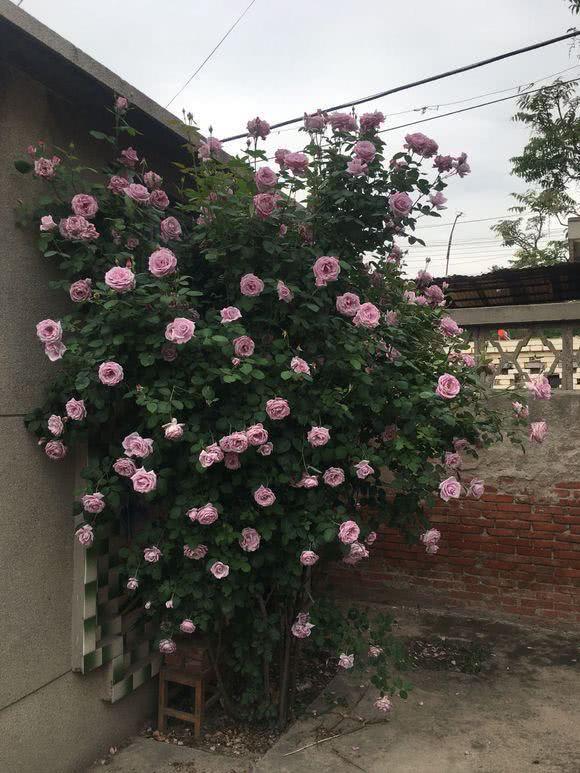
Many gardening friends complain to Huahua that the roses they grow are small, with just a few flower buds, and they don't bloom diligently. Today Huahua will share a few tricks on how to turn an ordinary rose into a giant rose.
Trick one: sufficient, balanced fertilizer.
If base fertilizer was applied in December, no additional fertilizer is needed in early spring. When the buds begin to sprout, sprinkle an appropriate amount of chemical fertilizer around the roots to encourage budding.
In summer, evaporation and consumption are both high, and growth is rapid. During the flowering period, apply a light fertilizer every 10 days. You can also soak soybean cake and poultry manure in water, ferment it in a sealed container, then dilute it with water and use it as a top dressing, so the plant produces abundant flowers and lush foliage and breaks out of its summer dormancy. For watering, use sun-warmed water to reduce the temperature difference between the potting soil and the water. Using water that is too cold will shock the roots and affect the plant's normal development.
For convenience and ease, it is still recommended to use ready-made organic fertilizer, which is rich and balanced in nitrogen, phosphorus and potassium, with various organic ingredients added to promote rose growth and flowering. It is also easy to use: just fill a mineral water bottle with water, drip in 1 milliliter, and you can water the potting soil with it.
Fertilizer should be applied frequently and promptly. Generally, newly planted or transplanted potted roses can be grown in humus-rich, loose loess soil. It is best to mix in 1/4 rice chaff ash or a small amount of broad bean shells, soybean cake, or chicken and pigeon manure, so the rose can continuously absorb nitrogen, phosphorus, potassium and other nutrients from the soil.
If an old potted rose needs repotting, base fertilizer can also be applied as described above. If not repotting, you can scrape open 2-3 cm of the soil surface and mound in some fresh fish guts or chicken and pigeon manure, soybean cake crumbs, etc. as base fertilizer. This is best done in January-February when the rose is dormant.
In this way, the fertilizer will gradually ferment into a liquid fertilizer and seep into the roots with rain or irrigation water, achieving good results. After May comes the peak growing season for roses. Every 10 days, apply a top dressing once. You can use fully fermented fish liquid or vegetable leaf liquid, mixed at a ratio of 3 parts fertilizer to 7 parts water. Stop fertilizing by November.
Trick two: watering should match the season
In spring, for potted plants, do not water until the soil is dry; when you do water, water thoroughly. For ground-planted roses, water thoroughly only once after they emerge from the soil, and ordinarily no watering is needed. If there is a drought, water once every 10-15 days. From late April, when the flower buds swell, to early May, the flowering period, do not let the soil dry out; the soil surface should never look dry.
In summer, the weather is hot and evaporation is high, so potted plants should be watered more, especially with a thorough watering in the evening. But during the plum rain season in the south and during prolonged rainy spells in the north, air humidity is high, so watering should be controlled. If the soil is constantly waterlogged and soggy, it is bad for root respiration and prone to rot. Therefore, ground-planted roses should be drained promptly. For potted plants in hot weather, in order to reduce evaporation and lower temperature, besides spraying the leaves with water several times a day, also spray the ground with water more often.
In autumn, the climate gradually cools and evaporation is not as high as in summer. Do not water potted plants too frequently; still follow the principle of not watering until the soil is dry, and watering thoroughly when you do. In late autumn, watering should be controlled.
In winter, both ground-planted and potted roses should be given one thorough watering before the ground freezes in November, to help them overwinter. After that, water about once every half month at noon to prevent the potting soil from becoming too dry and damaging the roots.
Trick three: pruning. Only when you can bear to cut will you reap big results
If you want your rose to bloom more, it needs to grow more branches, and this must be done without affecting the plant's ventilation and light penetration. It is not that the more lush the branches and leaves, the better. Beginners, come learn with me.
You can see in the picture above that the branches at the top of the rose have already been cut off, and at the red arrows we can also see that new small buds have grown out. These are the newly grown small branches. If you keep this leaf bud, it will make the rose grow more densely.