Thousand-year mouse droppings were once a lifesaving food for the poor, now 40 yuan per jin makes them a rare commodity
Whether in the countryside or in the city, there is a saying, "one mouse dropping spoils a whole pot of porridge," which is a metaphor for one person's problem dragging down an entire group. It can be said that when it comes to mouse droppings, whether they are farmer friends or city dwellers, everyone quite dislikes them.
However, in the countryside, there is such a magical wild grass whose root is called "thousand-year mouse droppings" by farmer friends. This is not ordinary mouse droppings, but thousand-year mouse droppings. By rights, farmer friends should dislike it, yet the fact is exactly the opposite. Farmer friends not only do not dislike these "thousand-year mouse droppings," but actually like them very much. Why is that?
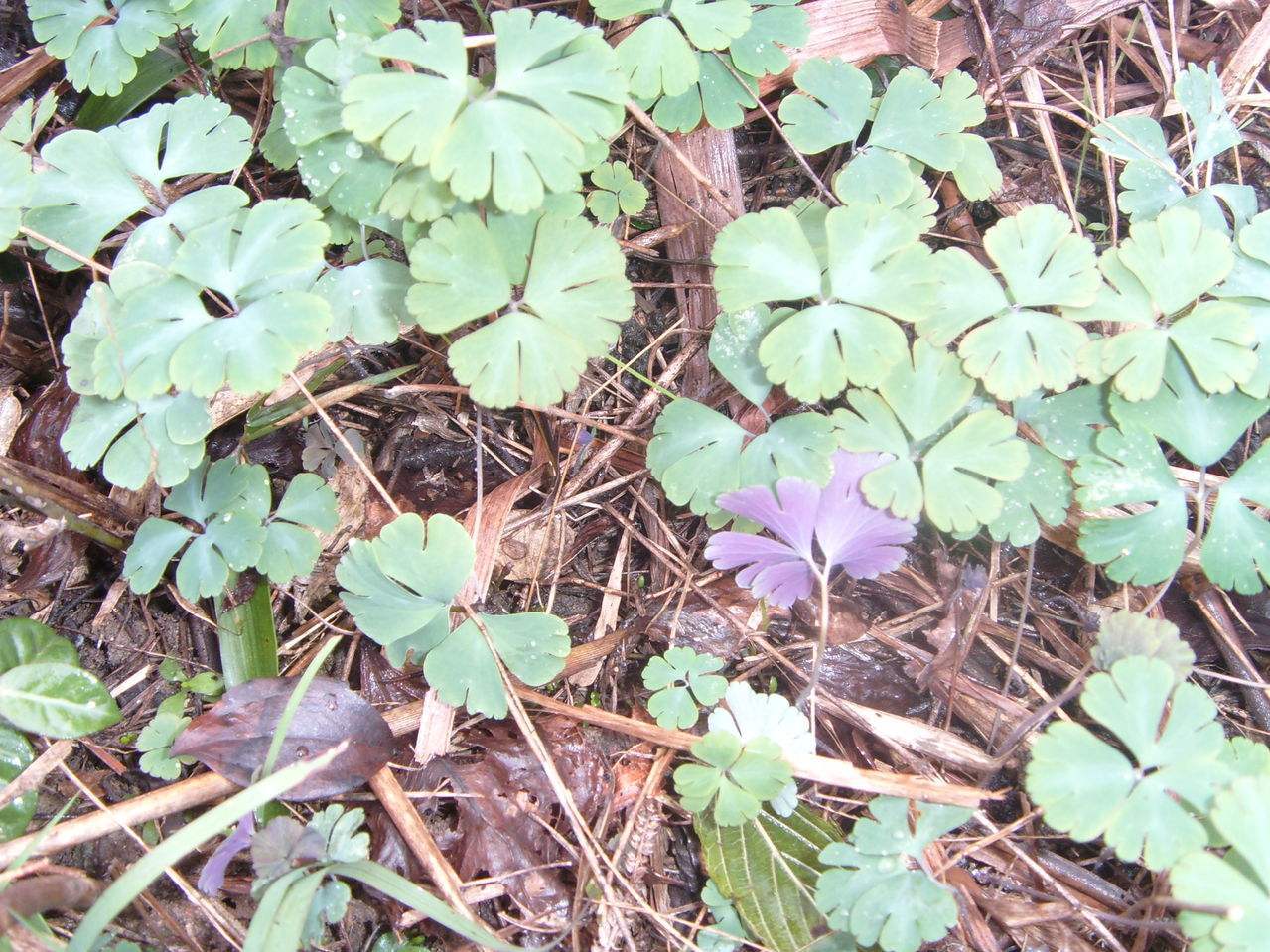
Every year after spring arrives, all kinds of wild grasses begin to grow in the rural wilderness, and in the rural wilderness there grows such a small wild grass. Its leaves are in three or 4 leaflets, looking like a four-leaf clover, and the underside of its leaves is purple. This wild grass is "Tiankui" (Semiaquilegia adoxoides). Tiankui is distributed in rural wilderness areas of China's Sichuan, Guizhou, Hubei, Hunan, northern Guangxi, Jiangxi, Fujian, Zhejiang and other places. Its main growing locations are in sparse forests, by roadsides, or in the shadier spots of valley land.
Speaking of Tiankui, one cannot help but mention its peculiar tuberous root. Its tuberous root is what farmer friends call "thousand-year mouse droppings," also called "Tiankuizi." Regarding this thing, I believe quite a few older farmer friends should remember it deeply. During famines in the past, many poor and impoverished people often could not afford to eat, so they could only dig up wild vegetables in the rural wilderness to eat, and Tiankuizi was one of them.
The author remembers that when I was little, my family's conditions were poor and we could not eat our fill, so I often went with my parents to dig up some wild vegetables in the wilderness to eat. At that time, every year during April and May, when Tiankui was ripe, we would go to the wilderness to dig up some Tiankuizi to eat raw, and we would also dig up thatch roots and some other wild grasses to eat. It can be said that Tiankuizi was once a lifesaving food for many poor people.
And Tiankuizi is not only edible, but also has very high medicinal value. According to the "Golden Mirror of Medical Ancestors," Tiankuizi can be used as medicine and has effects such as clearing heat and detoxifying, reducing swelling and relieving pain, and promoting urination. It can be used to treat more than a dozen symptoms including carbuncles and swelling, scrofula, boils, strangury and turbid urine, leukorrhea, cough due to lung deficiency, hernia, epilepsy, infantile convulsions, hemorrhoids, traumatic injuries, and venomous snake bites. Besides its root Tiankuizi being edible and medicinal, the whole plant of Tiankui can also be made into a homemade pesticide to kill pests, so farmer friends are extremely fond of this wild grass Tiankui.
It is precisely because Tiankuizi has so many uses that its price has now risen. It is understood that Tiankuizi now sells for 40 yuan per jin, and it has also become a rare commodity. Therefore, quite a few farmer friends have become rich by growing Tiankuizi.
The author reminds: Tiankuizi is actually slightly toxic. In the past, because family conditions were poor and people could not afford to eat, many impoverished people had no choice but to eat Tiankuizi. Now that living conditions are better and people can afford to eat, the author does not recommend everyone casually eat Tiankuizi, to avoid problems. In addition, if it is needed for medicinal use, it is best to consult a professional physician to avoid problems.
Dear friends, did you use Tiankuizi (thousand-year mouse droppings) when you were little? You are welcome to leave a message and share!