Illustrated guide to the single-branch crown technique in bonsai: the single-branch landscape styling art is worth collecting
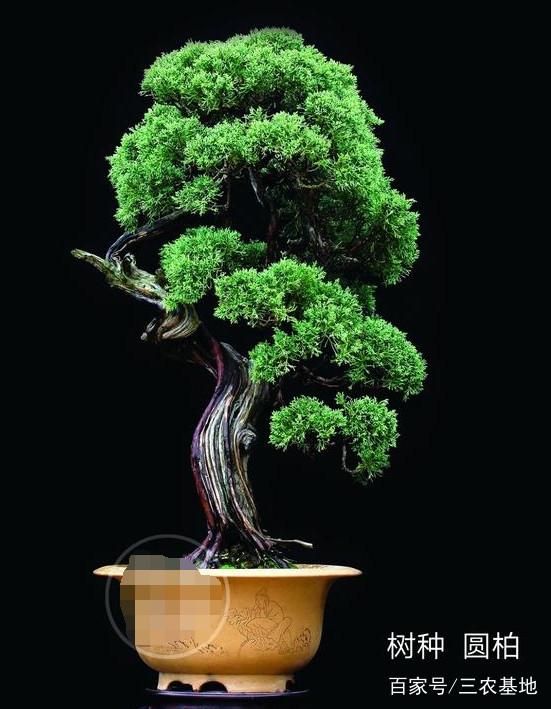
"Single-branch crown, single-branch landscape" is [a technique] from a teacher who has been engaged in bonsai creation for more than 40 years, based on the essence of the teaching method, with the deepest emotions and experiences as the foundation, greatly enriching the practice and practice of gambling creation. Artificial intelligence. Here, let us start from what "single-branch top and single branch" is.
Single-branch top: apply the apical dominance of the tree, and draw a branch on the skeleton at the top. When the side branch grows and lignifies, the left branch goes to the left, and the right branch goes to the right. The rear branch should point downward, then bend to the left or right, leaving the branch. The front fork also bends downward, then is adjusted to one side. After covering, control growth, increase the density of the branches, and do not increase height. The single-branch top technique is not compatible with ordinary trees, but it also works for small bonsai.
Single-branch landscape, that is, applying side branches and the single-branch top sealing technique on the branch road to suppress the side branches of the side branches, so that the side branches can also form a small bonsai. These small bonsai are either seaside or cliff-style. No matter what style they form, all the small bonsai are required to be compatible with the whole tree and form a whole.
The following specific operations:
Above: the stump is broken, leaving one bud, which is bent when it grows to 20 cm.
The skeleton should be made into two or two curved half-curves. It is necessary to vary the bends rather than a purely mechanical S shape, to show a sense of flatness.
Then bend the side branches, turning left, turning right, going backward, and turning left or right at the front. All the branches are made into two or two bends. The bending of the side branches should follow the curvature of the skeleton, seeking the same bend while varying.
Then some effort was cultivated, and this time, the excessive comparison had always been harmonious.
After repeated pruning, it will form "deer antler and chicken claw branches." One branch is completed with one branch.
It is full of leaves and one branch.
Teacher Wang Hengliang appreciates bonsai with the "single-branch top, single branch" technique.
Seventh World Bonsai New Year's Eve Award
Observe each stem carefully; it is a perfect miniature bonsai.
Each of them can be observed on its own.
Gold Award at the Third China Bonsai Exhibition
Each of them can be observed on its own.