Add more of this to your succulent soil mix for well-developed roots and vigorous growth
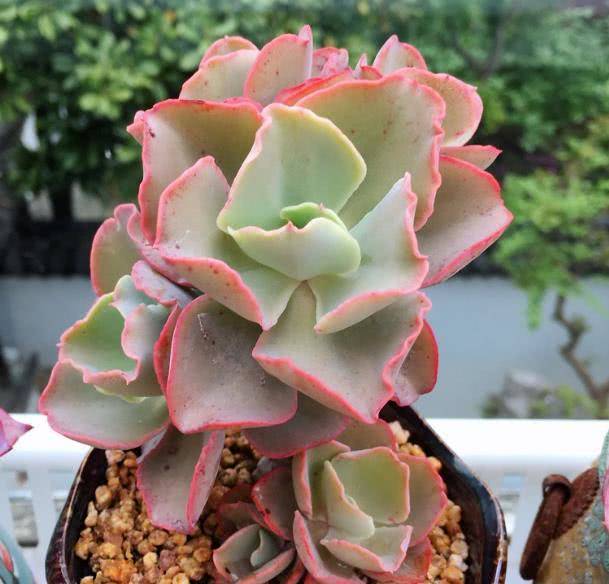
During succulent care, for succulents that need root development, you can add more grit to the substrate, ideally reaching 60 to 70 percent. With this kind of soil mix, water drains through faster, waterlogging is less likely, and root rot is less likely. Another advantage is that a high grit content means the substrate as a whole has larger air pockets, which benefits root extension and spread; soil mixes like this often produce very thick and well-developed roots. Once the roots and moisture control are handled well, the above-ground parts naturally grow strong and healthy.
Plants with a growing point and leaves can develop roots as long as the environment is suitable and there is enough time, gradually forming a complete root system. For beheaded plants without a growing point, it is best to keep the leaves, otherwise the roots will gradually shrivel. For beheaded plants with neither a growing point nor leaves, once new shoots have formed, be sure not to cut them off too early; keep 1 to 2 shoots as appropriate to support the life of the root base, so that more plantlets can be produced.
Roots are very important to plants, and succulent plants are no exception. When growing succulents, you need to pay attention to caring for their roots; this is very important. Basically, if a succulent's roots develop problems, the leaves will develop problems, and the whole plant can easily run into trouble too. Problems like yellowing leaves, soft leaves, turning to mush, and black rot emerge one after another, making them hard to guard against. In the end, all of these come back to problems with the roots.
How do succulent seedlings develop roots? This mainly refers to side shoots, leaf-cutting and root-cutting seedlings, and tissue-culture seedlings: side shoots root most easily, because they accumulate the largest amount of auxin from the mother plant and store abundant nutrients; leaf-cutting and root-cutting seedlings generally already have roots once separated, so they are not difficult to root either. If you are not quite confident, you can choose a commercially available rooting powder, dip the wound in it, and then pot it up; generally this can achieve a 100% survival rate. Before roots emerge, make sure conditions are dry to prevent rot. After roots emerge, make sure the air humidity is sufficient to prevent the newly emerged tender roots from drying out. Do not water frequently; instead, mist frequently. Moist air is more welcome to newly sprouting succulents than wet soil.
For young, weak seedlings, the watering principle is small amounts but frequent watering, keeping the soil at a certain level of moisture, and placing them somewhere with relatively stable environmental conditions. For mature seedlings, water thoroughly in one go; because their leaves themselves hold relatively abundant water, you can wait longer between waterings without affecting their growth. The hardest to root are tissue-culture seedlings in the hardening stage or not properly hardened; since many tissue-culture seedlings cannot be identified by appearance, if you are sure they are tissue-culture seedlings, especially ones that are not fully hardened, you must spray them with an auxin solution at the appropriate time during later cultivation for them to transition smoothly. But it is best not to buy unhardened tissue-culture seedlings; well-hardened tissue-culture seedlings do not have this problem.
Spring and autumn are the peak growing seasons for succulents. While providing plenty of water, apply light fertilizer frequently. Foliar spraying is one approach; you can also mix organic fertilizer into the substrate to enhance the substrate's fertility and promote rooting and strong seedlings. In summer, succulents go dormant, so you can give less fertilizer. Do not expect good roots all year round; what this section is about is a matter of mindset. Developing good roots is a process, and processes fluctuate. During the growing season you can see the plant's best condition, and the roots are naturally in their best condition too; during dormancy you often cannot see a very ideal condition, and the roots are mainly maintained, preventing rot from excess moisture and heat.
This is a gathering place for succulent lovers, sharing succulent care tips. You are welcome to follow and join the discussion.