Put these things at the bottom of a succulent pot and care becomes effortless, plus it easily fills out the pot
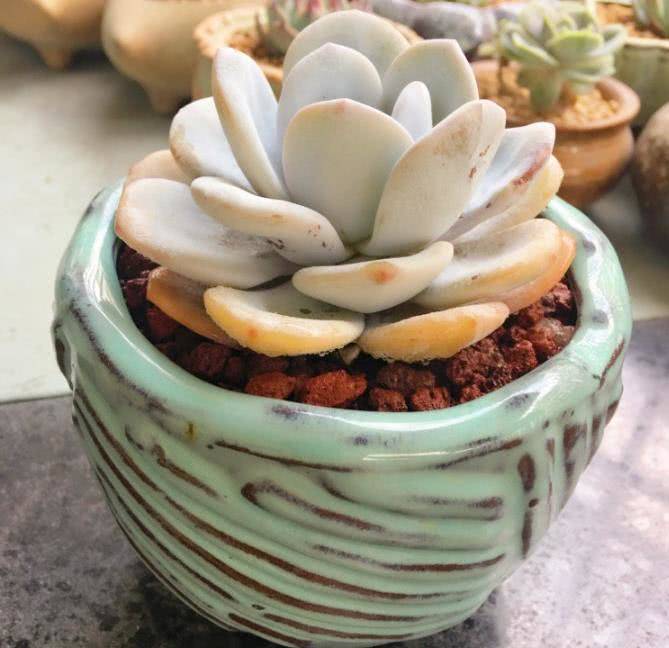
To ensure the soil has good drainage, you must put some large-particle material at the bottom of the pot, such as the widely used expanded clay pebbles, broken bricks and tiles, nut shells, and so on. In addition, whether you are repotting or have just bought a succulent, be sure to trim the roots as much as possible. This not only lets the succulent quickly grow new roots, but also reduces the potential risk that dead roots pose to the plant (rot). I will not go into the root-trimming process.
Every beginner who has just started growing succulents always wants to find the most perfect or ideal soil mix for succulents. In fact, there is no such thing as a most perfect soil mix, only the one that suits you best. As long as it is loose and breathable, drains well, has a certain crumb structure, and is sterile and free of pests, it will generally be suitable for succulent growth. Of course, different succulent varieties have slightly different requirements for the soil mix, but as long as you grasp the main principles, there generally will not be much of a problem.
With soil mixing you need to be particular, but not overly particular. General succulent soil mixes choose peat soil (coco coir), perlite, vermiculite and akadama (or kanuma, or river sand will do), and mixing them in a 4:2:1:3 ratio works fairly well. Some people like leaf propagation, not to breed and sell, but to enjoy the various surprises and anticipation that leaf propagation brings. You can try it too. Actually, leaf propagation is not hard; what it needs is patience.
About ten days or so after leaf propagation of succulents, you can basically clearly see the new shoots growing, while a few still have not come out, or have only shoots or only roots, but time can change everything, so wait patiently. When the small shoots from leaf propagation come out, you need to carefully observe the dryness and moisture of the vermiculite. If the vermiculite is completely dry, then you can start spraying water with a spray bottle, just water the soil below thoroughly~ Small seedlings from leaf propagation need more water than large plants, so more water will not be a problem, just water with confidence.
Mixing soil for succulents also requires skill. First you need to look at how developed your succulent's root system is. Although succulents like gritty soil, the ratio also needs attention. Generally follow the principle of "small particles for small seedlings, large particles for large plants," and also consider the succulent's growth habits. To ensure the soil has good drainage, you must put some large-particle material at the bottom of the pot, such as the widely used expanded clay pebbles, broken bricks and tiles, nut shells, and so on.
Whether you are repotting or have just bought a succulent, be sure to trim the roots as much as possible. This not only lets the succulent quickly grow new roots, but also reduces the potential risk that dead roots pose to the plant (rot). I will not go into the root-trimming process. Of course, you also need to choose according to the specific situation. If you see roots that are dried out or blackened, of course you will choose to cut them off, but if the roots are all healthy and good, succulent growers will not cut them and will just plant directly. As long as later care is proper, there will be no problem. Root trimming is not something that must be done.
This is a gathering place for succulent lovers, sharing succulent care tips. Welcome to follow and connect.