Camellia keeps dropping leaves? It turns out the problem is in the roots
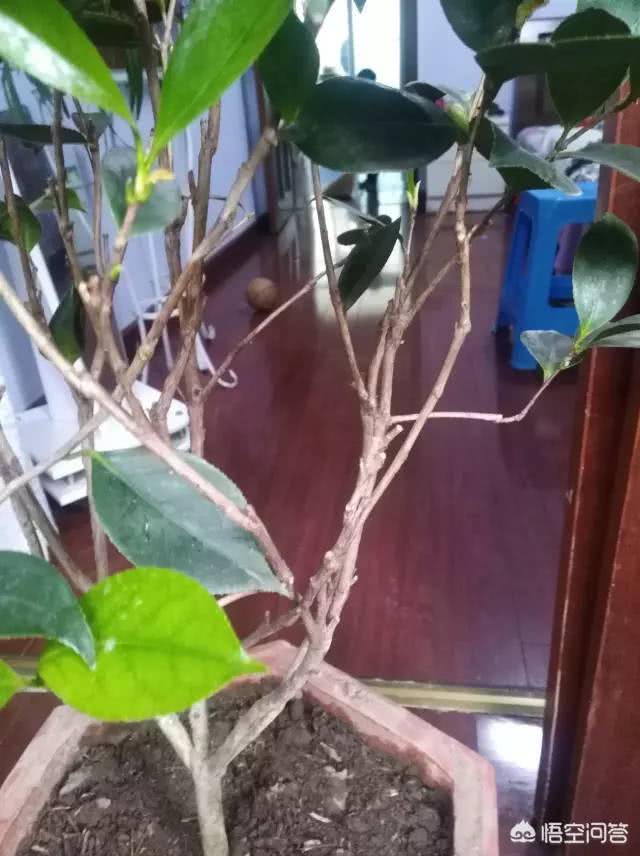
Camellias are very beautiful, but growing them is not an easy task, and various problems often arise, especially for camellias grown in the north, which are even more prone to disease. Leaf drop is a common poor-growth situation that often happens with camellias. A fellow gardening enthusiast provided photos of leaf drop on their own camellia, and we will take a look together. Today, using this enthusiast's question, let's talk about the problem of leaf drop in camellias.
1. The gardening enthusiast's camellia problem
From the pictures provided by the gardening enthusiast, it can be seen that the camellia's leaves have turned black and are falling off, and the whole camellia looks listless, with drooping, lusterless leaves. There are also very few leaves left on the plant, and the newly grown leaves are yellowing as well. Taking all these conditions together, it is very likely that the camellia has root rot. It is recommended that the gardening enthusiast quickly check the growth condition of the camellia's roots. Generally, a camellia with root rot needs timely root trimming and soil replacement, otherwise it is very likely to die.
It is recommended that the gardening enthusiast dig out the camellia's roots and check whether root rot has occurred. If root rot has occurred, the already rotted camellia roots need to be cut off. First, rinse the camellia's roots and cut off the rotted roots until normal woody roots are seen. Then mix new soil. It is best to first use plain soil, that is, soil with no fertility, so that the camellia with rotted roots can survive. Ordinary red sandy loam can be chosen, plus sand soil with good air permeability, and the two mixed together for use. Then choose a flower pot with relatively good air permeability and drainage, and the drainage holes at the bottom of the pot should be appropriately more numerous, which is beneficial to the growth of the camellia's roots. Then prune the camellia's branches a little, cutting off some branches and leaves that have already lost their vitality. Then pot the camellia, water it thoroughly, and move it to a cool environment to slowly recover its roots.
2. Other causes of camellia leaf drop
In addition to the reason mentioned above, where the gardening enthusiast's camellia suffered root rot due to a stuffy pot, causing leaf drop, there are also other reasons that can cause leaf drop in camellias. Below, let's share some reasons for camellia leaf drop.
Anthracnose. Camellias often suffer from anthracnose, which is caused by fungal infection. It generally begins to develop in April, and enters its peak period in June and July. A camellia with anthracnose will develop black spots, and the black spots may even spread across half a leaf, causing the leaves to fall off. Once diseased leaves are found, they should be cut off promptly and burned to prevent the fungus from spreading. In addition, it is best to spray some 50% thiophanate-methyl wettable powder 800-1000 times dilution to promptly control the condition. Usually, pay attention to keeping the moisture in the pot appropriate to enhance the camellia's disease resistance.
Sudden environmental change. Camellias have poor adaptability to the environment. If a camellia is suddenly moved from indoors to outdoors, it will drop a large number of leaves because it cannot adapt to the environment. At this time, the camellia needs to be promptly moved back indoors, slowly allowed to adapt to the environment, and fertilizing and watering should be stopped.
In addition, a camellia that has just been repotted will also drop leaves, but this is a normal situation, because the camellia has just been moved into a new pot and its roots have not yet grown well. To reduce its own consumption and let the roots grow better, the camellia will adopt the method of dropping leaves to reduce consumption.