13 Beautiful Flowers You Should Never Keep at Home - Check If You Have Any of Them
Gardeners usually like to buy some flowers to decorate their rooms. Not only can they make the room more colorful, but they also lift your mood. However, some flowers and plants are not suitable for keeping in the home, especially in households with children, pets or pregnant women. Children and pets are very curious, and eating or touching them by mistake is not good. Let's take a look!
“
Keeping Flowers at Home
”
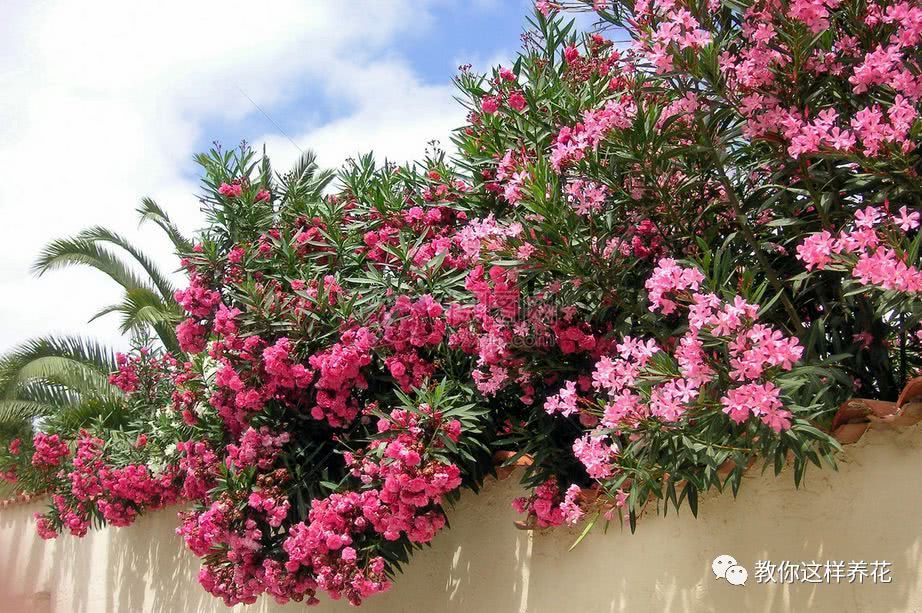
Oleander
Oleander leaves resemble willow or bamboo, with brilliant red flowers that outshine peach blossoms. The flowers are fragrant, and the blooming period is from June to October. It is a well-known ornamental flower, especially beautiful when planted in large stretches. During the blooming season, seas of white and pink flowers stretch out, a breathtaking sight. Note that the stems, leaves and even flowers of oleander are toxic. It secretes a milky white sap containing a substance called oleandrin, and ingesting it by mistake can cause poisoning. Households with children and pets should be careful!
In general, it is actually quite good as a landscaping tree in courtyards and along roadsides, but never touch it, and especially do not get the tree's sap on you!
If you have oleander at home, it is not recommended. Hurry up and move it out to the yard!
Summary: Not suitable for keeping at home
Yellow Azalea
Azaleas have lush foliage, are gorgeously varied, sprout vigorously, tolerate pruning well, and have uniquely shaped root bases. When azaleas bloom in season, they always give people a lively and bustling feeling. Does hearing that azaleas cannot be kept give you a fright? Actually, not all azaleas are toxic. Some varieties are toxic, some are not, but for safety's sake, never eat azaleas.
The plants and flowers of yellow azaleas contain toxins, and eating them by mistake can cause poisoning. The flowers of white azaleas contain tetracyclic diterpenoid toxins. After poisoning, people may experience vomiting, difficulty breathing, numbness in the limbs, and in severe cases shock, seriously harming human health.
Toxic variety - Chinese Azalea (Rhododendron molle)
Toxic variety - Large White Azalea
Summary: Not suitable for keeping toxic varieties, especially yellow and white azaleas
Tulip
Tulip flowers contain toxic alkaloids. If people and animals stay among these flowers for 2 to 3 hours, they will feel dizzy and lightheaded, so they are generally not placed in bedrooms. But placing them in a ventilated spot on the balcony is fine.
Summary: Not suitable for the bedroom, be careful not to eat them by mistake
Night-blooming Cereus (Cestrum nocturnum)
Night-blooming cereus releases a rich fragrance at night. This fragrance is a fairly strong secondary stimulus to human smell, making people with high blood pressure and heart disease prone to dizziness and discomfort. Night-blooming cereus is not suitable for placement in the bedroom, and those who are sensitive to fragrances should not keep it either.
Summary: Not suitable for the bedroom, allergic people should be careful
Narcissus
Narcissus is beautiful and elegant, but its bulb (bulb) contains lycorine, a toxic substance. The flowers, branches and leaves of narcissus are all toxic. After poisoning, vomiting and abdominal pain will occur. The overpowering fragrance of narcissus can also cause discomfort to the nervous system. Over time, especially when inhaling its fragrance during sleep, people will feel dizzy. Some gardeners think narcissus looks nice and place it by the bedside. Move it out to the balcony right away! Also, those with children and pets should be careful not to let them eat it by mistake.
Summary: Not suitable for the bedroom, children and pets should be kept from eating it by mistake
Mimosa
The mimosine in mimosa is a highly toxic organic compound. Too much contact can easily cause sparse eyebrows and yellowing hair, and in severe cases hair loss. So it is generally not kept indoors either. If you have a mimosa, just throw it out!
Summary: Not suitable for keeping at home
Poinsettia
Poinsettia has vivid colors and a long blooming period, blooming right around Christmas, New Year's Day and Spring Festival. Keeping a pot is very festive, but it is best used in public places such as meeting room decorations. This is because the whole poinsettia plant is toxic, especially the white sap in the stems and leaves, which irritates the skin and causes redness and swelling and allergic reactions. If the stems and leaves are eaten by mistake, there is a risk of poisoning and death.
Summary: Not suitable for the bedroom, children and pets should be kept from eating it by mistake
Lantana
Lantana can be seen blooming almost all year round, so it can be called an ever-blooming plant. A single cluster of flower heads often shows multiple color changes, so it is also known as five-color plum. Its flowers and leaves are both toxic, and eating them by mistake can cause symptoms such as diarrhea and fever. But its seeds and leaves can be used to make biological insecticides.
Summary: Not suitable for keeping at home
Dragon Bone (Euphorbia lactea)
Dragon Bone is a succulent of the genus Euphorbia in the family Euphorbiaceae, also known as Ba Wang Bian or Liang Tian Chi. Its stems are narrow and long, three-ridged and jointed, shaped like a knotted whip, incomparably graceful and full of dominance, as if it has the momentum of "a horned dragon leaping high, wanting to measure the sky," hence the fine names Ba Wang Bian and Liang Tian Chi.
However, as long as it is a plant in the Euphorbiaceae family, you need to be careful. The vast majority are toxic, and the toxicity is not low. The white milky sap in the stems of Dragon Bone is toxic, and especially must not get into the eyes, so take special care to prevent children and the elderly from being pricked and poisoned.
Summary: Children and pets should be kept from touching it
Datura
Datura is gorgeous and enchanting, giving a sense of noble splendor and special taste. Huahua has seen some gardeners planting it in their yards, though they may not know what flower it is. The whole datura plant is toxic, with the fruit and especially the seeds being the most toxic, followed by the young leaves. Guard against children and passersby eating it by mistake or smelling its fragrance up close, to avoid poisoning.
Summary: Not suitable for keeping at home
Winter Cherry (Solanum pseudocapsicum)
The whole winter cherry plant is toxic, and the leaves are more toxic than the fruit. Symptoms of poisoning include dizziness, nausea, drowsiness, severe abdominal pain and dilated pupils. So never eat it! Households with children had best not keep it, as seeing the little berries, they may not be able to resist eating them.
Summary: Children and pets should be kept from eating it by mistake
Nandina
Nandina is toxic, and the toxicity is in the whole plant, so it cannot be eaten. Nandina is an ornamental fruit plant. In autumn, the fruits it produces are bright red and tempting, and are easily eaten by mistake by young children, so be careful.
Summary: Children and pets should be kept from eating it by mistake
Alocasia (Alocasia macrorrhizos)
The white sap in the rhizome of Alocasia is toxic. Touching or eating the sap by mistake will cause discomfort in the throat and mouth, and in severe cases suffocation, leading to cardiac paralysis and death. Some people's skin will itch or be strongly irritated when it comes into contact with the sap, and contact of the sap with the eyes can cause severe conjunctivitis, or even blindness.
Summary: Children and pets should be kept from touching it
Coral Cactus (Euphorbia neriifolia)
Coral Cactus is also a Euphorbiaceae plant. Its stem sap contains diterpenoids, toxic proteins, alkaloids and other toxic substances. Diterpenoids are the main source of irritation, and ricin, one of the most toxic substances in the world, is a type of toxic protein. The white sap will cause allergic symptoms such as redness, swelling and itching on the skin. If there are children at home, it is best not to keep it.
In addition, Jade Plant and Crown of Thorns are also in the Euphorbiaceae family! Never let children play with them. Their sap is toxic, and being pricked by their thorns will also cause redness or even swelling.
Summary: Children and pets should be kept from touching it
Actually, for most flowers, simply enjoying them is no problem at all
There is no need to be overly nervous
It is just that households with pregnant women and children, and some sensitive groups, need to be more careful!
Many gardeners still don't know!
Show it to gardeners who need it!