What are the cultivation methods and precautions for sago palm (Cycas revoluta)?
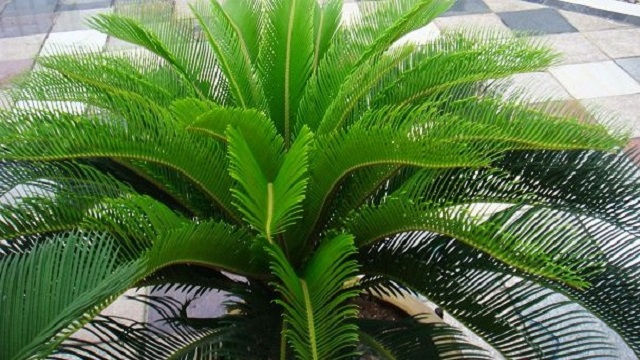
1. Soil
Specific requirements: first, good drainage, as sago palm dislikes wet conditions. Second, loose and nutrient-rich. Third, the plant itself prefers slightly acidic sandy soil.
2. Light
Sago palm is especially fond of light, so it should be placed in a spot with ample light in every season. If it lacks light, its leaves will become sparse and lose their green color, and the whole plant will be very weak. This is especially true in spring and autumn, which are exactly the times when it grows new leaves, so light must be ensured.
3. Temperature
It likes warmth. However, it should not be too hot, so in summer it needs to be cooled by spraying water. It also should not be too cold; in winter it can only survive safely above ten degrees.
4. Water
Overall, it likes dry conditions and fears waterlogging, so water it after observing that the soil has dried out. The watering frequency differs by season. In spring and autumn, generally once every three to five days; in the high temperatures of summer, water more often, once each in the morning and evening; in winter, the least, about once every ten days. The general principle is "water when dry, stop when wet," and do not let water accumulate.
5. Fertilizer
Mainly nitrogen fertilizer and potassium fertilizer, such as decomposed cake fertilizer water. However, the fertilizer should not be too concentrated. In addition, to encourage the leaf color to become deep green, ferrous sulfate can be added to the fertilizer.
6. Precautions
Pruning requires attention. At regular intervals, old leaves and leaves that have already turned yellow can be cut off. For leaves that are too dense, decide according to the situation whether to cut them off as well.