9 flowers grown into lollipops with just 3 little tricks, and the neighbors will all be jealous
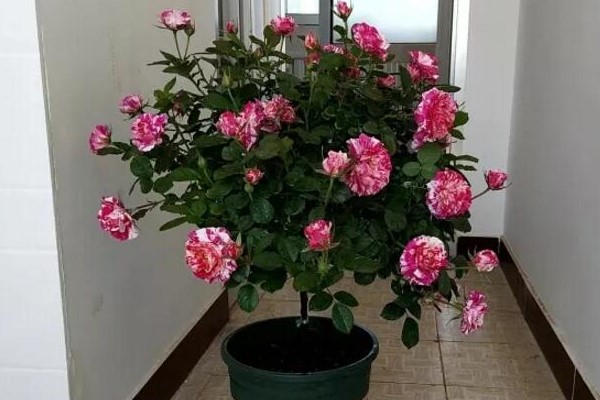
Bougainvillea
Lollipop growing steps:
1. Prune branches and remove leaves
Choose a bougainvillea with a relatively thick trunk, cut off the extra branches, and keep only the trunk.
2. Insert a support pole
To prevent the bougainvillea from falling over, insert a pole into the pot and tie the bougainvillea to the pole. Before it grows to a suitable height, keep removing the leaves that grow from the trunk.
3. Pinch the top to encourage branching
When the stem grows to the height you are satisfied with, pinch the top. Remove the terminal bud to encourage branch growth. The flower buds that appear should also be removed in time. For the sake of a perfect final shape, don't be reluctant to do it~
4. Don't stop pruning
You must constantly prune the branches and leaves of the bougainvillea so that the bougainvillea will look good after blooming.
Anisodontea (false mallow)
1. Strip all the leaves
Choose a semi-lignified anisodontea seedling, remove the leaves on the stem, and keep only 3-4 leaves at the top.
2. Insert a support pole
When the seedling grows to about 20 cm, insert a straight wooden pole into the flowerpot and tie the anisodontea to the wooden pole. During this period, keep removing the newly grown side buds.
3. Pinch the top and keep side branches
When the trunk grows to a suitable height, start pinching the top and keeping side branches. At the same time, continuously prune side branches that grow too long, and trim the anisodontea into a round shape.
4. Keep pruning and wait for it to bloom
Before the anisodontea grows flower buds, keep pruning and shaping the branches and leaves.
Plumbago (blue snow)
1. Prune the plant
Choose a plumbago with a thick trunk, cut off all the extra branches, remove the leaves on the trunk, and keep only a portion at the top.
2. Insert a support pole and make a flower support
Because plumbago branches are relatively slender and cannot support themselves, insert a straight thin pole into the flowerpot and tie the plumbago to the thin pole to prevent it from falling over.
3. Make a flower support
Unlike other flowers, plumbago has relatively thin branches, so it needs a flower support to form a flower ball. Use wire to bind it into a sphere, and let the plumbago grow around the flower support.
4. Remove new leaves until it takes shape
The plumbago lollipop is relatively simple to shape; you only need to keep removing the leaves on the branches below the flower support.
Rose lollipop
1. Girdling
Choose a straight, thick rose branch and carry out girdling.
2. Rooting
Put a clean disposable plastic cup over the girdled stem, fill it with soil, water it thoroughly, wrap it with plastic wrap, and wait for roots to form.
3. Pot it after rooting
Cut off the rose stem after it has rooted, bury it in a flowerpot with a larger diameter, and begin growing a rose lollipop.
4. Prune and shape
After potting, begin pruning, remove the terminal buds, and cut the branches into a round shape.
Actually, many flowers can be made into lollipop shapes, and the shaping methods are basically the ones Huahua listed. Next, continue enjoying the "lollipops" grown by the masters together with Huahua!
Fuchsia
Star jasmine
Marguerite daisy
Rosemary
Camellia
Do you flower lovers like this kind of "lollipop"?
Do you also have flowers shaped like this at home?
Welcome to leave a message for Huahua in the comments section~