How to care for a peace lily? Growing methods and precautions
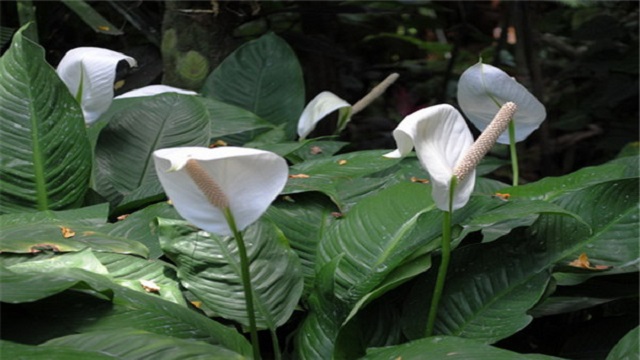
I. Growing environment
1. Flower pot: You can use either a clay or ceramic pot for growing a peace lily, and the size of the pot can be determined by the size of the plant; anything with a diameter within 18-34 cm will do.
2. Soil: To grow a peace lily well, use soft, breathable, nutrient-rich soil rich in humus. Specifically, you can mix it in the ratio of garden soil: leaf mold: fine sand = 4:3:2.
3. Temperature: Normally maintain a temperature of around 20°C; in summer it must not exceed 24°C, and in winter it must not fall below 10°C.
4. Light: The peace lily is shade-tolerant but not tolerant of strong light. If grown outdoors, shade it in summer; if grown indoors, place it in summer somewhere the sun cannot shine directly.
5. Water. The peace lily likes moisture and cannot tolerate dryness, so the soil must always be kept moist and must not be allowed to dry out completely. When watering, it is best to water from the top down.
II. Propagation methods
1. Sowing propagation: Wait until October, when the peace lily's seeds are fully ripe and can be collected; the collected seeds should be sown as soon as they are collected. First prepare a flower pot and an appropriate amount of potting soil, then sow the seeds, cover them with a layer of soil, and finally water thoroughly, then place it in a spot at 25°C with high humidity and semi-shade for care.
2. Division propagation: After autumn, cut off the small shoots at the base of the peace lily and plant them in another flower pot. Likewise give them a moist and semi-shaded environment, and before long they will sprout.
III. Common pests and diseases
1. Leaf spot disease. If spots start to appear on the peace lily's leaves, it has most likely contracted this disease. Once discovered, promptly remove and destroy the diseased leaves, and spray with chlorothalonil or mancozeb.
2. Scale insects. If the peace lily has only a small number of scale insects, you can brush them off with a brush, then remove the diseased leaves and disinfect with pesticide; if the number of pests is large, spray pesticide directly to kill them.