One Hundred Thousand Whys of the Plant Kingdom: Reading Them Will Make Everything Clear
The plant world is an inseparable part of the many ecosystems on Earth that we depend on for survival. Within the vast and profound green world lie many little-known mysteries. Let's take a look below!
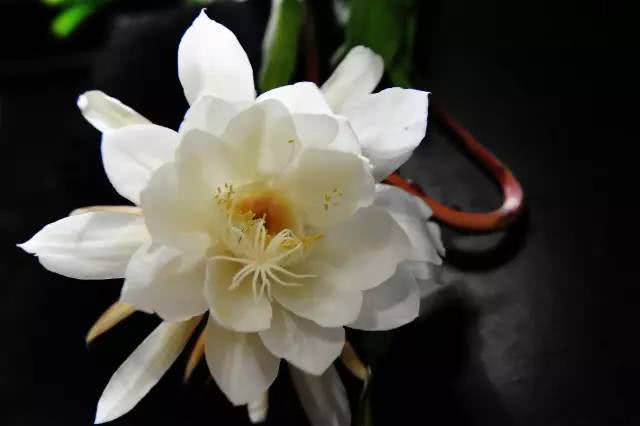
Why does the epiphyllum wither after blooming for only a short while?
The epiphyllum is a cactus-family plant native to the hot, dry regions of Mexico, where it developed a drought-tolerant habit. The epiphyllum blooms at night to avoid the scorching tropical sun, and its short blooming time also serves to reduce water evaporation. That is why the epiphyllum fades as soon as it appears. This is in fact also a long-term adaptation of the epiphyllum to its living environment.
Can wisteria vines strangle a tree to death?
Yes. Because wisteria vines grow especially fast, once they climb and twine around a tree, they will tightly wrap around the trunk in no time. As the trunk grows thicker, the vines wrap tighter and tighter, and the trunk's pathway for transporting nutrients becomes blocked. The dense leaves of the vines also block light and affect the tree's growth, and gradually the tree will die.
Why are the leaves of the plantain arranged in a spiral?
The plantain grows short, almost flat against the ground, and is easily shaded from sunlight by taller plants. But the plantain has a clever way of competing for sunlight. Its leaves are arranged in a spiral.
Why should you dip pineapple in salt water before eating it?
Because the flesh of pineapple is rich in sugars, vitamin C, citric acid, malic acid and other organic acids, but when you eat it raw without dipping it in salt water, you will feel a stinging sensation in your mouth, which is caused by the pineapple acid. Since this acid can break down proteins, it produces a stinging effect on the oral mucosa. After the pineapple is dipped in salt water, the action of the pineapple acid can be inhibited, making the pineapple taste sweeter and more fragrant.
Will eating rotten food cause poisoning?
Not necessarily, because the "bacteria" that cause food poisoning and the "bacteria" that make food rot are two different kinds of "bacteria." Eating rotten things will not necessarily cause food poisoning; only when the rotten food contains "food-poisoning bacteria" will it cause food poisoning.
Why is pond water green?
If you observe carefully, you will find that the pond water hides many oddly shaped algae covered in green and shiny surfaces, and it is precisely they that dye the pond water green.
Why do spring radishes become spongy?
When radishes are sown in autumn, the root tuber must store a large amount of nutrients, so that in the following spring the nutrients can be used for bolting and flowering. The sugar in the root tuber is then heavily consumed, and at this time cellulose increases rapidly, making the radish dry and tasteless. That is why spring radishes become spongy.
Why does the sunflower turn toward the sun?
The tropic movements of plants can be divided into phototropism, geotropism and thigmotropism. The sun-facing behavior of the sunflower is a typical phototropic movement. Under sunlight, the content of auxin on the shaded side of the sunflower increases, stimulating the cells on the shaded side to elongate, thereby slowly turning toward the sun. After the sun sets, the auxin is redistributed, causing the sunflower to slowly turn back to its starting position, that is, the east. However, once the flower head is fully open, it no longer turns toward the sun but faces fixedly east.
Why are the Huangshan pines all so bizarre and varied?
Anyone who has visited Huangshan will be deeply impressed by the "Guest-Greeting Pine" there. The bizarre and varied shapes of Huangshan pines are caused by the environment there. In mountainous areas, mountain winds howl day and night, blowing steadily downward from the mountaintop, and the pines on the mountain have to change their tree shape in order to survive; some become flag-shaped, and some grow into umbrella shapes. Huangshan is mostly bare rock, and even where there is soil it is very thin and poor. In places where water and nutrients are extremely scarce, Huangshan pines have to grow their root systems in twisted, tangled masses, dense as spider webs, to intercept the rainwater that tries to slip away; and the trunks grow shorter and smaller, the leaves become narrower and shorter, and a thick layer of wax is added to the leaf surface, which can reduce water evaporation. After countless years of struggle, the Huangshan pines survived in the harsh environment, but left the traces of time on their tree shapes.
Why can fruit sober you up?
Drinking too much often leads to drunkenness, and drunkenness usually has warning signs: increasing talkativeness, a clumsy tongue, hot and numb cheeks, dizziness and unsteady standing... all are signs of drunkenness, and at this point one needs to sober up. Eating some sour fruit or drinking 1--2 liang of clean vinegar can help sober you up. This is because fruit contains organic acids, for example, apples contain malic acid, citrus contains citric acid, grapes contain tartaric acid, and so on, while the main component of alcohol is ethanol; organic acids can interact with ethanol to form ester substances, thereby achieving the purpose of sobering up.
Why can't tofu and spinach be cooked together?
Spinach is nutritious and is known as the "king of vegetables," but spinach contains a lot of oxalic acid, with about 300 mg of oxalic acid per 100 grams of spinach. Tofu contains a relatively large amount of calcium. If the two enter the human body at the same time, a chemical change can occur in the body, producing insoluble calcium oxalate. Stones in the human body are precisely formed by the deposition of insoluble calcium salts such as calcium oxalate and calcium carbonate, so it is best not to stew spinach and tofu together.
Why is it best to eat tofu with some kelp?
Tofu and other soybean products are indeed nutritious and inexpensive, and are good foods for supplementing high-quality protein, lecithin, linoleic acid, vitamin B1, vitamin E, calcium and iron. Tofu also contains a variety of saponins, which can prevent the production of lipid peroxides, inhibit fat absorption, and promote fat decomposition. But saponins can also promote the excretion of iodine, easily causing iodine deficiency. Therefore, people who often eat tofu should appropriately increase their iodine intake; generally speaking, as long as they keep eating iodized salt, that is enough. Kelp is rich in iodine, so eating tofu together with kelp is very reasonable.
Why does the scallion have white and green parts?
Any plant that grows in a place without light will not be green in color. When planting scallions, cover more soil around the growing leaves; the part buried in the soil cannot receive light, so it becomes the white part of the scallion. The leaves above the soil can see sunlight, so they are green. That is why the scallion has white and green parts.
Why do flowers have fragrance?
Because the flowers contain oil cells that continuously secrete aromatic oils. Aromatic oils evaporate easily, especially during the day, when the flowers are warmed by the sun and give off fragrance.
Why do flowers have all kinds of colors?
Most flowers' colors vary among red, purple and blue. This is because there is a "chameleon" in the petals: anthocyanin. Anthocyanin can change into different colors according to differences in soil pH and changes in the temperature of the surrounding environment. Some flowers' colors can vary among yellow, orange and red, because the anthocyanin in the flower cells is at work.
In "red beans grow in the south," which plant is the red bean?
Southerners customarily call the rosary pea, the acacia tree and the sea red bean all "red bean." The red bean in the poem is a symbol of love among the people. Among them, the rosary pea, when young men and women are in love, is often exchanged as a token, expressing unswerving fidelity, and it fits the poetic meaning very well, so the rosary pea is the red bean in the poet's writing.
How did the name "stone plant" come about?
There is a plant that looks just like a flower blooming on a stone. It is a plant of the Aizoaceae family, and because its color, shape and markings all resemble small pebbles, it is named "stone plant."
Why can people suffocate to death in a cabbage cellar?
Because cabbage, like people, also breathes, and it takes in oxygen and exhales carbon dioxide. When it is put into the vegetable cellar, it will still breathe. After a long time, and because the cellar is not often ventilated, the inside becomes filled with carbon dioxide. Since carbon dioxide can suffocate people, a person who goes into the cabbage cellar will suffocate to death.
Why does Welwitschia not shed its leaves for a hundred years?
The leaves of Welwitschia, which grows on the coast of Angola, are truly evergreen and do not fall, and can live for over a hundred years. Welwitschia's root system is especially well developed, often deep in the ground, absorbing large amounts of water and sending it to the leaves; at night, the dew formed by sea fog can also keep the leaf surface moist. Therefore, Welwitschia's leaves do not lack water all year round and can maintain vigorous vitality.
Why is corn sweet?
The reason corn is sweet is that there is a recessive gene on the chromosomes of the corn endosperm. The recessive gene can hinder the conversion of sucrose in the kernels into starch, reducing starch and increasing sugar content. In this way, the corn becomes very sweet.
Why do fruit trees sometimes bloom twice in one year?
Most fruit trees bloom in spring and their fruit ripens in summer and autumn. But some fruit trees will also bloom once in autumn. This is caused by abnormal climate or pests and diseases. More rain and high temperatures in autumn will awaken flower buds that are already dormant and make them bloom early. When pests occur in the orchard in autumn and a large number of leaves fall, this will also wake up the already sleeping flower buds.
Why do bamboo plants die after flowering?
Bamboo flowers because it has exhausted the nutrients in the soil, indicating that its life is about to end. After flowering, most varieties of bamboo will die. Therefore, bamboo flowering is a swan song of life; bamboo hopes to bear its own fruit in the final moment of life and create another green bamboo forest.
Why is the dove tree famous at home and abroad?
The dove tree is also called the handkerchief tree, and it is a famous "living fossil" in the plant kingdom. A million years ago, its traces were all over the world. Later, the Earth's climate turned cold and ice and snow covered the land, and the handkerchief trees were almost all frozen to death. After the handkerchief tree was discovered, countries around the world introduced and planted it one after another, and now handkerchief trees are found throughout European countries.
How does eelgrass pollinate?
The male plants of eelgrass send out spike-like inflorescences in the water, and many bracts grow on the outside of the inflorescences. When the male flowers mature, the bracts automatically detach from the floral axis, float out of the water surface, and drift with the water. At this time, the flower stalk of the female plant rapidly elongates, sending the female flower out of the water to open. The female flower and male flower meet on the water surface, and as soon as the stigma touches the stamens, pollination occurs. Then the female flower closes, the flower stalk curls, and it retracts into the water to nurture the fruit.
Why is it rare for the sago palm to bloom?
The sago palm, also called cycad, once grew everywhere on Earth during the age when dinosaurs roamed. Later, the Earth's climate turned cold, and cycads survived only in tropical regions. Most of China lies in the temperate zone, and the cycads transplanted as ornamental plants grow short and small. Because of the low temperature, they often do not bloom for many years, and when a sago palm occasionally blooms, people find it rare.
Why can the snow lotus bloom on snow- and ice-covered high mountains?
If the seeds are not well selected, the harvest will be poor or there will even be no harvest. Therefore, when selecting seeds, farmers always choose those that are large and plump.
Why can thousand-year-old lotus seeds still bloom?
Ancient lotus seeds have a hard outer shell that can completely prevent water and air from seeping in or leaking out; inside the ancient lotus seed there is a small air hole storing oxygen, carbon dioxide and nitrogen; the ancient lotus seed also contains a small amount of water and rich nutrients. These characteristics of the ancient lotus seed itself give it extremely strong vitality.
Why are angiosperms more advanced than gymnosperms?
Angiosperms and gymnosperms are both seed plants. The ovules and seeds of gymnosperms are all exposed; there is no ovary outside the ovule, and no fruit peel wrapping the seed. Angiosperms have true flowers; after fertilization, the ovule develops and grows inside the ovary, and the seed is wrapped in the fruit peel. Therefore, angiosperms can receive better protection during reproduction and have a stronger ability to adapt to the environment. That is why angiosperms are more advanced than gymnosperms.
How large can fruit grow?
After fruit ripens, it is many times larger than the ovary. The largest fruit comes from artificially cultivated plants; a pumpkin grown by a family in Indiana, USA, weighed 233 kg.
Why do fleshy fruits become brightly colored, sweet and juicy after ripening?
When fleshy fruits are about to ripen, many complex changes occur. Green fruits become yellow-orange and bright red; hard, sour and astringent flesh becomes fragrant, sweet, tender and juicy.
Why do fruits fall off after ripening?
After fruits ripen, if they are not picked in time, most will fall off on their own. This is not because the fruit stalk is too thin to bear the weight of the fruit, but because the fruit must fall to the ground in order to sprout, take root, and grow into a new fruit tree. In order to reproduce offspring, when the fruit ripens, the cells on the fruit stalk begin to age, forming a so-called "abscission layer" where the fruit stalk connects to the branch. The abscission layer acts like a barrier, cutting off the fruit tree's nutrient supply to the fruit. In this way, due to the attraction of the Earth's center, the fruits fall to the ground one after another.
How do plants sow seeds with the help of wind?
Some plant seeds are small in size and light in weight and can drift far away with the wind; some seeds have flat wings, and after ripening the seeds fly out of the split fruit shell and fly to other places to take root and grow; some seeds have a cluster of soft spines or soft hairs on their heads, and after the fruit ripens, when the wind blows, they fly to various places to settle down; some seeds, when mature, have stems that separate from the roots and roll along the ground in the wind, scattering seeds along the way.
Can the Venus flytrap really eat insects?
Yes. Because the Venus flytrap lacks certain nutrients, its leaves gradually change and it relies on catching and digesting insects to meet its nutritional needs. These carnivorous plants do not rely entirely on insects for survival. But after "eating" insects, they grow stronger.
Can castor beans be eaten?
No. Because castor beans are highly toxic, and people who eat them will be poisoned to death. Although they cannot be eaten, they are very useful: they can be made into castor oil for use in airplanes, and the toxicity can also be removed to make medicine to treat people's illnesses.
Why should rice seeds be sprouted?
Before sowing, rice must first be sprouted at home into neat, tender white sprouts. This is done first to catch the season; second, to make care easier; and third, to avoid birds pecking at them and damage from wind and rain. Wind and rain will move the seeds and make their distribution uneven. Seeds that have been well sprouted can take root faster and remain secure even if wind and rain come.
Why does rice rot in the rice seedling bed?
After sowing, the weather may suddenly turn cold or hot, and if a cold wave or frost strikes suddenly, the young sprouts cannot withstand it and will freeze to death. If the seedling bed is not made level, low-lying areas accumulate more water, or if water is drained to prevent cold, the seeds or seedlings lack oxygen and will also die. If the stable manure or dung in the seedling bed is not fully rotted and continues to ferment, it releases harmful gases, causing the young roots to turn black and die. If the rice seeds carry pathogens, or if there are pathogens in the seedling bed, the seedlings will become diseased and die. If moss and other weeds grow in the seedling bed and compete for space with the seedlings, this will also cause rice seedling rot. Birds pecking at the rice seeds and insect pests gnawing the seedlings can also cause rice seedling rot.
What are the uses of the cacao tree?
The seeds of the cacao tree are the main raw material for making chocolate. Chocolate is processed from cocoa powder, with some sugar, spices, nuts and so on added in.
If you also like growing flowers, then follow us!