How do you grow a sago palm so its leaves don't turn yellow? A few tricks to keep it evergreen all year round
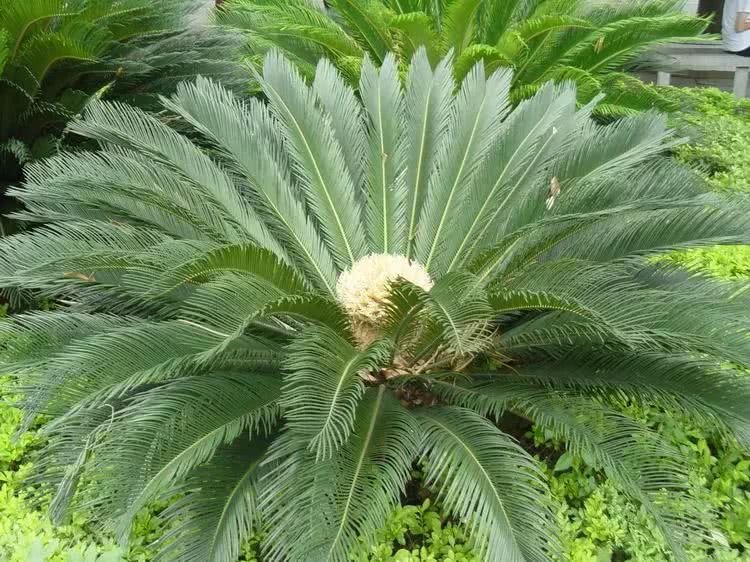
The sago palm, also called cycad, is a common foliage plant. It has an elegant, antique-looking form, a thick, sturdy trunk as hard as iron, and glossy, smooth feathered leaves that stay green all year round. The sago palm grows slowly but lives a very long time, even up to 200-plus years. It is often used to decorate courtyards and halls, and it is very attractive.
The sago palm is a fairly tough plant. It adapts to its environment very well and is easy to keep alive. But in the course of everyday growing, you will inevitably run into the problem of leaves turning yellow and withering. Don't worry. Today the editor has a few suggestions for you. If your sago palm is having problems like yellowing leaves, take a quick look~
Soil
Soil is the basic condition for whether a sago palm can grow healthily. The sago palm likes a sandy loam that drains well, breathes well, is loose and fertile. It should not be grown in heavy clay soil, otherwise poor drainage and lack of oxygen can easily cause the plant's roots and stem to rot, and can even kill the whole plant.
For potting soil, you can mix 6 parts garden soil, 3 parts leaf mold and 1 part chaff ash. When preparing the potting soil, we can also add some bone meal, which is even better for the sago palm's growth.
Repotting
Because the sago palm grows rather slowly, repotting it and changing its soil is very important. Otherwise, over time the soil's looseness and air permeability get worse and affect its growth. Small plants should be repotted and given fresh soil once every spring, but they don't need to be moved into a bigger pot every year. Large plants can be repotted once every 2-3 years. When repotting, properly trim away some old roots so that new roots can grow.
Watering
The sago palm likes a warm, moist environment, but it is not tolerant of waterlogging, so when watering we must be careful not to give too much water. Too much water saturates the soil pores, which affects the sago palm's root respiration, causes the leaves to wilt, and can even turn its roots black and kill the plant.
Bone-dry potting soil is also not good. The sago palm will lack the water it needs to grow and develop pale, yellowing leaves and scorched leaf tips. So the principle for watering a sago palm is "don't water until it's dry, and when you water, water thoroughly." In winter, if the potting soil is not especially dry, we can skip watering, and it is even less advisable to water thoroughly, to avoid the potting soil freezing and icing over.
Light
Too little or too much light will both cause a sago palm's leaves to turn yellow. Although the sago palm likes light, overly strong light easily makes the leaves turn yellow, and newly grown leaves in particular should be kept away from strong light. But if the sago palm is kept in a shady spot without light for a long time, its leaves will also lose their original green color.
Iron deficiency
The reason the sago palm is called the "iron tree" is also that it cannot grow without iron. If it lacks the element iron, the sago palm's leaves will turn yellow. So if your sago palm's leaves have turned yellow, that means it is time to give it iron promptly.
So when fertilizing we can add 0.5% ferrous sulfate, and about once a month is enough. You can also put rusty iron nails or iron sheet in the potting soil and let the iron gradually seep into the soil, providing the iron the sago palm needs to grow. As long as the iron is topped up, the sago palm's leaves will of course become very glossy green.