Why does a tillandsia's flower bract slowly turn green when cared for at home?
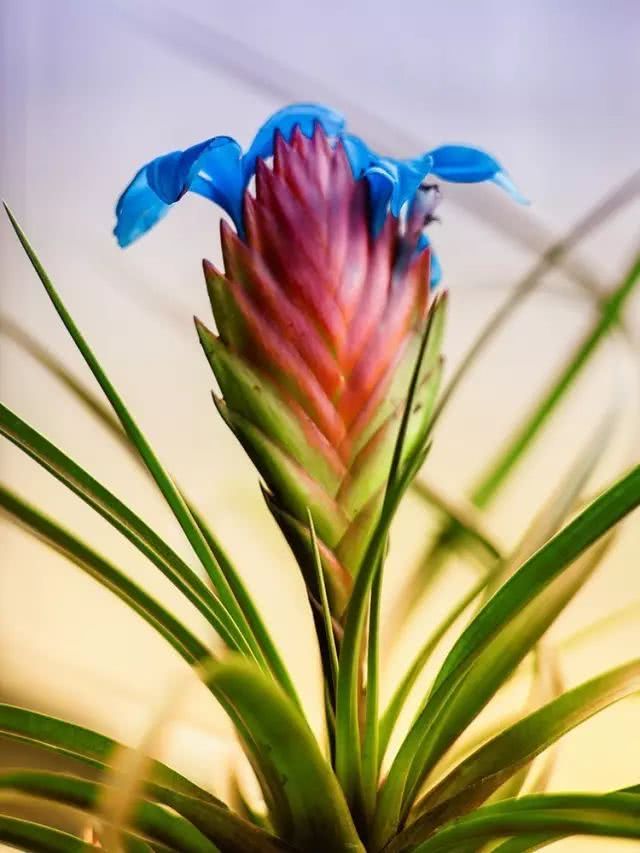
Remember the beautiful tillandsia? A very beautiful bromeliad flower, with pink bracts, occasionally dotted with small purple flowers, and still loved by many gardeners.
But a gardener's tillandsia turned into what you see below, with the bracts turning green. What is going on here, dear editor?
Tillandsia belongs to the bromeliad family, genus Tillandsia, and is an epiphyte. Wild tillandsias grow on trees or among dead branches. It looks very sweet, but some gardeners told me that when they first bought their tillandsia the flowers were pink, so why did they slowly turn green?
First, the editor should explain that the pink "flower" everyone sees on a tillandsia is actually its bract, similar to the color-changing leaves of poinsettia and bougainvillea, except that the bract is closer to a flower. Sometimes small purple flowers can appear on the bract, and those are the true flowers.
A tillandsia's bracts turning green is a very normal thing. No matter how you care for it, its bracts will wither, and this is the last vitality before they wither.
Its flowering period generally lasts about 5 months. After these bracts wither, you can cut them off to reduce nutrient consumption, and keep watering it to encourage the tillandsia's small offsets to sprout.
After cutting off the place where the tillandsia grew bracts, continued watering can produce new offsets, which grow very fast. As long as the temperature and humidity are sufficient, once they grow to half the height of the old plant, you can divide them. By then the new plants will also bloom easily, while the old tillandsia plant is very unlikely to bloom again unless you spray it with chemicals.
(I heard from some flower shop owners that it is ethylene gas; does anyone know?)
(The photo above was taken by a gardener when they first bought it; the photo below was taken after more than a month. When bought, it had probably been in flower for some time.)
New offsets are generally transplanted once they are half the height of the old plant, then watered regularly for a month, and after a month you can appropriately supplement with nutrient solution.
Bromeliads generally bloom only once, so many gardeners who buy Guzmania and the like simply buy new ones after the flowers finish. Their flowering period generally lasts more than 4 months, which is still quite good.