What flowers are good to grow at home? These few have long blooming periods and are easy to keep alive
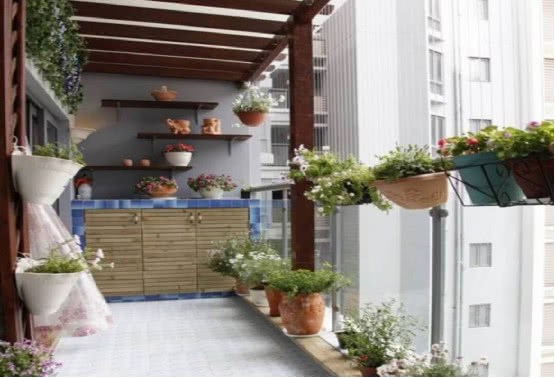
These are the best flowers to grow at home, with long blooming periods and easy care, and every flower shop owner knows it!
The breath of spring slowly spreads; spring has arrived, so can the season of blooming flowers be far behind? This is a season of blooming flowers, and those who love to admire flowers are in luck. Looking at this beautiful scene can lift your mood. Today I will introduce several flowers with relatively long blooming periods, so you can enjoy flowers every day.
Chinese rose
Complete Guide to Flower Growing
Blooming period: May to November
The Chinese rose (Rosa chinensis) comes in diverse colors and has a very rich range of varieties. It can also tolerate low temperatures and has low demands on its environment, blooming almost all year round, which is why it is called the "queen of flowers." With such a wide variety of Chinese roses, there is surely one that suits you.
Care tips:
1. The Chinese rose likes nutrient-rich conditions. For potted planting, you can use your own mixed organic fertilizer to provide nutrients; a fertile environment is more conducive to the growth of the Chinese rose. For outdoor planting, you can bury kitchen waste and water or materials containing fertilizer into the soil, but it must not touch the roots of the plant. Not only will it fail to promote the flower's growth, it will instead harm the plant.
2. The Chinese rose is especially prone to attracting pests, and aphids are often the culprit damaging the Chinese rose. Once aphids are found, we must deal with them promptly, either by spraying pesticide or using a homemade insecticide.
Fuchsia
Complete Guide to Flower Growing
Blooming period: April to December
The name fuchsia is very interesting; it is named according to the shape of the flower. Little lanterns hang upside down one by one, dazzling like golden bells, and hanging upside down on the branches is very beautiful!
Care tips:
1. If you want the fuchsia to grow faster, you must pay more attention in daily care and promptly cut off spent flowers and withered stems, so that the other parts that are about to grow have more nutrients.
2. Because the blooming period is relatively long, it needs a richer supply of substances to continue providing its nutrients. We can add some compounds containing more nitrogen, or during its growing period water it with decomposed soybean water, once every half a month.
Wax begonia
Complete Guide to Flower Growing
Blooming period: year-round
Wax begonia, as the name suggests, is a begonia that blooms in all four seasons. The flowers of the wax begonia are small and tender, and we can admire its beauty in all four seasons of the year.
Care tips
1. Begonia is a plant that is relatively afraid of environments with too much water. When growing it, be careful not to water it too much, and for drainage we can spread more sand in the soil, or use perlite and other media that help with drainage.
2. The wax begonia must be pruned promptly. Just like the Chinese rose, if it is not pruned in time, the branches will become thinner and longer, and the number of times it blooms and the number of flowers will become fewer and fewer.
Madagascar periwinkle
Complete Guide to Flower Growing
Blooming period: year-round
The Madagascar periwinkle (Catharanthus roseus) feels like a flower that is in spring all year round. It also has an interesting name, "daily spring," and its blooming time is naturally long, because for it every day is like spring.
Care tips:
1. The Madagascar periwinkle likes light, so in daily care let it bask in the sun more, but the light duration must not be too long either, so in summer you should still appropriately reduce its light time.
2. The Madagascar periwinkle also does not like environments with too much water. In daily care it cannot be placed in a damp environment. We can wait until its soil becomes dry and slightly whitish before watering it.