Detailed Guide to Making and Caring for Orchid Bonsai
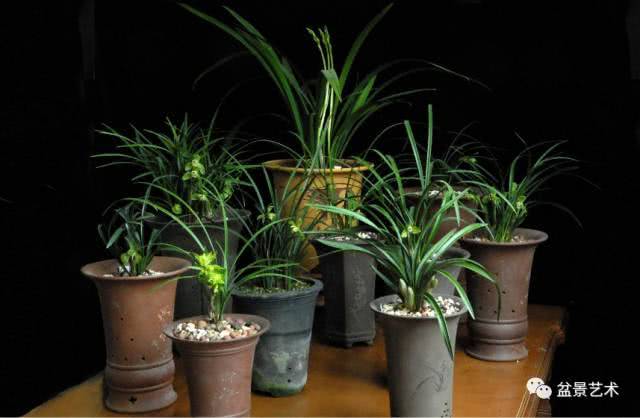
Orchid leaves are elegant, standing gracefully upright, numerous yet uncluttered; their flowers have a delicate fragrance that carries far, rich and striking. With one plant in a room, the whole room is filled with scent. Orchids, together with plum, bamboo and chrysanthemum, are known as the "Four Gentlemen." Orchids grow among secluded valleys, sparse rocks and fallen leaves, their silver roots tangled, their leathery leaves evergreen. They do not vie for splendor with peach and plum blossoms, nor do they change color because of frost and snow. With their quiet elegance and overflowing fresh fragrance, it is no wonder people call them "the finest fragrance under heaven" and "the national fragrance." The ancient poet Zhang Yu wrote a poem praising orchids: "It can be white and it can be yellow, blooming fragrant even with no one around; its heart is not large, yet it holds so much fragrance." From this poem one can see that the ancients likened orchids to a true gentleman, regarding them as a symbol of steadfastness, beauty and nobility - and they are fully deserving of it.
1. Shaping and Layout
When making bonsai with orchids, they are mostly combined with rocks, imitating the layout of the "Orchid and Rock Painting" style in Chinese painting. Some plant several orchids of differing heights at one end of the pot, and place one or two relatively tall, exquisitely perforated rocks at the other end not far from the orchids, adding 2 to 3 small stones of graceful shape at suitable spots on the pot surface for contrast. Others plant 4 to 5 orchids of differing size and height in a staggered, well-arranged way in the pot, placing several appropriately sized, elegantly shaped rocks at suitable spots in the pot. When making an orchid-and-rock bonsai, note that the orchids and rocks should differ in height; if they sit on equal footing with no distinction between primary and secondary, the artistic conception will not be beautiful. To make an orchid-and-rock bonsai, the most widely cultivated orchid in China, the spring orchid (Cymbidium goeringii), will do. Spring orchid leaves are narrow and long, generally 20 to 50 cm; the flower scape is upright, pale yellow-green, fragrant, with a blooming period of February to March. In a bonsai made from spring orchids and rocks, the rocks are upright and vigorous while the orchid leaves are curved and soft - hardness and softness complement each other, elegant and natural, with a delightful fragrance and rich poetic charm.
2. Planting and Pot Selection
Orchids just bought from a flower shop or dug up from the mountains should first be grown in clay pots for 1 to 2 years so the plants adapt to the new environment; only after they grow robust can they be put into fine pots to make bonsai. For bonsai, rectangular, oval, round, long octagonal and fan-shaped pots are best. Medium-depth purple clay pots are commonly used; if the pot is too deep, the resulting bonsai will lack beauty of artistic conception; if the pot is too shallow, care becomes rather difficult.
Orchid planting is generally carried out in March to April. After knocking the orchid out of its pot, first cut off old roots and rotten roots, then divide the clumps while planting. Choose several plants of differing height and leaf length and plant them at one end of the pot; the line connecting their roots should form a scalene triangle - do not plant them in a straight line, or it will look rigid.
For planting orchids, soil rich in humus, loose and well-drained, neutral or slightly acidic (pH 5.5 to 7.0) is best. You can use three parts peat soil mixed evenly with one part sandy soil, or use humus soil mixed with an appropriate amount of fermented sawdust and cow dung, mixed evenly; you can also buy special orchid soil. Generally no base fertilizer is applied at planting time.
3. Care and Management
(1) Location. Orchids like a shaded, warm, humid and well-ventilated environment. But this does not mean orchids need no sunlight at all; spring orchids in particular need more sunlight. Sunlight is an indispensable condition for all green plants to carry out photosynthesis and produce nutrients; it is only that, because of differences in plant classification, the amount of sunlight needed varies. If orchids are kept in shade all year round, they will grow poorly and bloom little or not at all.
Orchids like cool shade and fear direct strong light. From late spring to early autumn, placing orchids on a north-facing balcony where they can see sunlight in the morning and evening will meet their sunlight needs. If placed in a sunny spot, from 8 a.m. to 5 p.m. each day, reed mats should be used for shading. In late autumn and early winter, when sunlight weakens, orchids should get more light than in summer, to favor flower bud differentiation.
Orchid growth is closely related to temperature. Generally speaking, the minimum temperature for orchid growth is 5 to 10°C; the suitable temperature is 15 to 25°C; the upper critical temperature is 30 to 35°C (requirements differ by orchid variety). Below 5°C and above 35°C, orchids stop growing. Whether in the north or the south, potted orchids should be brought indoors to overwinter. Spring orchids have a certain cold tolerance and can overwinter at a room temperature of about 7°C.
(2) Watering. Orchids like moist soil but fear excess water; when soil moisture is high and air is low, aeration is poor, which affects gas exchange in the root system. If the pot soil is too dry, it will cause the plant to lose water and grow poorly. Therefore, how much to water depends on the season and the orchid's growth; generally, in hot, dry weather and during the orchid's growing period, water somewhat more, and in winter water less. Orchids are fleshy-rooted plants, and too much water easily rots the roots, so no water should accumulate in the pot. Orchids like a humid environment; placing them beside a water pool is best. If that is not possible, you can often sprinkle water on the ground around the orchid bonsai to maintain a certain humidity.
(3) Fertilizing. For potted orchids, from May to September (except during the dog days), apply a dilute, well-rotted organic liquid fertilizer once every half month. Do not fertilize in winter or during the blooming period. In the year of repotting, if the soil is rich in nutrients, you may skip fertilizing. If repotting is done only once every few years, then fertilize in good time. When fertilizing, be careful not to splash fertilizer on the leaves; if it gets on them, immediately spray water to rinse it off.
(4) Trimming. When orchids develop old leaves, yellow leaves, especially leaves with pests or disease, cut them off promptly. Leafless pseudobulbs should not be cut off during shaping and trimming, because they can store nutrients and water, which benefits orchid growth. After flower buds emerge, keep just one flower bud per plant and cut off the rest; if too many flower buds are kept, they compete for nutrients, and not only will they all grow poorly, but next year's blooming will also be affected. Two weeks after spring orchids bloom, the flowers should be cut off to prevent pollination and seed setting, which would affect next year's blooming.
(5) Pest and disease control. Orchids mainly suffer from rot disease, black spot disease, scale insects, red spider mites and other pests and diseases, which should be prevented and eliminated promptly.