Beginner's Watering Guide: Master the Right Way to Water
1. Terminology - Water Withholding. Water withholding means that during the growth of flowers, watering is stopped or reduced to limit their vegetative growth, allowing nutrients to accumulate, which promotes flower bud differentiation and the formation of flower buds. For example, when cultivating bougainvillea, plum blossoms (ornamental peach, chrysanthemum, jasmine, winter coral, fingered citron, citrus types, etc.), when new shoots grow to about 20 cm, begin "water withholding," that is, do not water for 2-3 days. Because of the lack of water, the top leaves begin to wilt, and only then water a small amount to restore the leaves. After repeating this 2-3 times, growth at the tips of the branches is inhibited, causing nutrients to concentrate and promoting flower bud differentiation.
2. Terminology - Return Water. Return water means that after fertilizing on the previous evening, clear water must be applied again the next morning. It can promote root absorption of nutrients and prevent fertilizer burn. Because the fertilizer applied the previous evening has undergone a night of penetration, the nutrient concentration is too high, which not only makes it difficult for the roots to absorb but can also burn the seedlings. After applying "return water," the fertilizer concentration in the soil is diluted, which helps root absorption. (More suitable for the following flowers: azalea, clivia, camellia, white orchid, jasmine, pearl orchid, banana shrub, etc.)
3. Terminology - Mid-pot Water. "Mid-pot water" is also called "half-way water," meaning the potting soil is "wet on top and dry on the bottom," that is, the upper half is moist and the lower half is dry. Because the soil drains poorly, water accumulates in the potting soil, and the water applied cannot leak out through the drainage hole.
4. Terminology - Hard Water and Soft Water. Water is divided into hard water and soft water according to its salt content. Soft water refers to water with a hardness lower than 8 degrees; hard water refers to water with a hardness higher than 8 degrees and a relatively high salt content. For watering, soft water containing no salt is preferable.
5. Terminology - See Dry, See Wet. For some flowers that prefer moisture, such as azalea, camellia, banana shrub, gardenia, and orchid tree, water according to the principle of "see dry, see wet." Water when the surface of the growing medium turns white, and water until moist. The potting soil must not be too dry or too wet for a long time; keeping it "moist" is enough.
6. Terminology - Dry Through, Water Through. For potted flowers that prefer dryness and fear waterlogging, such as orchids, wintersweet, and geranium, water according to the principle of "dry through, water through." Water only when the growing medium has dried. "Water through" means do not apply "mid-pot water"; make the entire potting soil wet through from top to bottom. If it is not watered through, the roots will not be able to absorb water, which will affect their growth.
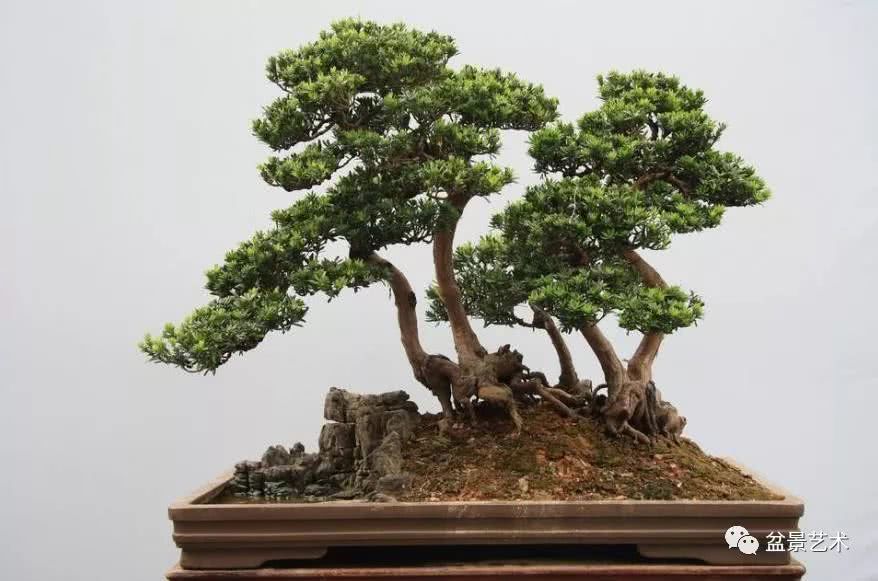
7. Terminology - Better Dry Than Wet. For five-needle pine, black pine, and xerophytes, water according to the principle of "better dry than wet." Water only after the medium has dried through, and never allow water to accumulate.
8. Terminology - Soil Moisture. This is usually expressed as the percentage of soil water content. The water needed for flower growth is mainly absorbed from the soil, so soil moisture is generally appropriate at 60-70% of field capacity.
9. Terminology - Field Capacity. Field soil has a maximum water-holding capacity, and this indicator is collectively called field capacity. Its value is about 25%, which is the limit value of the soil's water-holding capacity.
10. Terminology - Air Humidity. Air humidity is usually expressed as the percentage of relative air humidity. In a day, relative air humidity is lowest when the temperature is highest in the afternoon and highest in the early morning. The air humidity generally required by most flowers is about 65-70%, while plants in arid and desert climates need far less. Greenhouse flowers, tropical foliage plants, tropical orchids and other species with aerial roots, as well as moisture-loving plants such as ferns, need air humidity of about 70-80%.
11. Terminology - Air Drought. Air drought: due to air drought, a large amount of water in the flower plant transpires. At this time, soil water deficiency will cause the plant's water balance to become disrupted and temporary wilting, but it will not die.
12. Terminology - Soil Drought. Soil drought: atmospheric drought often causes soil drought. When the soil loses water over a long period and is not replenished in time, it cannot supply the water needed by the flowers, leading to withering and death.
13. Terminology - Waterlogging Damage. Because the soil drains poorly and too much water accumulates, air cannot enter the soil, and over time this causes the plant to suffocate and die.