Features of water-absorbing stone bonsai and things to note when choosing plants
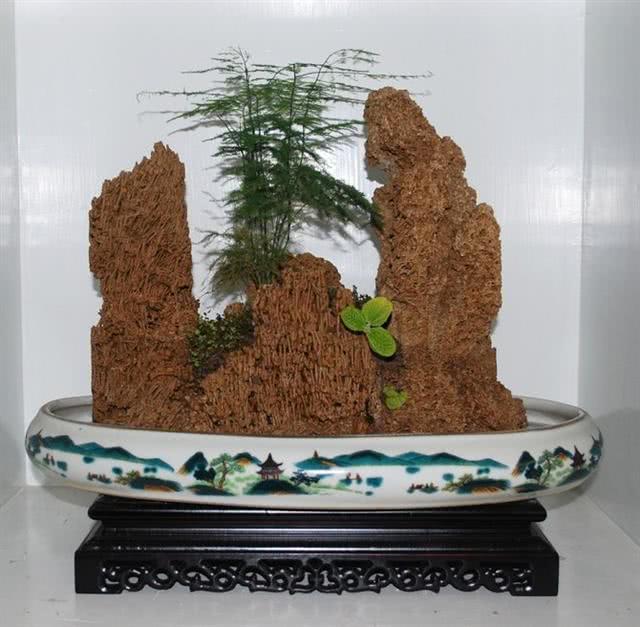
Water-absorbing stone mainly has two major characteristics. The first is that it is porous and brittle, which also gives it plasticity, making it possible to create different shapes; the second characteristic is that it has very strong water absorption, which is mainly due to the many all-natural cavities in the stone, and these cavities are interconnected. It is precisely because of these two characteristics that it is often used to make ornamental objects such as bonsai and rockeries. In addition, placing it indoors can also increase air humidity, making it especially practical in dry seasons.
It is found in Shandong, Hebei, Shanxi and other places. Although there are slight differences in the quality of the stone and its internal structure, their good water absorption is a common feature. Artists and bonsai enthusiasts, precisely through their differences and by making use of their characteristics, have created all kinds of bonsai.
No matter how good a bonsai is, it still needs careful care from people, otherwise the plants attached to the water-absorbing stone will die, and the ornamental value of the bonsai will be greatly reduced. The key to maintaining a water-absorbing stone bonsai well lies in mastering the habits of the plants in the bonsai. Some plants need sunlight, so they cannot be placed indoors in a place without sunlight and without ventilation. For plants that prefer to grow in shade, sunlight must not be given. In addition, temperature is also an important factor affecting plant growth, so the optimum temperature for the organism's growth must also be considered. Details such as these all need attention.
As the name suggests, water-absorbing stone certainly cannot do without water, and water is also essential for plant growth, so attention to water is especially important. The water in the bonsai does not flow, so it needs to be changed frequently, otherwise over time the water quality will become polluted. Plant growth cannot do without water, but their water requirements also differ, so the amount of water added should be determined according to the characteristics of the plants.
Besides water, plant growth also needs nutrients, so adding nutrient solution to the water is a very good method, but doing so also brings problems. The addition of nutrient solution will also attract bacteria. When nutrients are abundant, bacteria can breed, so the bottom of the pot must also be cleaned frequently. The branches and leaves of the plants on the bonsai will also normally wither and die, and dead leaves should also be cleaned up in time. If they are not cleaned up, first, it will intuitively affect the ornamental value of the bonsai, and second, it will also breed more bacteria, causing the plants to rot and then die. Therefore, although a water-absorbing bonsai is beautiful, it cannot do without careful care from people.