Succulents losing leaves more and more seriously? Control the temperature well and the roots will grow fast without dropping leaves
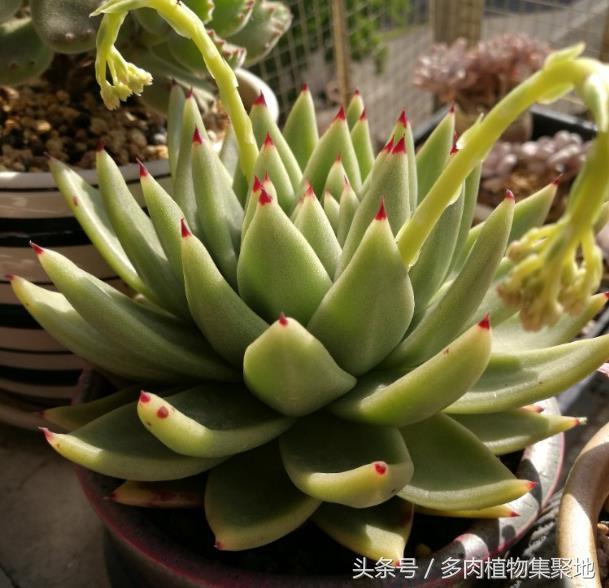
A flower friend asked, why do the succulents I grow keep dropping leaves? What can cause succulents to drop leaves is generally root drying or rotting caused by overwatering or hard potting soil, which leads to leaf water loss and then leaf drop. If water is not controlled or the soil is not loosened in time, it can easily cause the death of the succulent. The leaf drop in succulents caused by overwatering: normally, watering should not be too wet, because overly wet soil easily accumulates water, causing root rot and yellow leaves falling off. It is best to water after the soil dries, and not water until it is dry, which benefits root growth and makes leaf drop less likely.
When the soil is hard and impermeable, the water after watering cannot penetrate into the soil layer, so most of the roots cannot absorb water and nutrients, causing the leaves to lose water and nutrients and show symptoms of yellowing and falling. The best way is to loosen the soil appropriately, which helps the soil become loose, breathable and well-draining, and benefits root growth. In especially hot or cold environments, succulents produce a large amount of abscisic acid and then drop leaves; this is the plant's self-protection behavior, but it is also a danger signal. If you find that the weather is too hot or too cold, and there is no black rot, and the leaves fall off at a touch, what you need to do at this time is cool the succulent down or keep it warm, and it will slowly recover.
When a succulent has black rot, it will also have the problem of leaf drop. In this case, the leaves of the entire plant fall off, which is relatively serious and very hard to save. If many leaves fall and the plant also falls apart, black rot may have occurred. In some cases, even if black rot has occurred, the leaves can still be used for leaf propagation, such as the succulent Pachyphytum 'Oviferum' (moon stones). In others, they cannot be leaf-propagated, such as the succulent Echeveria 'Raindrops', because the leaves have long been infected.
In summer, it is very common for succulent leaves to fall off at a touch, but why does this happen? We might as well look at the summary from Duoge Succulents and see what needs attention and why this phenomenon occurs. This kind of problem is often caused by environmental changes, such as temperature being too high or too low, lack of light, sudden weather changes, water accumulation in the soil, or lack of nutrients. We call this kind of problem a stress response or physiological disorder. The same is true for plants. Plants do not have a nervous system, and all their responses depend on the mutual coordination of various plant hormones in the body.
For succulents that drop leaves, avoid heavy watering, and do not let the potting soil become too dry or too wet. For succulents with physiological disorders that cannot tolerate too much stimulation, any drastic environmental change may worsen the leaf drop. If you have space on a windowsill in your bedroom, you can move the succulent to the windowsill for care. At night, it can also enjoy cool air conditioning. After resting quietly like this for a period of time, the excess abscisic acid will gradually be used up, and the remaining leaves will become firmer.
If the leaves have a disease, the surface will not be smooth enough and will have sooty mold, rust spots, and so on. This is sooty mold disease, and at this time the diseased leaves will also fall off at a touch. At this point, you only need to treat the disease. Do not frequently move the succulent around, such as moving it out in the morning and back in at night, or moving it out at night and back in the morning; this kind of fussing is unsuitable. Relatively fragile leaves may drop several more with any vibration, and a drastically changing environment may cause the succulent to synthesize more abscisic acid, leading to even more severe leaf drop.
This is a gathering place for succulent lovers, sharing succulent care tips. You are welcome to follow and exchange ideas.