Raspberries were the market darling last year, easily bringing in 10,000 yuan per mu - are they still worth investing in and growing?
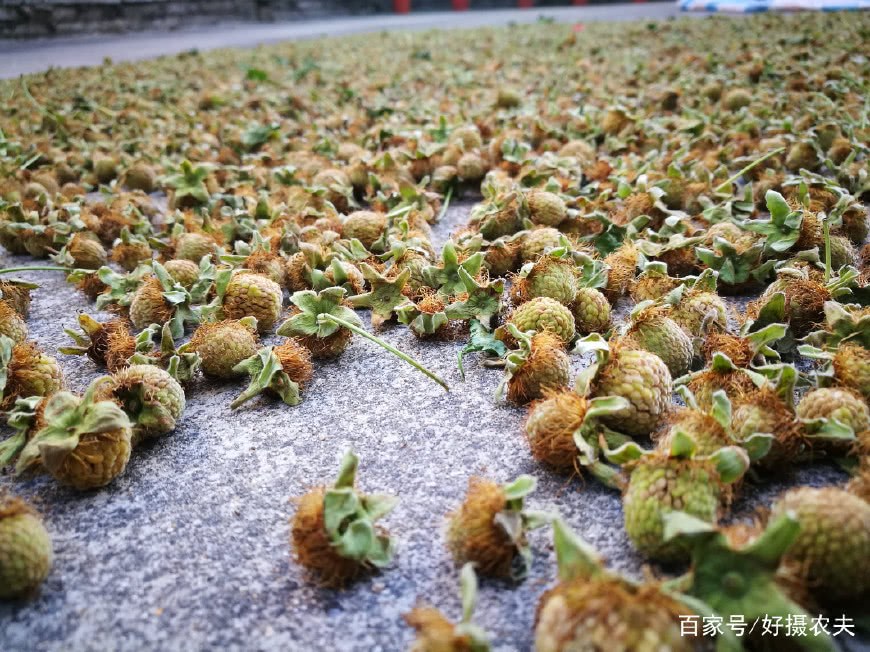
What is drying on the ground here is palmleaf raspberry, a traditional Chinese medicine whose price has been rising steadily in recent years. Palmleaf raspberry is named for its leaves, which split in a shape resembling a palm. Because palmleaf raspberry is simple to cultivate and manage, has few pests and diseases, has a short return cycle, and is easy for farmers to learn, it is deeply favored by some rural farmers who lack professional growing experience.
The picking time for raspberries is when the fruit is about to turn red but has not yet reddened. The green fruit is picked and dried for sale. If it turns red, it can only be sold as a fruit berry and cannot be sold as traditional Chinese medicine. Therefore, the raspberry picking season each year is also the busiest time in rural areas. Everyone has to finish picking before the fruit turns red.
Palmleaf raspberry is a perennial shrub, with thorns on both the upper and lower parts of the branches. The tender branches of the current year bear fruit the next year. When picking, cut off the branches that have borne fruit and keep the tender branches that sprouted that spring.
The best time to plant raspberries is the first month of the lunar year. Dig up old stumps for planting, water them to settle the roots, and use dry grass to prevent cold damage. Generally, tender branches sprout around Qingming Festival. When the branches grow to about two meters, pinch off the tips to encourage branching. The base fertilizer for planting is mainly farmyard manure, with a small amount of three-element compound fertilizer as a base.
Raspberries need to be protected from branches growing too long and lodging. If conditions allow, posts and ropes can be used for support. Generally, raspberries do not need to be treated with medicine throughout their life. Each autumn before the leaves fall, apply a wintering fertilizer once, using decomposed farmyard manure. First, it can enhance fertility; second, it can prevent cold and help them overwinter.
Because raspberries are simple to plant and have a short return cycle, in recent years wild raspberries have been replaced by artificial cultivation, and the planting trend has not diminished. Based on past experience, this kind of short-term, fast-growing planting industry is very likely to experience market oversupply at some point.
Last year, the purchase price of fresh raspberries in rural areas of Jixi County, Anhui Province, started at 35 yuan and peaked at 40 yuan per jin. This year's purchase price during the picking season is 15 yuan per jin, a price drop of 60%, which also caused great losses for people who invested funds to develop it early last year. But that is how the market is: things that can develop quickly will always fall back quickly.
Raspberries are planted at about 200 old stumps per mu. During the peak production period, 200---300 jin of fresh fruit can be harvested. If calculated at the peak price, the income per mu can reach more than 10,000 yuan.
Agricultural investment carries risks, especially for projects that rush out in a swarm like this. Farmer friends still need to mainly be cautious when investing.