Lantern Flower: A Bloom That Symbolizes Gratitude and Thanks
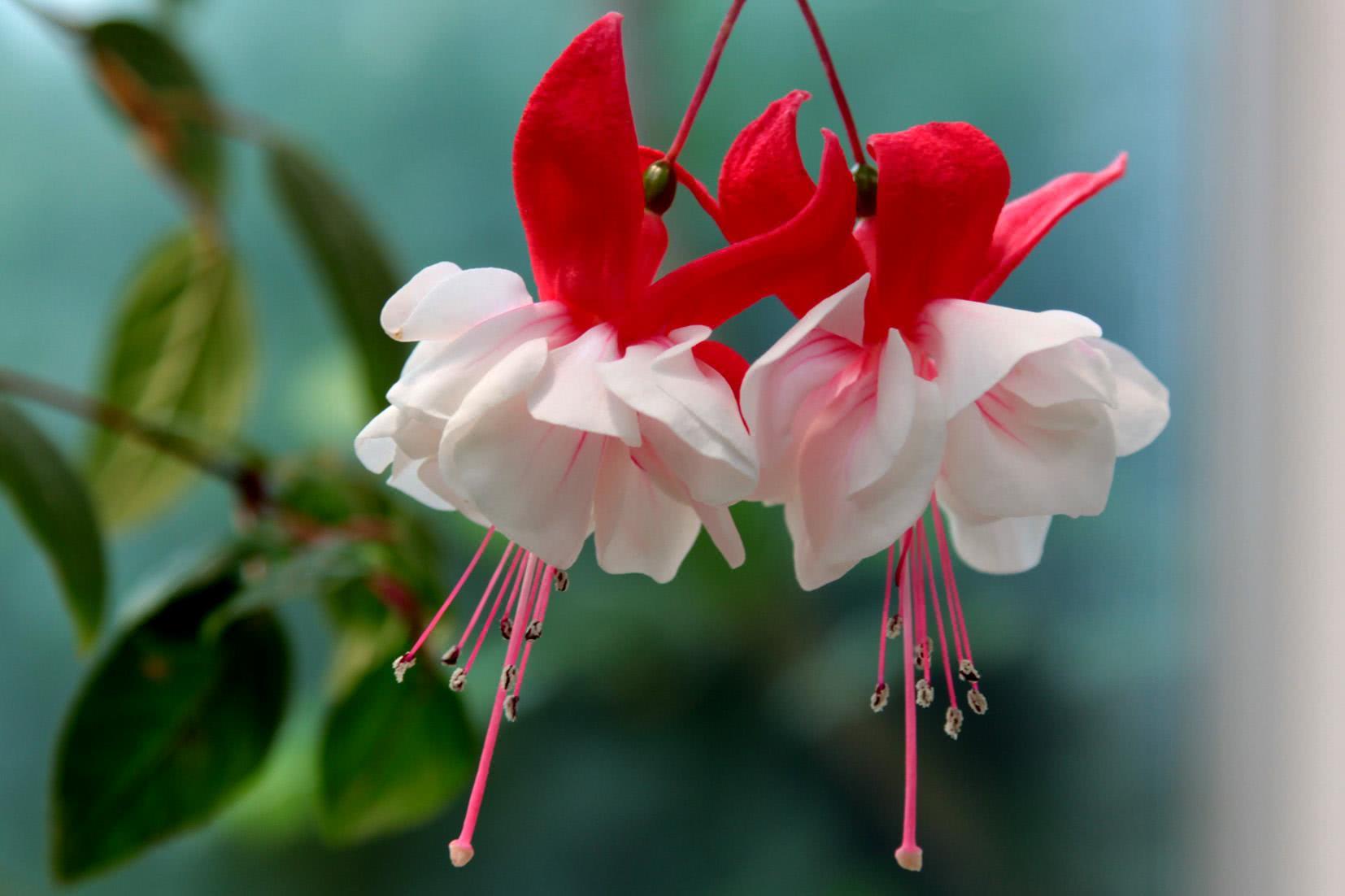
Lantern flower, also known as fuchsia or hanging bell begonia, is a perennial herbaceous flowering plant. It has many varieties, and the main flower colors come in three types: red, purple, and white. Although it is delicate and beautiful, it cannot withstand the scorching sun of midsummer. It prefers a cool, humid climate environment, with an optimum growth temperature of 10°C-25°C. In winter it requires plenty of sunlight, and in summer it needs a semi-shaded environment.
Lantern flower
When the summer temperature exceeds 38°C, metabolism slows down and growth comes to a standstill. At this time, leaf drop and root rot often occur. If effective measures are not taken, the entire plant may die. In addition, it should be noted that the medicinal lantern flower is a plant of the genus Enkianthus in the family Ericaceae. Unlike this, its branches are often whorled; the leaves are alternate and often clustered at the tips of the branchlets; the flowers are arranged in terminal, drooping umbels or racemes; the flowers are pentamerous, with a 5-lobed calyx and a bell-shaped or urn-shaped corolla with a short 5-lobed margin; there are 10 stamens, and the style is linear, longer than the stamens, with a capitate stigma; the fruit is a capsule.
Lantern flower
Floral meaning:
Because the flowers that the lantern flower produces are always neat, symmetrical, and very much like lanterns, they resemble the paper cuttings pasted on lanterns. They are symmetrical just like the decorative flower patterns pasted on palace lanterns, gauze lanterns, and cage-style lanterns. And lanterns in China represent good fortune and peace. Therefore, its floral meaning is gratitude and apology.
Lantern flower
Origin of the legend:
There was a little sprite named Kanfaniula who wanted to find something to do. The goddess Hera gave her a task: to watch over Hera and Zeus's golden apple tree. The golden apple tree had originally been guarded by the monster Ladon, and now the little sprite was to take over. As long as the little sprite rang the bell beside the apple tree, Ladon would come to help the little sprite drive away the villains who tried to steal the golden apples.
Once, when the little sprite was practicing ringing the bell, Ladon flew over. The little sprite said, "Ladon, I'm sorry, I was practicing." Another time, Ladon flew over again, and the little sprite said, "Sorry, Ladon, I was still practicing." The last time, two villains came to steal the golden apples. When the little sprite saw them, she was so frightened that she hid in the grass. Later, the little sprite still summoned her courage and, risking her life, ran over and rang the bell twice. Ladon thought the little sprite was practicing and did not come. The two villains knocked the little sprite to the ground. As the little sprite was about to die, her tears dripped onto the ground, and the bell beside the apple tree rang by itself. Ladon came, drove the villains away, and the little sprite had protected the golden apple tree with her life. To commemorate the little sprite, Hera turned her into the lantern flower. This is the origin of the lantern flower.