This toxic succulent in Jingmen can cause hallucinations, with symptoms resembling mental illness - never grow it
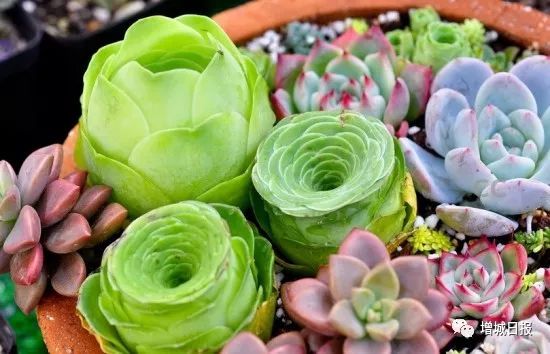
Many people in Jingmen like to grow plants and flowers
In recent years, succulents
have become the "internet celebrities" of the plant world
Many young people like
to keep them at home and in the office
But there is one type of succulent
that friends should buy with caution!
They contain toxins
and can cause hallucinations and mental confusion
and even threaten life!
Eve
nts
Multiple cases of "toxic cactus" being smuggled into the country have been seized
Recently, Shenzhen Huanggang Customs announced that it had seized multiple cases of "toxic cactus" being brought into the country. Huanggang Customs said that unlike ordinary spiny cacti, this type of "toxic cactus" belongs to the "spineless cactus" category and is called "Lophophora williamsii" (peyote). According to a Shenzhen Customs notice, Lophophora williamsii belongs to the genus Lophophora in the cactus family and is native to the Americas.Lophophora williamsii contains hallucinogenic alkaloids, which can cause hallucinations, mental confusion, and even threaten life.
The intercepted Lophophora williamsii. Source: Huanggang Inspection and Quarantine Bureau
On April 11, when staff members of Huanggang Customs were inspecting a male passenger from Hong Kong, they seized from the passenger's luggage33 Lophophora williamsii plants。
wrapped in newspaper. Customs said in the notice, "At that time, these plants were placed in the passenger's suitcase, each wrapped in white paper, with an irregular spherical shape. After opening the white paper, they were all found to be succulents, and almost every plant still had roots and soil.These succulents were grayish green or dark green, with some white powder on the surface, and were very soft.”
Lophophora williamsii
Similar cases are not isolated. According to a Huanggang Customs notice, in April of this year alone, the passenger inspection channels at Huanggang Port successively seized 5 cases of passengers carrying Lophophora williamsii into the country,with more than 120 Lophophora williamsii plants seized in total,with a total weight of about 30 kg.
Huanggang Customs said that after preliminary investigation of these 5 cases, almost all the passengers involved were short-term, multiple-entry travelers, and the purpose of bringing the plants into the country was to earn a "carrying fee," ranging from 300 to 500 yuan.
In
vestigation
Most overseas-purchased succulents have no import license
A search on multiple online shopping platforms shows thatmany imported succulents, including Lophophora williamsii, are selling well online and have already become "internet celebrity" products.While overseas-purchased succulents have become popular, there have also been many voices questioning whether imported succulents comply with relevant regulations.
According to staff at the national customs service hotline, if succulents are purchased directly from overseas or carried into the country,they need to comply with the relevant provisions of Announcement No. 1712 issued jointly by the Ministry of Agriculture and the General Administration of Quality Supervision, Inspection and Quarantine.
Image from the internet
According to Announcement No. 1712, namely the "List of Animals, Plants and Their Products and Other Quarantine Objects Prohibited from Being Carried or Mailed into China," seeds (seedlings), nursery stock and other plant materials with reproductive capacity, as well as organic cultivation media, are included in the prohibited list. The appendix also notes that animals, plants and their products and other quarantine objects entering the country by carrying or mailing are not subject to the restrictions of this list if they have been approved and permitted by the relevant national administrative departments and have a quarantine certificate issued by the official institution of the exporting country or region.
In addition, the Beijing Entry-Exit Inspection and Quarantine Bureau previously issued a reminder stating that products under 3 major categories and 16 items are prohibited from being carried or mailed into the country.Among them, bird's nests, sea cucumbers, fresh fruits and vegetables, and succulents are all prohibited from being brought into the country.
In addition to the Lophophora williamsii succulents seized by Shenzhen Customs, other imported succulents, including Ariocarpus species listed in the Convention on International Trade in Endangered Species of Wild Fauna and Flora, are also selling well online.
Ariocarpus, source: Baidu Baike
In a shop selling succulents on a shopping platform, its page shows that these succulents are priced from 679 yuan to 3,686 yuan.
The seller said that these succulents are imported from Japan, but are artificially cultivated abroad rather than wild. The seller also said, "Wild ones have a low survival rate and are relatively cheap. Those that have been stably cultivated are more expensive."
When asked whether there is an import permit or quarantine certificate, the seller asked in return,"What do you need a certificate for?"At the same time, the seller said,"Even if some have certificates, they may not necessarily let you import them. There are channels through which you can import them yourself."
Another seller of imported succulent seeds said that the seeds are imported from Germany, and 10 seeds sell for 7 yuan. According to the seller, foreign seeds are relatively more professional than domestic ones, and "the varieties are guaranteed." In addition, the seller also said,although they know that importing seeds is prohibited in China, they are still selling such seeds.
Another seller selling succulent leaves said that they had previously "imported" a succulent from Japan, and after receiving it, sold the leaves of this succulent online. After buyers receive the leaves, they can place them on soil and let them sprout on their own.When asked whether there is a permit and quarantine certificate for the "imported" succulents, the seller said frankly that there were none, and believed that imported plants do not need relevant permits.
Ha
rm
Some "overseas-purchased" succulents may cause hallucinations
In addition to issues such as import quarantine, some imported succulents may also cause hallucinations and even threaten life and health.
The Lophophora williamsii seized by Shenzhen Customs belongs to the genus Lophophora in the cactus family, and is a hallucinogenic plant.The mescaline it contains has already been listed by public security organs as a hallucinogen-type drug.
The Narcotics Control Detachment of the Nanjing Public Security Bureau also previously issued a notice listing Lophophora williamsii cactus as a hallucinogenic plant. According to the Narcotics Control Detachment of the Nanjing Public Security Bureau,"After taking a certain dose of Lophophora williamsii, one can experience visual or auditory hallucinations."
A netizen who grows Lophophora williamsii said that they had indeed heard people say that the sap of Lophophora cacti is toxic, but they did not know exactly what kind of toxicity it was, nor had they considered eating it, "after all, good Lophophora williamsii is not cheap."
But another netizen described on Zhihu the experience of eating Lophophora williamsii cactus, saying,"Half an hour after eating it, dizziness, slight nausea, and abdominal pain."
In response, Lu Lin, director of the Peking University China Institute of Drug Dependence, said that the mescaline contained in Lophophora cacti has a relatively strong hallucinogenic effect,"It can make patients' brains produce fantasies and cause symptoms similar to mental illness. In this situation, patients may engage in self-harm or harm others. After taking an overdose of mescaline, it may cause permanent damage to a person's nervous system."Lu Lin believes that such a cactus containing hallucinogenic ingredients is not suitable for sale on the market, otherwise it may harm society.
La
wyer
Illegal import and sale should bear legal responsibility
Lawyer Chang Sha of Beijing Jingdu Law Firm said,the import and export of wild plants requires approval from the relevant administrative departments and must obtain an import and export permit or label issued by the national endangered species import and export management institution.Otherwise, according to Article 151 of the Criminal Law of the People's Republic of China, illegally importing such succulents in violation of legal provisions requires bearing corresponding legal responsibility,and if the circumstances are serious, it may also violate criminal law and entail criminal responsibility.
In addition, Chang Sha said that imported seeds must also pass quarantine and obtainthe "Inspection and Quarantine Customs Clearance Form"before they can clear customs normally. If the import involves seeds of endangered species, it is also necessary to providethe "Permit for Import and Export of Endangered Species"。
Source/Beijing Youth Daily, Meizhou Daily, Guangzhou Reference, Baidu Baike
Chief editor/Zhang Yunfeng Editor/Luo Rui
If you think it's good, please like it