4 reasons why the orchid cactus won't bloom, save this for later
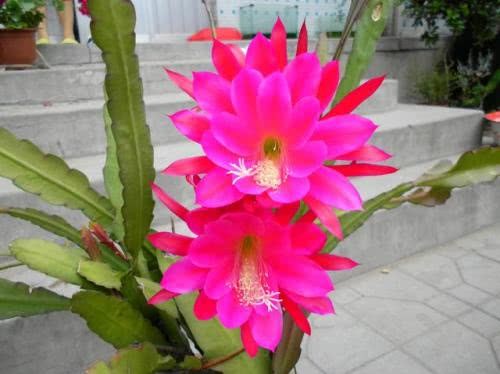
The orchid cactus (Epiphyllum) belongs to the cactus family. Its stems are upright, it branches heavily, and it comes in many flower colors. The colors are vivid and very beautiful, but each flower only opens for about two days, and its flowers only open during the day and close at night, which is also the special reason many gardening enthusiasts like it.
It is the blooming peak season for the orchid cactus right now, but some gardening enthusiasts report that theirs only grows bigger and won't bloom. In fact, this is mainly caused by 4 reasons. Hua'er will tell you, and it's not too late to know now!
1. Insufficient light
The orchid cactus is a light-loving plant. Only enough light can make it form buds and bloom. Move it to a place with plenty of light so it can carry out better metabolism. However, as the weather gets hotter and the temperature exceeds 35°C, it needs to be shaded.
2. Too much watering
The orchid cactus is a drought-tolerant plant and does not need too much water. Water it thoroughly again only when there are signs of dry cracking in the potting soil. Otherwise, watering too often or too much will cause the roots to be soaked, and in serious cases will lead to root rot, making it unable to absorb more nutrients to form buds and bloom.
3. Too much nitrogen fertilizer
Nitrogen fertilizer acts on plant growth. During the flowering period, nitrogen fertilizer should be reduced or stopped. Otherwise, the orchid cactus will keep growing leggy, which is not good for flower bud differentiation, and naturally it will not be able to form buds.
Switch to applying some phosphorus and potassium fertilizer. Remember to apply thin fertilizer frequently. About every ten days, apply phosphorus and potassium fertilizer once to promote the formation of buds and extend the flowering period.
4. Soil acidity is too low
The orchid cactus likes acidic soil. Some gardening enthusiasts' orchid cacti grow relatively thick and strong, in a very large pot, so they do not repot them, which leads to the pH value being too high, reducing acidity and affecting flower bud formation.
There are many ways to do this. You can drip a few drops of white vinegar or fermented orange peel solution into the water when watering to adjust the acidity and alkalinity of the soil. The best approach is still to repot directly, as this is more helpful for blooming.
That is all for the introduction to the orchid cactus. If you gardening enthusiasts have other additions, you can share them with everyone in the comment section below. If you want to learn more about flower-growing knowledge, you can follow Huajianke!