What is Kalanchoe millotii? Let us introduce you to this succulent plant
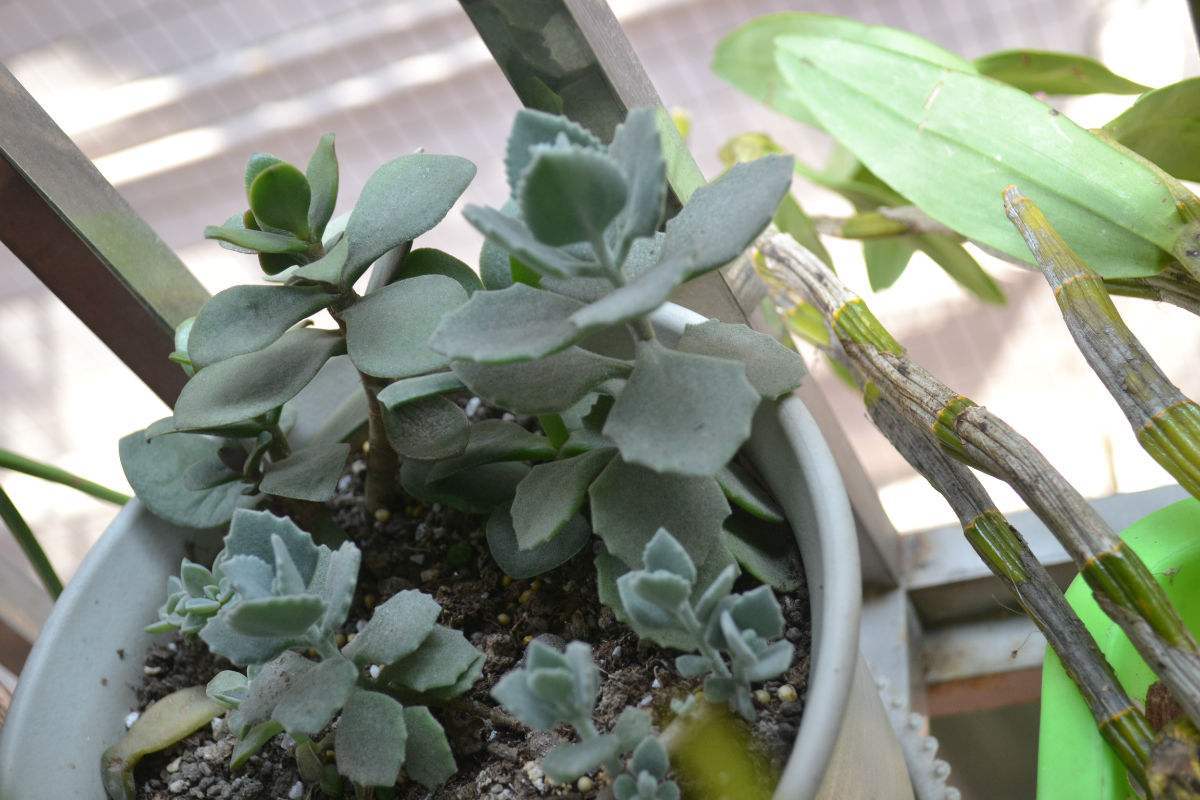
Fuzzy hairs, half-serrated leaves, and small buds sprouting from the notches, summer-growing type (winter dormancy), loves light, can take direct sun, heat-tolerant (but needs ventilation), suitable for spring and autumn. In summer, be careful not to water too much, but not too little either. Suitable for fertile, well-draining sandy soil. Grows readily, can reach about 30 cm, insufficient sunlight causes leggy growth, spring, autumn and early summer are the peak growing seasons.
Kalanchoe millotii
Like other rabbit ear succulents, the leaf surface of Kalanchoe millotii also has a layer of soft fuzz that feels great to touch. The beauty of Kalanchoe millotii lies not only in its fuzzy leaves but also in its very symmetrical and neat opposite leaves. The serrated leaves have a slightly adorable look reminiscent of white maple leaves, giving an overall fluffy and cute impression. The stems easily become woody and can be shaped by withholding water. It is also called white rabbit ear and can produce pink flowers. Probably because its leaves are mostly white, some people mistakenly call it white rabbit ear. The leaves of white rabbit ear are more like the slender feel of rabbit ears, refer to the image below. Relatively speaking, white rabbit ear is less common and a bit more expensive.
Kalanchoe millotii
How to propagate the succulent Kalanchoe millotii? Actually it is the same as other succulent plants. Artificial propagation of Kalanchoe millotii uses leaf cuttings and stem cuttings. The main propagation methods for Kalanchoe millotii are leaf cuttings and stem cuttings, both of which are relatively easy to succeed with. Propagation of Kalanchoe millotii is quite simple; you can directly use the simple and straightforward leaf cutting method. Take healthy, mature fleshy leaves, let them dry for 1 to 2 days, then lay them flat on sandy soil or vermiculite, making sure the base of the leaf is in close contact with the cutting medium, then keep it moist, and before long new roots and new buds will grow from the base. Kalanchoe millotii belongs to the easy-to-grow type; with just a few leaves used as leaf cuttings it can grow into a very large pot. Refer to the leaf cutting process of Kalanchoe millotii in the image below.
Kalanchoe millotii