Features, Making Techniques and Care Methods of Cloud-Layer Bonsai
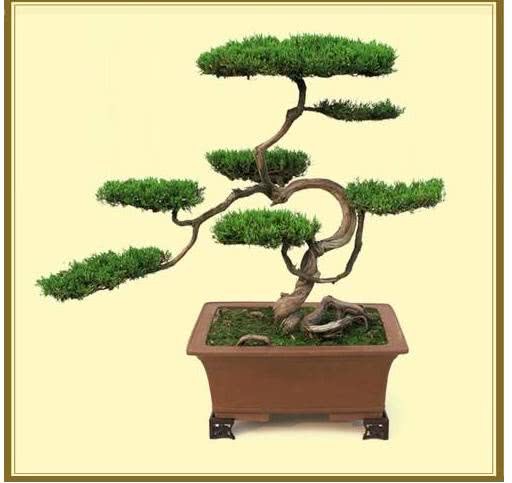
Trees generally grow from the tips of the branches, and it is usually the tips of the branches that receive the most nutrients. I wonder if any flower lovers have had this idea: wanting to create a cloud-layer bonsai, but finding themselves at a loss about where to start. So next, the editor will introduce to all you flower lovers the making techniques for cloud-layer bonsai as well as the issues to pay attention to.
1. Choosing the Branches and Trunk
When making a bonsai, the first thing that must be done is to choose good branches and trunk, and the craft passed down by our predecessors is to choose branches and trunk from nature, selecting those in the natural world that are already rather damaged and decayed but still have hope of being planted and kept alive.
2. Treating the Trunk
There are many methods for treating the trunk. The purpose of treating the trunk is to make it look old, and there are many ways to do this, such as: burning with fire, splitting with an axe, striking with a hammer, and so on. Although there are relatively few people nowadays who know how to do this, if you do meet one, be sure to ask them for advice properly, as it will be useful for flower lovers' learning.
3. Treating the Branches
The treatment of branches mainly follows these principles: the dot branches need to be relatively small but must be dense; the treatment of drifting branches is mainly to present a graceful, flowing appearance; the top branches should be balanced when viewed from above; and the bent branches should be strong and powerful. Actually, the treatment is mainly divided into two steps. One is fixing the branches, which means choosing well which twigs and leaves should be kept or discarded, or should be shortened; the second is cultivating the twigs and leaves that are kept, letting them grow and sprout, and the thing to note is that you must not let the twigs and leaves that should be shortened instead be cultivated to grow longer and longer.
4. Creating Multi-Level Branches
For some deciduous tree species, on these tree species, above each leaf stalk there is a node. If flower lovers shorten this node, then new twigs and leaves will grow again from this node.
So if flower lovers find some branches with 5 leaves, they can shorten them, leaving only two nodes. Not long after, new twigs and leaves will grow out from the nodes, and in this way, as the branches grow, relatively dense branching will appear. And once leaves grow on the branches, everyone will be able to see a new-style cloud-layer bonsai. After the production is completed, place the bonsai for a week to let it grow, and afterward everyone will be able to see a beautiful cloud-layer bonsai appear.
That is the end of the editor's understanding of how to make a cloud-layer bonsai. I just wonder whether you flower lovers have any other views on cultivating cloud-layer bonsai? You are welcome to come and discuss with the editor the problems that exist in cultivating cloud-layer bonsai.