How do you grow succulents so they're plump? Master this trick and they'll fill the pot year after year
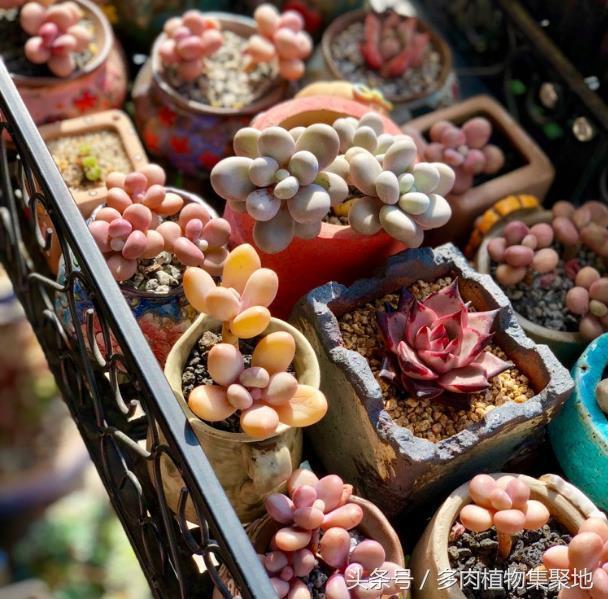
Fertilizing is such an important thing. Many flower lovers think having soil is enough, but if you don't fertilize, your succulents will turn ugly on you. Therefore, plump and juicy succulents are inseparable from the technique of fertilizing. For plants, especially succulents, you should use dilute fertilizer and apply it frequently. Why? This comes down to the succulent's growth cycle: the greater the daily temperature difference, the faster it grows.
Spring and autumn are generally the succulent growing season, so you can fertilize, but never fertilize those that go dormant in summer. Conversely, summer growers like Euphorbiaceae need more fertilizer, and winter-growing succulents such as snow lotus should not be forgotten when it comes to fertilizing. Never fertilize those in a wilted state - pull them out, trim the roots, and change the potting soil. What are the fertilizing methods for succulents? The method of fertilizing after the soil dries: first apply fertilizer water, and after the fertilizer water has fully seeped into the soil, water with an appropriate amount of clear water, which is best. Mixing fertilizer water with clear water and applying them together also works. Fertilize Lithops before flowering, that is, in mid-October, and Conophytum at the end of September.
Bury some slow-release flower fertilizer or organic fertilizer at the bottom of the pot, and combined with regular repotting and soil changing, slow-growing succulents hardly need any extra fertilizer supplementation. Unlike herbaceous flowers, the trait of succulents growing only a few leaves a year results in extremely low consumption. Low consumption naturally means eating less, and moreover, there are several months of dormancy each year. So, as for nutrient needs, what's already in the soil is more than enough.
Besides base fertilizer, you can also consider applying top dressing at the right time. The situation here is relatively more complex, because although they're all called cacti, in fact, among different varieties, due to differences in the inherent characteristics of the varieties themselves, the differences are quite large. What's more, succulents belong to different families and genera. Although they all share the trait of being drought-tolerant, the differences among them are still great, so they must be treated differently and fertilized with caution. For some robust-growing varieties, such as the genera Opuntia, Echinopsis, Mammillaria, Ferocactus and so on, during the growing season, as long as you follow the principle of "dilute fertilizer applied frequently," there's no problem at all.
For fertilizers used on succulents, generally speaking, organic fertilizer is better than inorganic fertilizer. If you must use chemical fertilizer, be sure to use a small amount and dissolve it in water. For organic fertilizer, for example, you can use eco-friendly enzyme, or the chicken manure and leaf mold mentioned above. When fertilizing, if it's a nutrient solution, also use a small amount. If spraying, don't spray it onto the leaves - pour it directly onto the soil. Also, when using fertilizer, try to make it fine and mix it into the succulent's potting soil, and don't damage the roots.
If you want succulents to bloom, you need to pay attention to watering and fertilizing. Watering should be done according to the plant's growth needs, ensuring the water supply, but be careful not to let water accumulate, otherwise it will cause root rot and affect flowering. Don't fertilize too much; follow the principle of dilute and frequent application. When fertilizing, you can apply more phosphorus fertilizer and potassium fertilizer, which can promote flowering and make the plants bloom more and more beautifully. Be careful not to apply too much nitrogen fertilizer, lest they grow leggy.
This is a gathering place for succulent lovers, sharing succulent care tips. Welcome to follow and exchange ideas.