How to maintain and manage tree-and-stone bonsai? A detailed guide to the methods
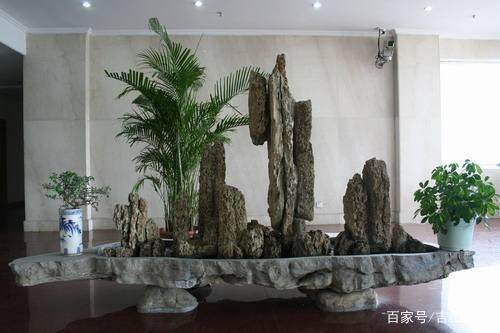
How to maintain and manage tree-and-stone bonsai?
Tree-and-stone bonsai has beautiful scenery, a fresh style, subtle and lasting appeal, a wide range of applicable themes, and considerable market prospects. If it is to reach thousands of households, simplifying its maintenance and management is an important part. The following are the maintenance methods for tree-and-stone bonsai.
1. Watering and fertilizing
Because tree-and-stone bonsai uses very shallow pots and holds little soil, the pot soil usually dries out easily, especially during the high-temperature period of midsummer, so special attention must be paid to timely replenishing water. Generally, this can be determined according to weather conditions. For example, in spring when the sun is bright, water once in the morning and once in the evening; in summer during high temperatures, in addition to watering twice in the morning and evening, an additional misting can be given at noon; in autumn when the wind is high and the air is crisp, water twice a day as well.
To prevent the pot soil from being washed away by water, it is advisable to use a fine-nozzle watering can when watering. After spraying, wait for the water to seep into the soil, then spray again. Repeat this several times so that the pot soil can be thoroughly saturated with water.
In addition to normal watering, a sprayer should also be used to mist the trees, rocks, and moss on the pot surface so that the trees, moss, and so on grow well.
To make the plants in the pot grow vigorously, nutrients must also be supplemented. If there is not enough abundant nutrient supplementation, the plants will grow poorly.
For fertilizing tree-and-stone bonsai, apply thin fertilizer frequently. The fertilizer water used is mostly diluted organic fertilizer water, and inorganic fertilizers should be used as little as possible. The fertilizer water can be sprinkled finely with a watering can, taking care not to contaminate the tree leaves. Some granular organic compound fertilizer can also be buried in the soil so that the plants naturally absorb it slowly.
The best time to fertilize is in spring and autumn, not in summer, usually once a week. Autumn fertilization is very important and can continue until just before Start of Winter and Minor Snow, when it should then stop. Because autumn is the period when trees accumulate nutrients, only by applying enough fertilizer in this season and letting the plants absorb sufficient nutrients can a foundation be laid for the trees' growth in early spring of the following year, and only then will the trees grow vigorously the next year; moreover, applying sufficient fertilizer in autumn also enhances the trees' ability to resist cold and pests and diseases in winter.
2. Pruning and soil changing
After the trees in the pot have grown for some time, they must all be pruned. But at this time, the focus only needs to be on maintaining the tree's shape and posture, that is, cutting short the branches that have grown wild, and promptly removing some crossing branches, whorled branches, water sprouts, overlapping branches, and diseased or dead branches. Apart from this, generally no excessive heavy pruning is needed.
Pruning is best done around the Grain in Ear solar term in June and after the Winter Solstice in December, with two major prunings each year. Usually, take care to remove water sprouts. If a work is to be exhibited, it must be pruned 15 days before the exhibition, and all leaves should be removed so that new leaves sprout right at the time of the exhibition, achieving the best ornamental effect. However, before leaf removal and pruning, fertilizer must be applied early to promote normal sprouting of new leaves.
After the trees in the pot have grown for many years, fibrous roots will densely fill the pot, and the soil will gradually become compacted. If soil changing is not carried out at this time, it will affect the growth of the plants in the pot.
Generally, change the soil once every 2-3 years, mostly in spring and autumn. When changing the soil, first remove the accessories and accent stones, and remember their positions. When the pot soil is slightly dry, take the tree out of the pot, remove about half of the old soil with a bamboo stick, and at the same time cut away some overly long and dense root systems, replace with loose and fertile cultivation soil, then replant the tree into the pot according to its original position, put the accent stones back in their original positions and fix them, place the accessories, lay on moss, and then spray water to soak the pot soil thoroughly.
3. Preventing and controlling pests and diseases
To make the trees in tree-and-stone bonsai grow healthily and vigorously, it is advisable to frequently observe whether there are pests and diseases, so as to prevent them in advance. Because the growing environment of the trees in tree-and-stone bonsai is affected by shallow pots and little soil, their resistance to pests and diseases is relatively weaker, so special attention should be paid to this. Usually, spray pesticide for killing insects and preventing disease once every two months; this can ensure the trees are free from pests and diseases and make them grow robustly.
Production techniques and steps for dry-style tree-and-stone bonsai