Summer is here. What is it about this season that scares everyone so much?
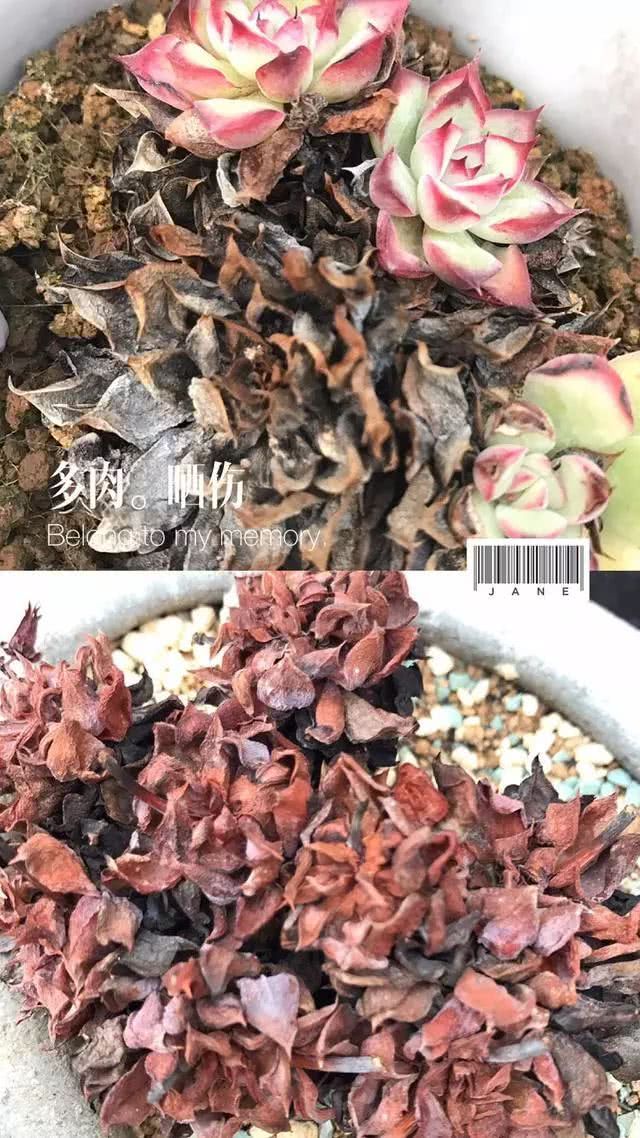
Whenever summer arrives, our succulent-growing circles are filled with all kinds of fear. Beginners who have never made it through a summer in particular just plan to endure it by avoidance until autumn comes.
Some fear sunburn, some fear black rot, some fear root rot, some fear pest infestations, some fear sooty mold, some fear that newly bought succulents won't settle into their pots... The most bizarre of all, some even fear that their succulents will get frost damage. Uh, I forgot to mention, the grower who fears frost damage is located in Sydney.
But in fact, this big pile of problems above isn't necessarily as terrifying as you imagine. Most importantly, simply being afraid is useless; we need to do something about these things. Let's take a quick look at these scary things below.
1. Sunburn
The most memorable thing about summer is the scorching sun. People dread staying out under the sun, let alone succulents.
Sunburn comes in two forms: UV burn and heat burn. In fact, succulents from deserts and high mountain regions are extremely well adapted to UV themselves. All UV burns happen because the succulent isn't quite adapted, for example suddenly moving it outdoors from inside, or a sudden clear day after a long rainy spell, and so on. UV burn has nothing to do with air temperature; it can happen even in winter. Remember not to let your succulents be suddenly exposed to sunlight - that is the supreme method for avoiding UV burn.
The principle behind heat burn is similar to stir-frying. When the temperature is too high, succulents must open the stomata they normally keep closed, cooling down by evaporating water. When water is lost in large amounts, the succulent develops sunburn. Heat burn in summer usually happens in two situations. One is in an environment without ventilation, such as an enclosed balcony, where direct sunlight on the leaf surface causes the leaf temperature to rise sharply. The other is when the soil is too dry and not watered, which leaves the succulent without a channel to replenish water and makes it more prone to sunburn.
The best way to avoid sunburn is to put up a shade net and pay attention to ventilation. In places with poor ventilation, you can run a fan during the day to get the air moving.
Unless the sunburn is very severe, it rarely causes the succulent to die; most of the time it just ruins its looks. Since sunburn won't kill it and there are clear countermeasures, what is there to be afraid of?
2. Black rot
The really annoying thing about black rot is that once it happens, you have to deal with it by beheading, a drastic measure - there is no gentle treatment option. There are also many varieties of succulents, such as those that don't easily grow a stem, where once black rot sets in it's basically a dead end, and even beheading comes too late.
Moreover, the most notorious trait of black rot is that it can neither be prevented nor cured. "Cannot be prevented" means there is no effective drug to prevent black rot. Even the most thorough soil sterilization cannot completely block black rot, because many plants themselves carry the pathogen.
Curing black rot is even harder. That's because the pathogen that causes black rot infects the plant's vascular bundles. When black rot occurs, methods like soaking in a chemical solution only make the pathogen spread faster.
The best way to deal with black rot is actually to let the succulent heal itself. When a succulent is growing vigorously, its resistance to black rot is at its strongest. The biggest reason black rot is so common in summer is that in high-temperature conditions the succulent's life activities weaken, leaving it without enough ability to resist infection. What we can do to help the succulent is to make sure the soil neither dries out completely nor becomes waterlogged, keeping the succulent somewhat vigorous, and this will minimize the occurrence of black rot.
3. High temperatures
Succulents' tolerance for high temperatures is far greater than we imagine. We often start worrying about our succulents once the temperature hits 30°C, but many varieties can live happily at 45°C.
Leaf surface temperature rises sharply because of direct sunlight. Putting up a shade net or blowing some air can quickly bring the leaf surface temperature down. Actual test data tells us that in a windless, directly sunlit environment at 30°C, the leaf surface temperature of the Echeveria 'Romeo' (Dongyun series) rises to 48°C, 18°C higher than the air temperature. But if you blow a fan on it at that point, the surface temperature drops to 34°C, only 4°C above the air temperature.
In the environments around us, most can be cooled for succulents by putting up a shade net or blowing a fan. If it's not that humid, muggy kind of weather, misting to cool down is also an extremely effective method.
Another often-overlooked problem is nighttime minimum temperatures being too high. No matter how hot the weather, nights are relatively cool. So we often overlook the problem of high nighttime temperatures. When the nighttime temperature reaches 26°C or even higher, the succulent's ability to absorb carbon dioxide at night becomes very weak. This directly affects the succulent's photosynthesis the next day. This problem repeats in a cycle, and it will starve the succulent to death.
Using misting to lower the leaf surface temperature is the one and only method for dealing with high nighttime temperatures. Of course, the big spenders among you might ask whether you can just turn on the air conditioning at night to cool things down - well, of course that's no problem at all.
4. Scale insect pests
Scale insect infestations very rarely cause succulents to die. After all, scale insects are parasites on the succulent, and they actually don't want the succulent to die either.
A healthy succulent can support a great many insects on its own, so occasionally finding a few scale insects really is nothing. If you don't have many succulents at home and can keep up with them, you can even skip the chemicals and control outbreaks purely by physical methods (picking them off with a toothpick, removing them with tweezers).
It's fine if you have a lot of succulents too - as soon as you spot scale insects, spray once immediately to control them, and spray again whenever you find more. After a few cycles, the scale insects will basically vanish without a trace.
Scale insects dislike humid environments, so overly dry soil and going a long time without watering are the foundational conditions for a major scale insect outbreak.
5. Fungal diseases
Leaf surface diseases like sooty mold and gray mold are truly terrifying - once they become widespread, they really can kill your succulents in huge numbers.
The worst thing about this kind of disease is not that it's hard to treat, but the cross-infection and reinfection. Once sooty mold starts appearing in your little garden, it means mold spores are everywhere in the surrounding air. These spores fly all over the place, and as soon as they land on another succulent's leaves they immediately attach and start growing. That's why you get the illusion that the mold can't be killed.
Generally speaking, 2 to 3 sprayings of mancozeb on the leaf surface is enough to kill off the fungi on the leaf surface. But once you stop the treatment, the mold spores drifting in the air will reinfect the leaves, giving us the false impression that fungal diseases are extremely hard to treat.
Most of the time, by the time we discover that a certain succulent has been infected with sooty mold, it's already fairly late. Doing isolation work at that point can no longer thoroughly block the spread of the fungus either. What we need to do then is spray uniformly, carrying out sterilization treatment on all the succulents in a given area. Treat the already-infected succulents while also preventing infection in the uninfected ones.
6. Succulents not settling into their pots
Succulents not settling into their pots in summer is almost the problem growers worry about most.
However, this problem doesn't really exist. In other words, most growers who fear their succulents won't settle into their pots are actually overthinking it.
If the environment where you grow succulents has nighttime temperatures below 26°C and daytime conditions where you can shade them to avoid direct sun, then worrying about succulents settling into their pots really is overthinking. In such an environment, succulents settling into their pots is almost a stress-free matter.
So what causes succulents not to settle into their pots in summer? The biggest reason is not! watering! You've already calculated that you're not going to water your succulents, so why on earth would they bother growing roots? They'd be better off saving a bit of energy and figuring out how to survive the "dry season" you've artificially created.