Want to make DIY fertilizer more effective? Here's how to do it right
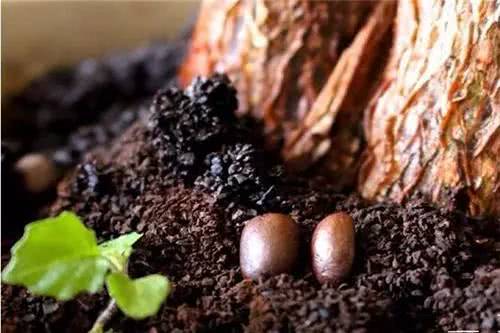
Organic fertilizer has many advantages for growing flowers: it not only improves and raises soil fertility, but its fertilizing effect also lasts a long time.
Unlike chemical fertilizers, whose effect is fierce but short-lived and whose long-term use leads to low soil self-regulation capacity and easy compaction.
Making organic fertilizer yourself not only turns waste into treasure and saves the money spent on buying chemical fertilizers, but also gives you hands-on satisfaction, enriches the joy of growing flowers, and delivers a fertilizing effect that is truly excellent - truly multiple benefits in one.
But many flower growers also say that homemade flower fertilizer is not very convenient to use, and has even killed their flowers.
The key lies in the compostingmethod、timeas well as the fertilizingamount and timing。
For homemade flower fertilizer, you must be clear about the following points:
1、Which materials need to be decomposed, how long decomposition takes, and how to judge whether decomposition and fermentation are complete.
2、Homemade flower fertilizer contains fertilizer nutrients and also many bacteria and pests. How do you disinfect it?
3、Understand which elements the flower fertilizer to be composted contains, and what its application effects are.
4、You need to know what problem your flowers have and what type of fertilizer they need.
5、Homemade fertilizer also requires attention to amount and timing.
The general method for composting homemade flower fertilizer is as follows:
1、Composting: Dig a soil pit about 20-60 cm deep, put the materials in, sprinkle insecticide or disinfectant, and cover with soil.
You can use the "sandwich method", one layer of soil and one layer of raw material. For plant-based materials, finally cover with more than 40 cm of soil.
If you do not have a soil pit, you can use a foam box or a large-capacity plastic bucket (must release gas regularly).
2、Soaking: In a sealed plastic container, add water to solid materials, or compost liquids directly, keep at constant temperature with sunlight, open the lid periodically to release gas, and shake evenly once each time.
3、When composting flower fertilizer, the higher the temperature, the faster the decomposition and the stronger the smell.
4、Before composting raw materials, it is best to boil them until soft, which can greatly speed up composting.
For common homemade flower fertilizers, how long do they actually need to be composted, and what nutrients do they contain?
They are rich in nitrogen, phosphorus and potassium fertilizers. Under what circumstances is using them more effective?
Nitrogen is an important component of protein and also of chlorophyll, and is one of the most basic substances for plant growth.
With sufficient nitrogen fertilizer, plant roots and stems are sturdy and the foliage is lush.
With insufficient nitrogen fertilizer, growth is slow, roots and stems are thin and weak, and leaves are small and yellow.
With excessive nitrogen fertilizer, stems and leaves grow excessively and flowering is delayed.
Phosphorus is an important component of plant cells, and plants need enough phosphorus throughout the growth period to strengthen development.
With sufficient phosphorus fertilizer, branching and the abundance of flowers and fruit can be promoted.
With insufficient phosphorus fertilizer, the ability to branch, flower and bear fruit is low.
With too much phosphorus fertilizer, development can also be affected, causing decline.
Potassium does not directly participate in the composition of plant growth, but it can promote photosynthesis and strengthen the synthesis of various nutrients.
With sufficient potassium fertilizer, roots and stems are robust, flowers bloom more beautifully, and resistance to pests and diseases is strong.
With insufficient potassium fertilizer, old leaves grow poorly, become scorched, black and yellow, and diseases easily appear.
With too much potassium fertilizer, it is easy to affect the absorption of trace elements, affect development, and cause new leaves to wither and yellow.
Many flower growers report that composting flower fertilizer smells too strong.
Composting flower fertilizer is a fermentation process, and the smell cannot be completely removed, but you can find ways to decompose it as much as possible and reduce volatilization:
1、Increase the composting time. When it is sufficiently decomposed, the flower fertilizer will not smell very bad.
2、Use a plastic jug with a wide belly and small mouth, so less smell is released.
3、Add crushed dried orange peel (has little effect) or 5% ferrous sulfate.
Finally, here are practical and necessary principles for fertilizer application.
Applying at the right time and in the right amount is the key to fertilizing. This passage summarizes it very well:
Apply more when yellow and thin, apply more before budding, apply more during bud formation, apply more after flowering;
Apply less when vigorous, apply less when sprouting, apply less when flowering, apply less in the rainy season;
Do not apply when growth is leggy, do not apply when newly planted, do not apply in the height of summer, do not apply during dormancy.
The most important point, as often said, is light fertilizer applied frequently.
If you also like growing flowers, then follow us!