How do succulents change color? A little carrot soup makes it easy to grow jelly-colored succulents
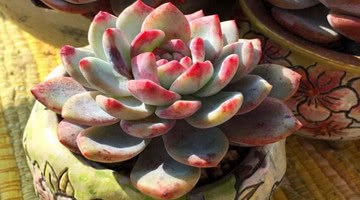
When growing succulents, you always hope they can reach their peak condition; succulents in peak condition have very high ornamental value and are deeply loved by succulent enthusiasts. In fact, many friends know that most succulents in the Crassulaceae family can have their colors changed through artificial intervention. Below are a few tips to turn your succulents at home into romantic jelly colors.
1. Light - ultraviolet rays
Succulents are best given at least 4 hours of light every day; the light referred to here means ultraviolet rays, not light that has passed through glass. The ultraviolet rays in light are the key to succulents changing color, so succulents grown outdoors are easier to bring into peak condition than succulents at home. However, outdoor growing requires attention to technique, otherwise they are prone to sunburn or frostbite.
2. Temperature difference
Generally, high temperatures can satisfy the growth of succulents, while in a low-temperature state new anthocyanins are synthesized very quickly. The principle is also fairly simple: chlorophyll cannot tolerate low temperatures, and under low-temperature conditions the chlorophyll in the leaves decreases, and then new anthocyanins form to resist the cold. This is the succulent's self-protection ability.
3. Carrot soup
This method is only suitable for succulents in the Crassulaceae family; Crassulaceae succulents will absorb carotene. The method is also fairly simple: cut the carrots into pieces, wash them, put them in a pot and boil them, then after cooling they can be put into a plastic bottle to ferment. Generally, after one or two months they will be fully decomposed, and then this can be used to water the succulents. It can make the succulents become semi-transparent or yellow-red.