How to make a Caragana sinica bonsai? A step-by-step guide to the method
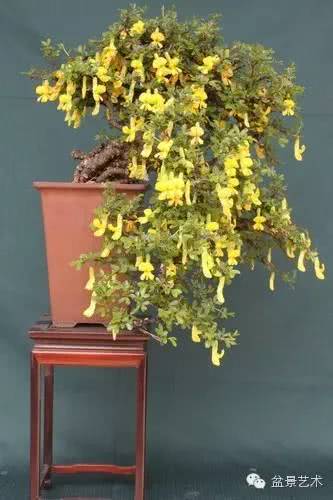
Caragana sinica gets its name because its golden-yellow flowers resemble a sparrow spreading its wings to fly. It also has other aliases such as peashrub, Feilai Feng, Qun Que and leopard-skin whip, and is a deciduous small shrub of the genus Caragana in the Fabaceae family. The plant grows about 1.5 m tall, with an iron-blackish-brown trunk that grows upright in clumps, slender yellowish-brown or gray branchlets, and long branches that droop as they grow. The stems have prickles, and the bark peels off in thread-like strips. The odd-pinnate compound leaves bear small leaflets that are leathery and dark green. One to two flowers are borne in the leaf axils; they are papilionaceous, yellow with a reddish flush, and open from April to June.
Caragana sinica is distributed on sunny slopes in the hilly and mountainous areas of China's Yangtze River basin and North China region, and is now widely cultivated as a garden ornamental. Its roots are gnarled and rugged, its trunk is steely and tough, and its supple branches are easy to twist and wire, making it suitable for creating bonsai in various styles such as wind-swept, cascade, forest, exposed-root, connected-root, root-on-rock, curved-trunk, slanting-trunk and double-trunk styles. When making a bonsai, you should shape it according to the material, combining wiring and pruning, and use methods such as guy-wiring for comprehensive shaping, so that the finished bonsai is both aged and ancient-looking and lush and green, full of vitality, achieving an artistic realm that originates from nature yet surpasses it. Before placing a Caragana sinica bonsai into a fine pot, you can first grow the material in a clay tile pot filled with clean, plain sandy soil; after it survives, give it preliminary shaping and expose its roots, then move it into a fine pot for viewing in the second or third year. Potting up and transplanting Caragana sinica should be done before growth starts in spring. Before planting, cut off excess branches and remove torn or damaged roots, and make the cut surfaces smooth. Never soak it in water, otherwise it will inevitably rot at the roots and die after planting. After planting, water once to settle the roots, and thereafter do not water unless the soil is dry. Plants that have not yet leafed out should be kept in a wind-sheltered, sunny place after potting, and the ambient temperature need not be too high; let them first grow roots and then leaves, so that overly high temperatures do not cause the plant to sprout too early and create a "false survival" phenomenon.
Caragana sinica is commonly propagated by sowing, division, cuttings and layering. It prefers a sunny environment and tolerates drought and poor soil, but fears waterlogged and overly shaded conditions. It has very strong sprouting ability and grows rapidly, so during the growing season it should be pinched back frequently; this not only keeps the leaves small but also encourages more flower buds and more blooms. At any time, cut off branches that are too long, too messy or otherwise spoil the bonsai's appearance. Each spring before growth starts, prune the plant heavily once, removing weak branches, water sprouts, dead branches and other branches that affect the shape. Caragana sinica is not afraid of sun, and even in midsummer it does not need shading. However, too much water will rot the roots, and too much fertilizer will make the leaves too large and reduce its ornamental value, so during routine care there is generally no need for additional fertilizer; however, when the flower buds form, you can spray the leaves once with 0.2% potassium dihydrogen phosphate to prolong the flowering period. In winter, overwinter it indoors in a cool place or outdoors in a wind-sheltered, sunny spot. About every 3 years, repot once in spring before growth starts; the potting soil should be a sandy soil of medium fertility with good drainage.