Nectarines got powdery mildew? Try baking soda, it might help
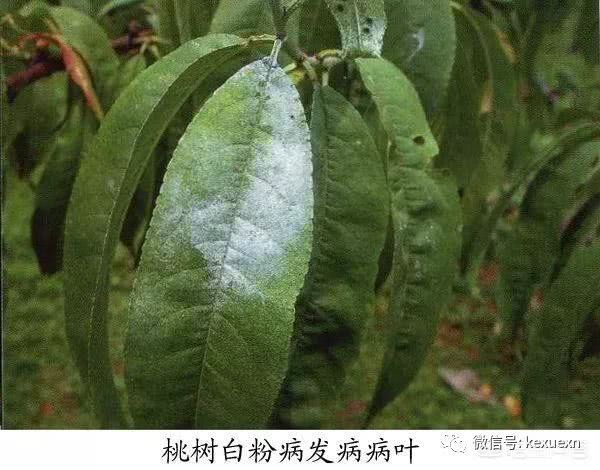
Regarding the use of baking soda to treat powdery mildew, I previously introduced the application of baking soda in vegetables, in which I mentioned that baking soda can treat powdery mildew. Powdery mildew is also a relatively common disease in peaches, and since peaches are a fruit we eat, there are also concerns about pesticide residues. Baking soda is simply our edible alkali, so there is no need to worry about these things; at least safety is guaranteed. Below I will introduce the situation regarding baking soda for treating powdery mildew, hoping it can be of help to you.
First, let me introduce the conditions under which powdery mildew occurs. Usually in wheat fields, or on fruit trees and vegetables, when the weather is humid or nitrogen fertilizer is excessive or insufficient, powdery mildew occurs at a high rate. It can occur at 10-25°C. Whether it ultimately develops into an epidemic disease depends critically on environmental humidity and the growth conditions of the host. The more humid the conditions, the faster the disease develops. In dry air conditions, it is favorable for reproduction and the spread of the disease.
The reason baking soda can treat powdery mildew is that the conditions for powdery mildew to occur are more suited to acidity; under acidic conditions, it is more favorable for the disease to occur and spread. Baking soda is weakly alkaline and will not poison crops, and the carbon dioxide produced by baking soda also helps photosynthesis, so it can be said to serve two purposes at once.
Spraying baking soda on peaches affected by the disease disrupts the growth conditions of powdery mildew spores and lowers the pH at the affected sites of powdery mildew, thereby causing the powdery mildew to die and achieving the purpose of treating the disease.
Specific usage: add 2 g of baking soda to 1 kg of water, fully dissolve the baking soda according to this ratio, then choose to spray with atomization. Spray once every three to five days, and after three to four consecutive sprays you can clearly see that the powdery mildew has lessened or been completely eliminated.
The above is a point of view shared with you by Science Agriculture, hoping it can be of help to you.