How to Make a Snow Mugwort (Artemisia) Bonsai and Key Care Points
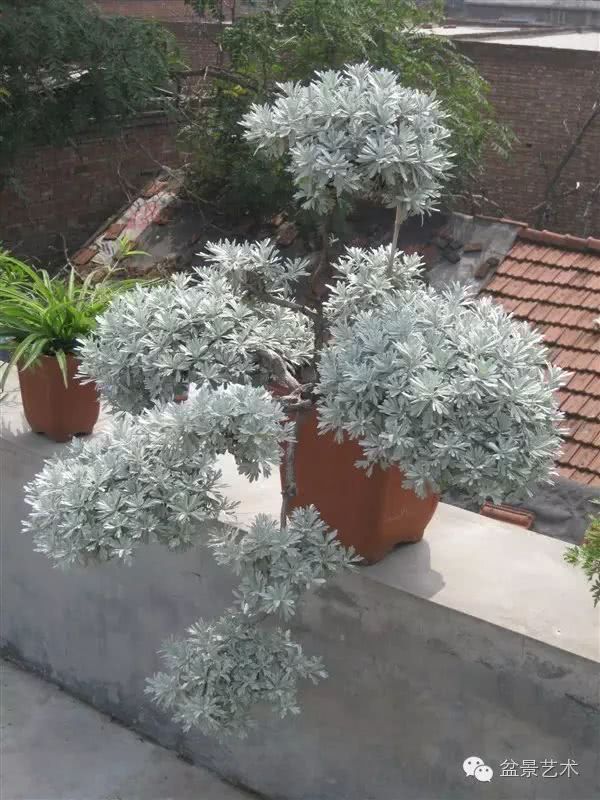
Snow mugwort, also known as Qi mugwort, hibiscus wormwood, sea hibiscus, and snow hibiscus, is a perennial evergreen subshrub of the genus Artemisia in the Asteraceae family. The whole plant is covered with white fuzz, the plant height is 30 cm to 60 cm, the branches are light yellowish-brown or grayish-white, the old trunks have vertical cracks, and the leaves are alternate, clustered at the ends of the branches. The leaf blades are oblong-spoon-shaped or oblong-obovate, with entire margins, and the tips are rounded-obtuse or shallowly lobed. The leaf color is grayish-white or silvery-white. Most of the flower heads gather at the branch tips into racemes, the florets are yellow-green, and the achenes are long-elliptic with five ridges. Using it to make bonsai produces a finished shape quickly; the roots twist like eagle claws, the trunk is simple and ancient-looking, and the silvery-white leaves resemble snow, so it can be enjoyed in all four seasons.
I. Material Sources
Snow mugwort used for making bonsai is commonly propagated by cuttings, generally carried out during the growing season. The cuttings can use robust and well-developed branches; old branches or young branches are both acceptable, and length is not limited. In production, growing branches that affect the shape are often cut off for use. The cutting bed can use river sand, perlite, vermiculite, or other media with good drainage and air permeability. After inserting the cuttings, water thoroughly once, then keep the soil and air moist, and provide appropriate shading to avoid exposure to fierce sun. Roots form in about half a month, and after one month they can be divided and potted for normal water and fertilizer management. During the seedling stage, it is best to plant in fertile soil and apply a once-weekly diluted, fully decomposed liquid fertilizer. Snow mugwort grows very quickly, and once the crown diameter reaches a suitable size, it can be shaped.
II. Styling
Snow mugwort can be styled during the growing period from April to October. In winter, because the branches are relatively weak and easy to break, styling should not be done. Its styling can, as needed, be worked into different forms of bonsai such as straight-trunk style, curved-trunk style, slanting-trunk style, double-trunk style, forest style, waterside style, cliff style, and water-and-land style. The canopy can be either natural in form or a neat round-pad shape. The styling method mainly uses wiring, with pruning as a supplement; fine wiring and rough pruning. First use metal wire to wire the main trunk, main branches, and side branches into the basic form, then prune appropriately to shape it. When styling, advantage can be taken of its fast wound healing: branches that affect the shape can be torn off from the base together with the bark. After the wound heals in about one month, it appears vigorous and ancient, with no trace of human work, achieving the artistic effect of "though man-made, it seems heaven-created."
III. Daily Care
Snow mugwort is native to Taiwan, China, Fujian, and other places in China. It likes a warm, humid environment and plenty of sunlight, is slightly tolerant of semi-shade, and is not cold-tolerant. A finished bonsai can be kept outdoors in a sunny spot during the growing season for care, and does not need shading even in midsummer. If light is insufficient, the branches and leaves will grow leggy, the plant shape will be loose and not compact, and the leaf color will change from silvery-white to light green, all of which affect its ornamental value. During the growing season, it requires sufficient water and fertilizer. A fully decomposed, diluted cake fertilizer water can be applied once a month. Normally, do not water until the soil is dry; when watering, water thoroughly. Never give half-watering, and do not allow water to accumulate in the pot. When the air is dry, pay attention to misting the plant to increase air humidity and avoid scorched leaf tips. In the rainy season, drain promptly to prevent waterlogging; otherwise, water accumulation in the pot soil will cause root disease and rot.
In winter, move it indoors to a sunny place, reduce watering, stop fertilizing, and maintain a room temperature of 5°C to 10°C. If the temperature is too low, frost damage will occur, while if the temperature is too high, the plant will grow leggy and affect the styling. Each spring, remove excess buds that are unfavorable to the shape. Repot once every 1 to 2 years. The potting soil should be rich in humus, loose, fertile, and have good drainage. It can be prepared by mixing 5 parts humus soil, 3 parts garden soil, and 2 parts river sand and furnace slag. When changing the pot, do not remove too many roots; about 1/3 of the old soil can be removed, and the roots can be lightly pruned. After planting, water thoroughly and keep it under a shade for care. After the plant recovers, it can be placed in a sunny spot for normal management.