Why does clearing the soil around peanut seedlings have so many benefits? It can both increase yield and improve disease resistance
1. What is clearing the soil around seedlings
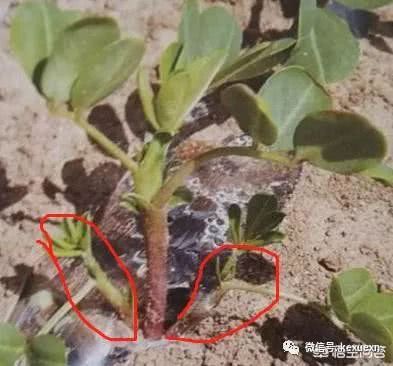
In fact, friends who have grown peanuts know that clearing the soil around seedlings can increase peanut yield. What does clearing the soil around seedlings mean? Actually, clearing the soil around peanut seedlings refers to the practice of, after peanuts enter the full seedling stage, exposing the two cotyledons of the peanut from the soil so they receive light and their growth is promoted.
2. The role of clearing the soil around seedlings
Then some may ask, why should the soil around seedlings be cleared? Is it not okay not to clear it? In fact, clearing the soil around peanut seedlings is mainly carried out according to the growth habits of peanuts. Timely clearing of the soil around peanut seedlings helps increase the peanut pod-setting rate, thereby increasing yield. Research shows that timely clearing of the soil around peanut seedlings can increase yield by about 20%. Therefore, clearing the soil around peanut seedlings is very necessary.
3. Reasons why clearing the soil around seedlings increases yield
Why can clearing the soil around peanut seedlings increase yield? First, we need to understand what factors affect the number of peanut pods. We all know that peanuts flower above ground and bear pods underground. After the peanut flowers, a peg grows out from the calyx tube. This peg quickly penetrates into the ground and then grows underground to form a peanut. This process is what we often hear called pegging. Therefore, flowering in the leaf axils and the number of pegs directly affect the peanut pod-setting rate.
But friends who often grow peanuts should know that the two cotyledonary buds of peanuts generally do not emerge from the ground on their own, so the peanut buds need to be manually exposed from the soil. After being exposed, the two cotyledonary buds of the peanut grow rapidly due to photosynthesis and form the first lateral branch of the peanut. The flower buds and pegs formed on the first lateral branch are the most numerous, and their pod-setting rate accounts for about 70% of the whole peanut plant.
The pod-setting rate of the second lateral branch is about 20%. Therefore, if the soil around peanut seedlings is not cleared in time, it is very easy for the peanut main stem to grow too tall, become spindly, and produce too many useless lateral branches, and the peanut plant will have poor disease resistance, affecting peanut yield.
In addition to timely clearing of the soil around seedlings increasing peanut yield as mentioned above, clearing the soil around seedlings can also play a role in hardening the seedlings. Timely clearing of the soil around peanut seedlings allows the peanut to supply nutrients in time to the first and second lateral branches, helps the peanut main stem become thick and strong, avoids spindly growth, and makes the plant grow more robust.
In addition, clearing the soil around peanut seedlings is generally carried out together with intertillage and weeding of peanuts. With fewer weeds, the peanuts naturally grow well, which is actually an indirect way of promoting peanut yield increase.
Moreover, after clearing the soil around peanut seedlings, it is beneficial to the growth of peanut lateral roots, promotes the absorption of nutrients by the roots, and increases the peanut's ability to resist diseases and abnormal weather. In addition, after clearing the soil around seedlings, the soil at the base of the peanut is removed, which helps reduce the breeding of aphids.
In fact, looking at it comprehensively, among these benefits of clearing the soil around seedlings, the most obvious one is still the increase in peanut yield.
4. Points to note when clearing the soil around seedlings
What needs attention when clearing the soil around peanut seedlings is that the timing must be well controlled. It should not be too early, nor too late. Generally, it is done in time after the peanuts reach full seedling stage. Clearing the soil around seedlings too early can easily cause poor cotyledon development, slow growth, and even sunburn of the buds. If too late, the peanut main stem has already elongated, the lateral branches grow too late, and nutrient supply is insufficient, causing the lateral branches to be weak, which is not conducive to more flowering and pegging.
When clearing the soil around seedlings, it is enough to ensure that the two cotyledons are exposed above the soil surface. Do not remove the soil too deeply, as this can easily cause the plant to lodge. If too shallow, it is equivalent to doing useless work and will not achieve the effect that clearing the soil around seedlings should have.
The above answer about clearing the soil around peanut seedlings comes from the original content of Science Agriculture and is hoped to be helpful to you.