Rose grafting is a skilled job, but mastering 5 key factors will ensure survival
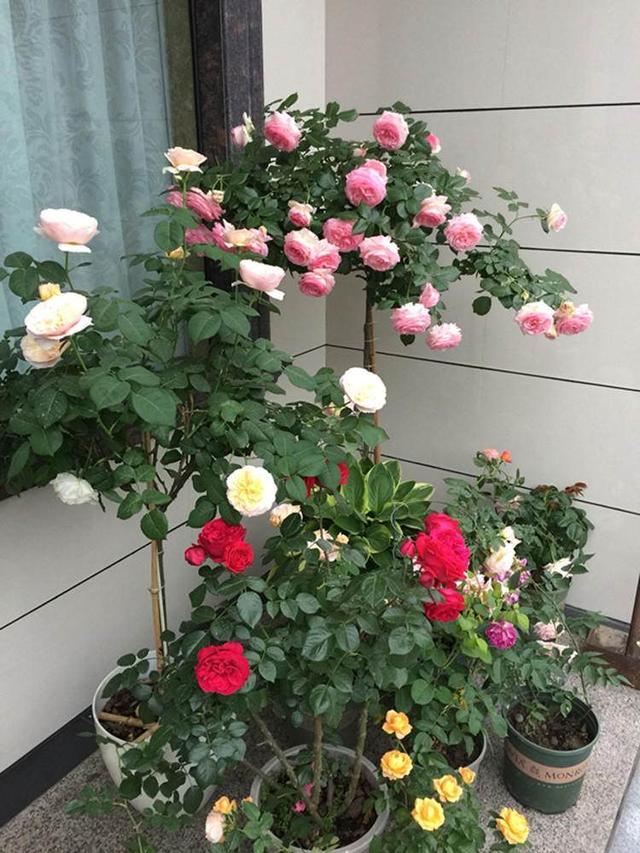
Rose grafting is a high-difficulty operation for many flower lovers, and the plants just never survive. What exactly is the problem? In fact, rose grafting is not technically difficult, but it is affected by many factors. Therefore, if you want a high survival rate in rose grafting, there are 5 factors you need to understand.
The first factor: degree of compatibility
To achieve a high survival rate in rose grafting, one key factor is that the compatibility between the scion and the rootstock (that is, a close genetic relationship) must be strong. Such grafted seedlings usually have relatively strong adaptability and can extend lifespan or bring flowering earlier. Therefore, rose grafting generally uses rose (Rosa multiflora) as the rootstock.
To make the grafted branches grow strong, flower lovers need to put in some effort in regular care, replenishing nutrients for the rose in time. Use an organic nutrient solution specially formulated for roses, with comprehensive nitrogen, phosphorus and potassium, dilute it with water at 500 times, and water the roots once every 7 days to support the rose's growth and absorption.
The second factor: grafting time
The grafting time differs depending on the method used in different regions. Each place should follow the best local time for propagating roses by grafting. It is generally recommended that cut grafting can be carried out from November each year to January of the following year, and cut grafting in December gives the highest survival rate and the best growth and development.
The third factor: phenological period of the rootstock and scion
Under normal circumstances, the phenological period of the rootstock should be slightly earlier than that of the scion, as this is more favorable for survival. This is because the water and nutrients that sustain the life activities of the rose scion must be replenished through the rootstock. If the scion becomes active first, and at that time the rootstock cannot supply water and nutrients in time, the scion will wither and die, and the grafting will fail.
Nutrients can be supplied with liquid fertilizer. During the care period, water the rootstock once every 7-10 days. When treating the rootstock, you can also soak the rootstock in an organic nutrient solution diluted 500 times for 10-15 minutes, which helps rooting and improves the survival rate.
The fourth factor: align the cambium layers closely
When grafting, you must align the cambium layers of the rootstock and scion, and ensure they are closely pressed together, so that callus tissue can form, and then roots and shoots can develop. Therefore, when grafting, it is best to cut the rootstock first and then the scion, as this can shorten the time for water evaporation. The cut surface must be smooth; the binding must be tight to avoid gaps in the middle that affect survival.
The fifth factor: suitable temperature
Generally, the suitable temperature for rose grafting is 25°C. If the temperature is too high or too low, it is not conducive to cell division and the formation of callus tissue. After grafting, if too much water is given, causing excessive humidity, it can easily cause the wound to rot; if there is drought and lack of water, and the air humidity is too low, the survival rate will not be high.
Some images are from the flower lover: Loulan's Dancer