Rhododendron: one ladle of water, one spoon of fertilizer, blooming in clusters in May
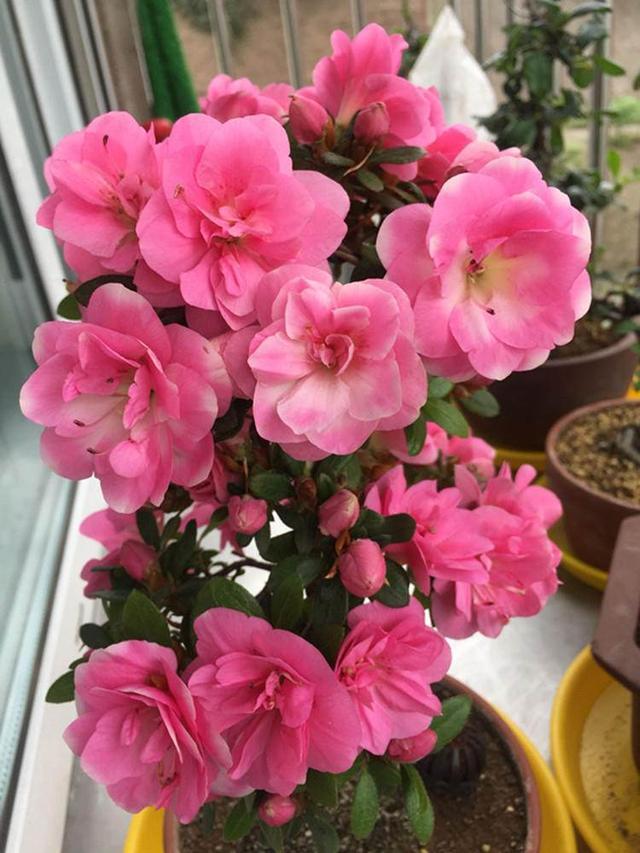
Rhododendrons are in full bloom in May, flowering in spectacular clusters. But to grow rhododendrons well, you need to master not only one ladle of water but also one spoon of fertilizer, so that they can bloom beautifully in May.
1. How to make good use of one spoon of fertilizer?
For rhododendron care, repot and change the soil once every two years. Do not fertilize too frequently, and especially avoid applying night soil; the concentration must not be too high. When fertilizing, pay attention to the following: from the time they are moved outdoors until the flower buds form, that is, from March to early April, to encourage old leaves to turn green and the buds to be brightly colored, you can apply a general-purpose flower nutrient solution 1-2 times, diluting it 500 times each time and pouring it directly at the roots.
After flowering, from May to July, apply a post-bloom fertilizer once; in autumn, before moving them indoors, in early to mid-September, spread a layer of horse manure over the surface of the pot to protect the roots through the winter. In early spring, before moving them outdoors, apply an additional greening fertilizer, diluted 500 times with water and poured on.
2. How to make good use of one ladle of water?
Rhododendrons have fine, delicate roots, and neither drying out nor waterlogging is good for their growth. If water is lacking during flowering, the petals soften and droop, the flowering period shortens, and the flower color is less vivid. If water is lacking during leaf expansion, the leaves turn yellow, the young leaves curl, and growth is poor. If too wet, the fibrous roots are damaged and rot, so watering must be done at the right time and in the right amount according to each stage of development.
(1) From November of that year to March-April of the following year, rhododendrons overwinter indoors in a dormant stage and do not need much water, so just keep the soil from drying out. Generally water once every 3-5 days, preferably at noon. If the temperature is too high, combine this with ventilation to lower the temperature.
(2) By the end of March, rhododendrons have begun to root and sprout, and their water needs increase accordingly, so watering should be handled differently, generally once every 1-2 days at noon.
(3) From late April to early May, rhododendrons are in the flower bud differentiation stage, and branches and leaves also begin to sprout, so water demand is relatively high. Generally, water once in the morning and once in the evening, with a sufficient amount each time. At the same time, pay attention to ventilation and spray more water on the leaves to increase indoor humidity.
(4) Before moving them out of the greenhouse in mid-May, gradually harden them off to suit the outdoor climate. First open all the greenhouse skylights and door curtains, and after 7-10 days move them outdoors to a shaded place for cultivation. At this time, dry spring winds are most common, so spray water 4 times a day and set up windbreaks for protection.
(5) In June-July, when it is hot and dry, set up a double shade canopy and increase watering on the ground and spraying on the leaves, 2-3 times a day.
(6) In August-September, as the temperature drops, reduce watering to 1-2 times, and along with watering, apply an organic nutrient solution diluted 800 times to help the rhododendrons absorb it and overwinter safely.
In addition, to promote larger rhododendron flowers and extend the flowering period, you can thin-prune once in mid-December each year and properly shorten the branches once. Do not water during the flowering period, and promptly remove the flower stalks after flowering; this can extend the flowering period and make the flowers larger and more vivid.