Detailed Guide to Growing Moringa Trees in Balcony Containers
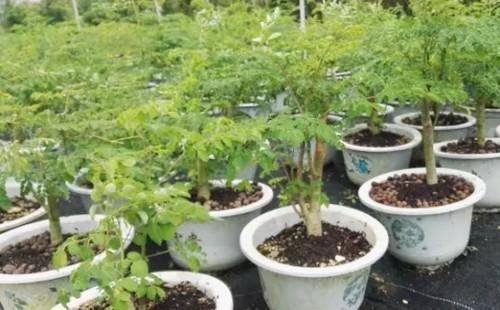
Moringa is a tree species well suited to ornamental container growing. Its leaves are small and oval, and its flowers are white with a slight tinge of yellow, curving downward and outward when in bloom, making them very beautiful. Not only that, but moringa also gives off a richly fragrant scent. At the same time, it can also be cooked and eaten as a vegetable; it is not only nutritious but also has fairly high health value.
Moringa trees can be grown in containers on balconies to beautify the environment, but when grown as container plants, dwarfing techniques are very important. This is because moringa trees tend to grow very tall under natural conditions. If grown in containers on a balcony without dwarfing, they will not only be limited by the balcony space but also look unattractive as container plants, seriously undermining their ornamental value. Below, the editor will introduce the method for growing moringa trees in balcony containers.
I. Placement
Moringa trees prefer light and also have a certain degree of drought tolerance, so growing them in containers on a balcony is ideal. However, this tree species has relatively poor cold tolerance, so it needs to be placed in a sunny spot on the balcony where it can easily receive ample light. The most suitable growing temperature is between 25°C-35°C. When winter temperatures drop, it should be moved indoors promptly to keep it warm so it can successfully overwinter.
II. Potting Soil Environment
Although moringa is not strict about potting soil and generally adapts to various types of soil environments, and is fairly tolerant of poor soil, to ensure it maintains good growth, it is usually recommended to use sandy loam for planting to improve the soil's drainage. The potting soil pH should preferably be kept at 4-8.
III. Watering Management
After moringa seedlings are potted and established and growing steadily, the first thing we need to do well is watering. Each watering should be thorough, but waterlogging in the pot must be avoided, otherwise the plant is prone to disease infection and may die. Normally, keeping the potting soil moist is best, but during the high-temperature summer period, it is recommended to water once each morning and evening, likewise with the aim of keeping the potting soil moist. After autumn begins, the watering frequency should be reduced to prevent the plant from developing withered branches and leaves.
IV. Timely Repotting
Because moringa trees grow rapidly and have a high demand for nutrients, timely topdressing management is needed. In addition, container-grown moringa trees usually need repotting and soil replacement every 1-2 years to meet their growth needs. If nutrients are insufficient, moringa trees are very prone to problems such as yellowing leaves and various other poor-growth issues.
V. Dwarfing Treatment
Moringa trees have strong sprouting ability and tolerate pruning well, so when grown as container plants they should be pruned frequently to control the plant shape, thereby achieving a dwarfing effect that is better for ornamental display. If branches grow too thick and sturdy, they will inevitably affect the plant's direction of growth, so generally the plant is cut back directly at a point about 30 cm above the pot surface to encourage more side branches to sprout. As for pruning container-grown moringa, the plant shape should be kept varied and well-arranged with a sense of layering, so that while maintaining plant growth it also maintains a better ornamental effect.
VI. Timely Harvesting
Generally, if care and management are done fairly well, the harvesting period of a moringa tree can be maintained at more than 6-7 months throughout the year. However, during harvesting, care should be taken to maintain the plant shape, and harvesting must not be concentrated on one side just because that side has a large amount to harvest. The purpose of growing moringa trees in containers is to make harvesting convenient while also maintaining good ornamental value.