Another clivia added to the collection, a friend just dug it up and gave it to me, full of surprises
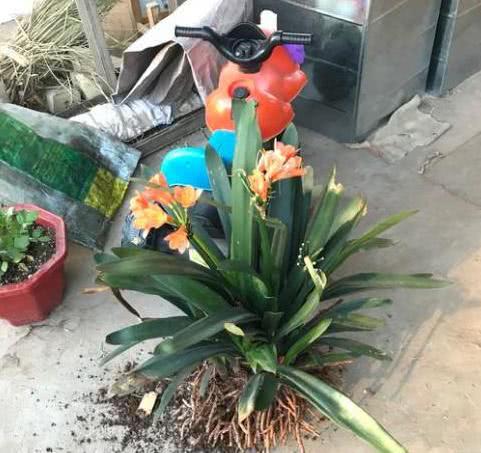
My friend just dug up another clivia for me, and I'm a bit surprised. This one has several pups, does anyone want some, I'll divide the pups
Some people like to water repeatedly, which very easily causes clivia root rot, so when caring for them you must pay special attention to watering frequency to prevent root rot, especially during the flowering period, you must do a good job of controlling water, otherwise it easily causes bud drop. Water appropriately during the growing season; when the soil 3~5 cm below the surface of the pot is dry, then choose to water appropriately. When the temperature is below 10°C, you should control water somewhat, and in cold weather keep the potting soil slightly dry.
When the weather gradually turns cool, on drizzly days, it is best to cut the scape of mature clivias and harvest the seeds, as this gives more chances for scapes and flowers to form. Clivia is one of the flowers that gardening enthusiasts commonly grow. A mature clivia can absorb about 1 liter of air and release 80% oxygen in 1 day! And at night it does not release carbon dioxide. Placing two or three clivias at home can effectively absorb indoor smoke, play a good role in regulating the air, and keep indoor air fresh.
In summer, clivia should be kept from intense light all day. Using the slanted morning sunlight for a while each day is enough to satisfy photosynthesis. The accustomed temperature is 18°C--25°C. It is best to place it in an air-conditioned room, or in a shaded, ventilated spot on a balcony.
Caring for clivia is like people, it is divided by age. You always feel you are not suited to caring for clivia; no matter how carefully you care for it, clivia still develops root rot, fails to bloom, and so on
Generally speaking, insufficient temperature difference can also cause the scape to get stuck. The suitable growing temperature for clivia is 15°C-25°C, and a day-night temperature difference of about 10°C makes it easiest to bloom. If after the clivia forms a flower scape the temperature is below 10°C or above 30°C, it is very easy for the scape to get stuck.