Borage, a beautiful flower symbolizing courage
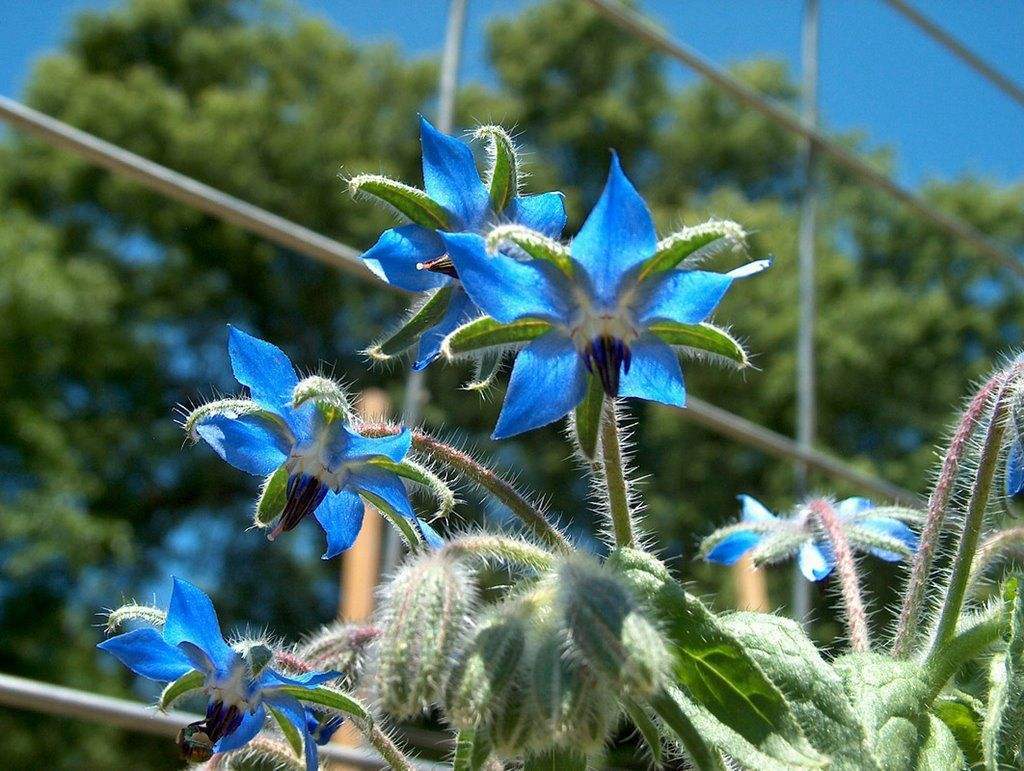
Borage, an annual herbaceous plant in the Boraginaceae family, with a slight cucumber fragrance. Native to the eastern Mediterranean coast and Asia Minor, it is now widely cultivated in Europe and North America. It can serve as a nectar source plant, and its fresh leaves are used as a vegetable in Europe, while both fresh and dried leaves can also be used to flavor stews, soups, and beverages.
The borage plant can reach a height of 120 cm. The leaves are alternate, rough like cucumber leaves, and stalked. The flowering period is in July, with blue flowers arranged in loose, leafy cymes on long stalks. The nutlets are smooth or have papillate protrusions. It is a warmth-loving plant, tolerant of high temperatures and heavy rain, as well as drought, but not cold, and requires soil that is not too poor.
Borage
Plant culture:
Wit. Borage, with its cucumber-like taste and aroma, is often used as a seasoning in dishes: some add the leaves to various dishes to enhance flavor; others float the blue petals on drinks to create atmosphere. Therefore, the flower language of borage complements these creative uses - wit. Those born under the blessing of this flower are quick-witted, sharp in reaction, diligent, and love to work. And the person suited to you might instead be someone who is careless about everything?
Borage
Courage. In famous Renaissance paintings, it was often used to decorate the outer robe of the Virgin Mary. It is called the - Fountain of Courage. It is said that in medieval Europe, borage was commonly planted in the back gardens of monasteries, not only for potted and garden cultivation for ornament, but mainly to treat various diseases, and was considered a secret weapon of monks. Before going to the battlefield, European soldiers would always put a sprig of borage in their wine cups and shout loudly: "I am borage, I fear nothing!" Using this method to boost morale helped contribute to victory in war.
Borage
Ancient and modern significance:
The flower of Saint Lidwina of the Netherlands. Since ancient times, Christianity has had the custom of linking saints with specific flowers, which originated from the church's practice of decorating altars with blooming flowers when commemorating saints. In medieval Catholic monasteries, various flowers were planted almost like in a gardening center, and over time, the church associated the 366 days' saints with different flowers respectively, forming the so-called flower calendar. At that time, most monasteries were located in Southern Europe, and Southern Europe has a Mediterranean climate, extremely suitable for growing flowers and plants. Borage, belonging to the Boraginaceae family, was chosen to honor the Dutch saint who spent almost her entire life in bed - Lidwina. It is native to areas from Turkey in the eastern Mediterranean to North Africa, and is an annual herbaceous plant.