Making succulents plump isn't hard - one small action can do it
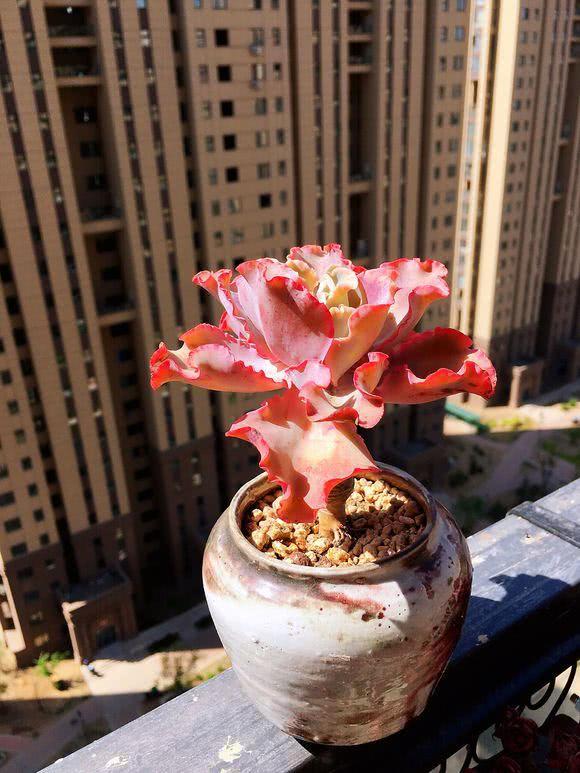
Many flower lovers might laugh when they see this title - succulents turn out to be so easy to grow, just pull off the dead leaves and they'll fatten up. Today Huahua will talk about the issue of pulling off dead leaves from succulents. If left untreated for a long time, it will bring trouble to succulent lovers, especially during the rainy season - the humid environment tends to accumulate moisture, putting succulents in an unventilated, stuffy environment, which easily breeds bacteria, scale insects and so on.
Dead leaves on succulents need to be dealt with. Succulent leaves are full of water. If shriveled leaves appear, don't be too anxious, because it's not a big deal at all - succulents also go through normal metabolism. Gradually more leaves will grow from the top. Some succulent plants, such as cacti, have leaves that have degenerated into spines. And Welwitschia mirabilis relies on a single pair of leaves to show off for a long time.
Most other succulents will have new and old leaves alternating, especially Crassulaceae - only when old leaves wither is it easy to form an old stem. And they burst out with clusters of baby succulents. When succulent leaves wither and die, there are 2 situations. One is Crassulaceae, thick-leaved genera - the leaves are thick and fleshy, and after shriveling they fall off on their own. Sometimes when the care environment changes in summer, they also drop leaves.
The last situation is when the leaves shrivel and wither but still refuse to let go of the mother plant, clinging firmly to the stem - Echelia (stone lotus), or Echeveria glauca (blue stone lotus), belong to this case. Many flower lovers think it doesn't matter, because they're lazy, and just treat succulents as lazy-person plants, feeling there's no need to clean up - just let them wither and die on their own. But if you're in the south, and it's the rainy season, it can easily create a certain risk.
Layer upon layer of dead leaves are a breeding ground for scale insects. In the south, in summer, due to rain or watering, the piled-up dead leaves easily create a hot, stuffy, humid micro-environment, and combined with the wounds from scale insect piercing and sucking, the stem easily develops black rot. For tough survivors like Echeveria glauca (blue stone lotus), the stem slowly becomes wet, mushy and decayed... So if the succulents in your home haven't had their dead leaves cleaned for a long time, clean them up properly before a tragedy is brewing.
When pulling off dead leaves, be careful to steady the succulent before cleaning, so as not to damage the roots. Some can be pulled off directly by hand, while others require tweezers - those that fit well can have their dead leaves pulled off quickly.
When peeling off leaves, you can get close to the base of the leaf and pull it off with a left-and-right tugging motion. After cleaning the dead leaves, if you find the succulent can't stand steadily, you can prop it up with a small object first, and once the succulent's roots grow out, it will be stable. If you unfortunately find scale insects, you can consider washing them off with water first as a temporary fix, and wait until the weather cools down to clean up properly. If you really can't stand it, pay attention to the concentration when spraying pesticide, and after spraying place it in a cool, ventilated environment - never put it in direct sunlight, as it easily causes pesticide damage.