Roses Owe Their Glory to Pruning: One Snip Brings a Sea of Blooms
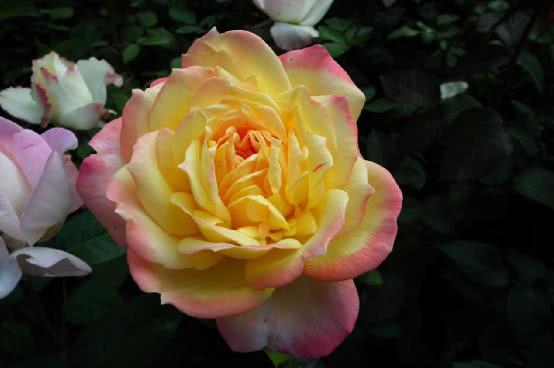
Everyone knows roses are beautiful, but cultivating such high beauty certainly requires effort behind the scenes. In the process of growing them, post-bloom pruning is a very important task that is often overlooked. So today, let's take a closer look at this "familiar stranger."
Why is post-bloom pruning necessary?
Veteran rose growers often keep the phrase "never a rose without pruning" on their lips, which shows just how important pruning is for roses. You should know that roses have the characteristic of "new branches bear new buds." With some varieties in particular, as soon as the flowers fade, the leaf buds begin to grow and form new branches. If you take a laid-back, free-range approach, strong stems may well become weak, flowers may shrink, and normal ventilation and light penetration may even be affected. So pruning is a must.
When is the right time to prune?
You've asked at just the right time. Better today than a chosen day: the first golden window for post-bloom rose pruning is in May. According to the experience passed down by veteran growers, roses need to be pruned three times a year, and the first is best done in mid-to-late May. So if your roses have just finished blooming, seize this moment and give them a good pruning right away!
So, how should you do it?
Actually, the tools and steps for post-bloom pruning are very simple. Just a small pair of scissors can instantly turn a novice watching the screen into a gardening expert. When pruning, promptly cut off the spent flowers. This allows the whole plant's nutrients to concentrate on the sprouting new branches. If you want to inhibit growth, you can keep 4-5 buds, while weaker branches need hard pruning, keeping 1-2 buds to encourage them to sprout strong shoots.
As for the second and third post-bloom prunings, they should be scheduled for late June/July and after August respectively. For the second pruning, since it falls in the height of summer, you don't need to cut away too many leaves and branches during the whole process, otherwise it may affect the rose's normal photosynthesis.
After the first two prunings, the third pruning (in August) should be changed to moderate pruning, leaving 2-3 buds on each stem. It is best to cut on the branches that bloomed in the previous batch, as this helps remove overlapping branches, crossing branches and overly dense branches. Of course, in short, 8 words: "Cull the weak, keep the strong, ensure light."