How do you care for hydrangeas? They easily flop over when short of water, so temperature and humidity must be controlled well
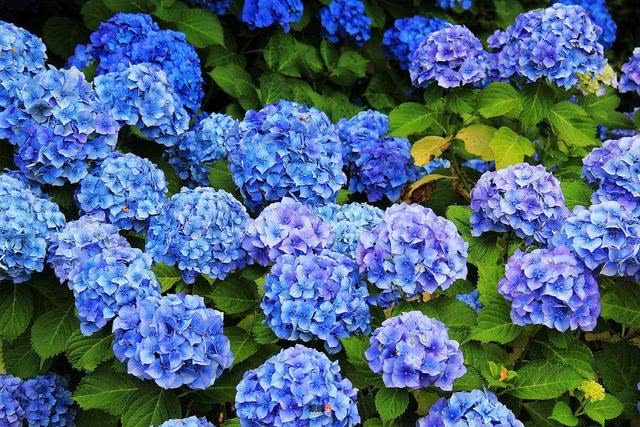
People often complain that growing flowers is so hard, wondering whether they are plant killers who cannot keep anything alive. A few days ago I saw a friend growing a pot of hydrangeas, but just yesterday she came running to tell me that her hydrangea buds had turned black. She wondered whether it was because she had not given the flowers sun protection, so they got sunburned black?
Many people who have had this experience probably think just like her: it must be that the sunlight was too harsh and scorched them to death, especially in summer. Every time we go out, don't we slather on layers of thick sunscreen and sun lotion? Yet we put the flowers on the balcony without giving them any sun protection. What a mistake, no wonder the buds turned black. But is that really the case?
Actually, that is not necessarily so. Blackened buds may not be caused by just one reason. First let's talk about the soil it depends on for survival. Hydrangeas are quite particular about soil; ordinary soil cannot satisfy them. They need soil that is somewhat alkaline and somewhat moist, and at the same time well drained. If your hydrangea's soil does not meet the above requirements, it is very likely one of the culprits behind the blackened buds.
Second, there may have been a problem with transplanting. Transplanting is a big deal. If it were a person, say, having an organ transplant, not only would you have to find a suitable organ source, but you would also need a highly skilled doctor to perform the operation personally. Switch to an inexperienced ordinary doctor, and who knows, they might accidentally damage something somewhere. The same principle applies to transplanting and grafting plants: an experienced person should do the job. A beginner with no transplanting experience might damage the roots, and this is also one of the reasons hydrangeas turn black.
Besides the two reasons above, here we also need to address a question from the beginning: the hydrangea has always been placed on the balcony, so could it have turned black from being exposed to the sun all the time? The answer is yes. Here we need to mention the yin and yang properties of things. The hydrangea is a yin plant, so it must never be exposed to sunlight all day long; it should be placed in a shady, cool place with good ventilation to nurture its nature. If this is the reason the buds turned black, then you might as well move the hydrangea to a shady, cool place and wait a while; the hydrangea's buds can then shed that layer of black, just as a person who has gotten tanned can turn white again after not going out for a long time. Placing it in a shady, cool place is also more favorable for the growth and flowering of a yin plant like the hydrangea.
These are a few reasons I have summarized for you. Of course, it is not limited to these; there are still many ever-changing and intricate reasons. However, I want to remind you of one thing: as a living species, the hydrangea has a spirit. Only with attentive, careful care will it bloom with even more gorgeous flowers to make you smile.