Growing potted lemons at home and wanting to enjoy both flowers and fruit? Try these growing methods
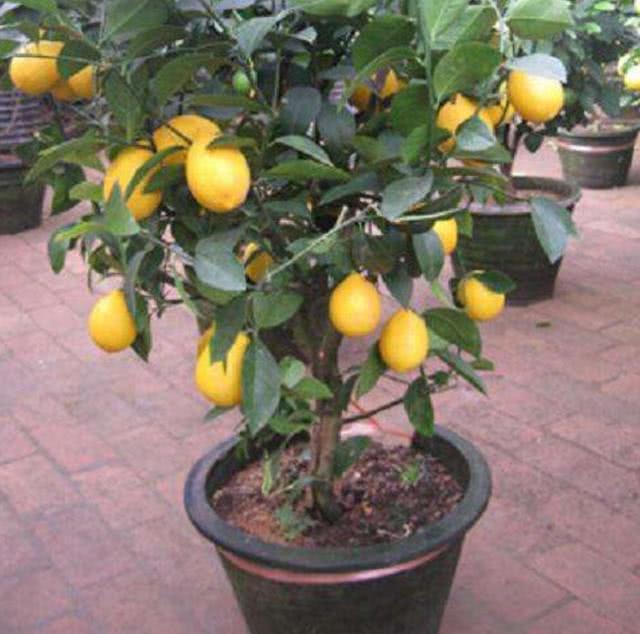
Lemon: the fruit is edible and has many benefits for the body; the leaves have a strong lemon fragrance and can be used to extract essential oil and make soap; the flowers are white or yellow with a fresh scent, and flowering in summer has a mosquito-repelling effect. Growing potted lemons at home requires extra effort in water and fertilizer management, pruning and other aspects. Poor growing management can easily lead to flowering without fruiting or only a few fruits, and some even grow only leaves without flowering.
Because potted lemons have limited soil in the pot, nutrients are consumed quickly. It is generally recommended to repot and change the soil in early spring each year. For the soil mix, a loose, fertile, slightly acidic soil is recommended, such as decomposed pine needle soil or leaf mold plus garden soil and river sand in a 3:2:1 ratio. A small amount of compound fertilizer can be added to the bottom of the pot to ensure a sufficient nutrient supply during its growing period. After repotting, place it in a cool, ventilated spot for a week to recover, then normal care can resume. Lemons like light, but excessively strong sunlight can cause poor growth and development, so at noon in midsummer the potted lemon should be moved to a mild environment suitable for growth. The most suitable growing temperature is 23°C~29°C. Lemons like fertilizer; during the vigorous spring growth period of branches and leaves, apply more nitrogen fertilizer to promote more spring shoots, and pinch the tips in time. You can also apply some decomposed cake fertilizer water to enhance the plant's fertility and encourage the branches to mature earlier. After autumn begins, reduce fertilization to avoid overly lush branches and leaves sprouting autumn shoots and competing with the fruit for nutrients.
If you want lemons to bloom and fruit more, timely pruning is essential. Before spring shoots sprout, cut off diseased and pest-damaged branches, crossing branches, inward-growing branches and newly sprouted branches. For strong branches, prune lightly, leaving 4 or 5 plump buds; for weak branches, prune heavily, leaving 2 or 3 buds, to encourage each branch to produce more robust spring shoots. After the spring shoots have grown in fully, to control excessive growth, you can cut off the 3rd or 4th node of the shoot tips. When the new shoots that grow later have 6~8 nodes, pinch the tips to encourage more summer shoots.
To promote flower bud formation and accumulate nutrients for the lemon tree, water control management can be carried out on potted lemons before the End of Heat (Chushu) solar term. The specific steps are as follows: gradually reduce the water supply to the potted lemon 10 days before the End of Heat, stop watering after 10 days, and continue for about 5 days. During this period, spray a small amount of water on the potting soil and leaves, so that the lemon is in a condition that is dry but not so dry that it dies. When you see the axillary buds increasingly swelling and most of the bud color changing from green to white, it means the water control to promote flowering has succeeded. At this point, promptly resume watering the potted lemon.
To reduce excessive nutrient consumption, you can promptly thin the buds after the lemon blooms, and at the same time apply more decomposed organic liquid fertilizer. Because potted lemons are mostly grown indoors and no insects visit them, pollination may fail, making it difficult to set fruit or resulting in few fruits. It is recommended to use artificial pollination to pollinate potted lemons, that is, use a cotton swab to transfer pollen from the surrounding stamens to the central style. If pollination succeeds, the lemon will set many fruits. After the flowers fade and fruit is set, thin out some of the young fruits so that nutrients are concentrated on the remaining young fruits, and promptly pinch off new shoots to prevent nutrient loss. After the fruit turns yellow, promptly stop fertilizing and reduce watering, keeping the soil slightly on the dry side, which can effectively extend the fruit-viewing period.